 Lithuania · 15th century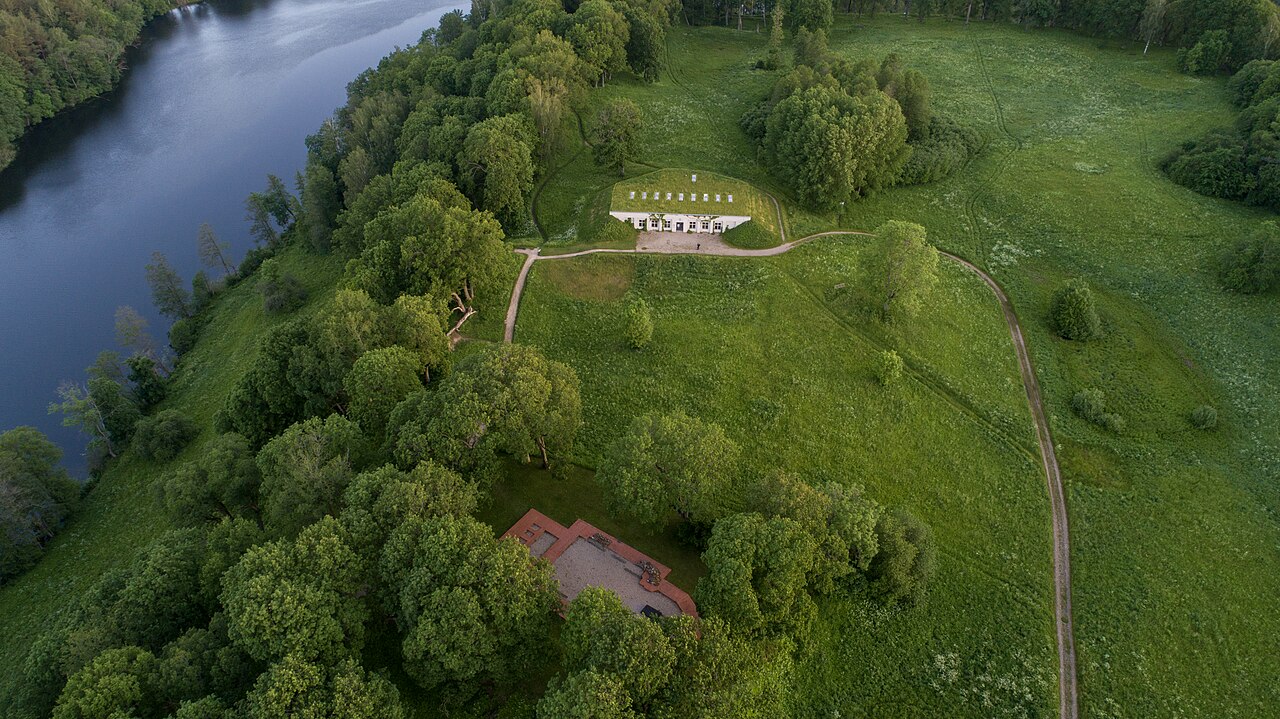
Dubingiai Castle (Lithuanian: Dubingių pilis) was a residential castle in Dubingiai, Molėtai district, Lithuania.
The first masonry castle was constructed by Vytautas, Grand Duke of Lithuania, in 1412-1413 on an island, now a peninsula, in Lake Asveja in order to secure the capital Vilnius from attacks from Livonia. No accounts concerning the architecture of Vytautas' castle have survived. It was acquired by Jerzy Radziwiłł (Jurgis Radvila) prior to 1508. He constructed a new palace in the Renaissance style in the first half of the 16th century. After the death of Jerzy, his son Mikolaj "the Red" inherited the property, causing the town nearby to become an important hub for the Reformation in Lithuania. Barbara Radziwiłł (Barbora Radvilaitė) spent five months in the castle after her marriage to Sigismund Augustus in 1547.
The palace used to be one of the most luxurious residences in the Grand Duchy, lagging not much behind the Royal Palace. Dubingiai Castle was the main seat of the Biržai-Dubingiai line of the Radziwiłł (Radvilos) family until the second half of the 17th century, when it was transferred to Biržai Castle.
During the Polish–Lithuanian-Swedish wars, the castle was pillaged by armies loyal to the King of Poland and Grand Duke of Lithuania. It was confiscated from Bogusław Radziwiłł (Boguslavas Radvila). It returned to the family in the second half of the 17th century. The neglected castle and church gradually fell into ruins. It was sold to Michał Tyszkiewicz (Mykolas Tiškevičius) in 1808. Today only the foundations and several cellars of the castle and church remain and are being researched.
The masonry Calvinist Church of the Holy Spirit was built in the Renaissance style near the castle by Janusz Radziwiłł (Jonušas Radvila) prior to 1620 and was intended to be the mausoleum of the Radziwiłł family. The most prominent members of the family were interred there, including Mikołaj "the Black" Radziwiłł (Mikalojus Radvila Juodasis) in 1565 and his wife Elżbieta Szydłowiecka in 1562, Mikołaj "the Red" Radziwiłł (Mikalojus Radvila Rudasis) in 1584 and Janusz Radziwiłł in 1620. Their remains were discovered during archaeological excavations in 2004 and reburied there on 5 September 2009.
Text adapted from “Dubingiai Castle” on Wikipedia, CC BY-SA 4.0.
Dubingiai Castle ranks #4,529 of 9,035 worldwide in the atlas's castle fame ranking, and #28 of the 32 mapped in Lithuania. Founded 1413, it is older than 49% of the atlas's dated landmarks, one of 556 atlas entries founded in the 15th century. The nearest day-trip guide is Vilnius, 43 km away. See how Lithuania compares in the castle statistics.
View on the interactive castle map →