 Japan · 16th century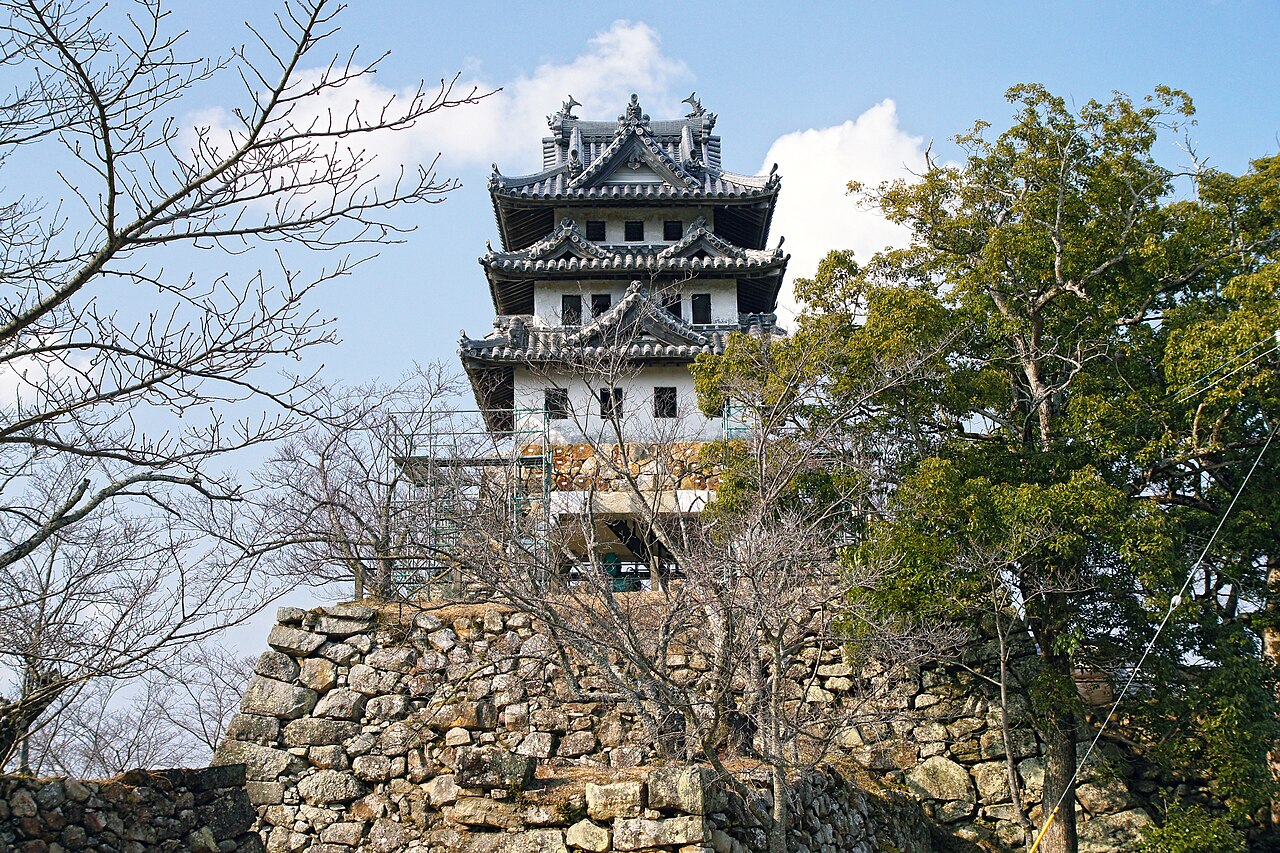
Sumoto Castle (洲本城, Sumoto-jō) was a Muromachi to Sengoku period Japanese castle located in the Orodani neighborhood of the city of Sumoto, Hyōgo Prefecture, Japan. Its ruins have been protected as a National Historic Site since 1999. It was also referred to as Mikuma Castle (三熊城).
Sumoto Castle is located on the southeast coast of Awaji Island on a long and narrow ridge of the 130-meter Mount Mikuma. Awaji Island has been a strategic transportation hub for the Kinai region since ancient times, forming part of the route between Honshu and Shikoku and controlling maritime transportation between the Pacific Ocean and the Seto Inland Sea and Osaka Bay. In the Sengoku period, the island was controlled by the Miyoshi clan, who ruled Sanuki, Awa and Kawachi Provinces. Sumoto Castle was constructed by their retainer, the Atagi clan, around 1526. The island was seized by Hashiba Hideyoshi in 1581 as part of Oda Nobunaga's conquest of western Japan, and assigned his general Sengoku Hidehisa to govern Sumoto.
In 1583, Sengoku Hidehisa was officially named daimyō and he modernized the Sumoto fortifications, and used the castle as his residence. However, Hidehisa was defeated and disgraced in 1586 in a battle with the Shimazu clan in 1585 and was replaced a Sumoto by Wakizaka Yasuharu. With the support of Hideyoshi, Wakizaka Yasuharu expanded the castle to protect the seaward approaches to Osaka, the economic center of the Toyotomi government.
After the 1600 Battle of Sekigahara, Awaji came briefly under the control of the Ikeda clan of Himeji Domain. The Ikeda clan abolished Sumoto Castle and built Yura Castle in the northern region of Awaji Island, which was closer to their stronghold at Himeji Castle. But after the Battle of Osaka from 1614 to 1615, Awaji was awarded by the Tokugawa shogunate to the Hachisuka clan of Tokushima Domain, who appointed their retainers, the Inada clan, as governors of Awaji. As Sumoto was closer to Tokushima than Yura, the Inada rebuilt Sumoto Castle in the 1630s. Sumoto Castle was held by the Inada clan until the Meiji restoration of 1868. What remains of the castle today are extensive complex-shaped stone walls. In 1928 the tenshu was rebuilt in reinforced concrete in commemoration of the enthronement of Emperor Hirohito.
Text adapted from “Sumoto Castle” on Wikipedia, CC BY-SA 4.0.
Sumoto Castle ranks #2,239 of 9,035 worldwide in the atlas's castle fame ranking, and #134 of the 295 mapped in Japan. Founded 1526, it is older than 41% of the atlas's dated landmarks, one of 886 atlas entries founded in the 16th century. Its Wikipedia articles were opened 4,595 times in the last 60 days, more than 85% of the atlas. The nearest day-trip guide is Wakayama, 27 km away. It is one of the 69 landmarks on the atlas's regional map of Kansai. See how Japan compares in the castle statistics.
View on the interactive castle map →