 United States · 18th century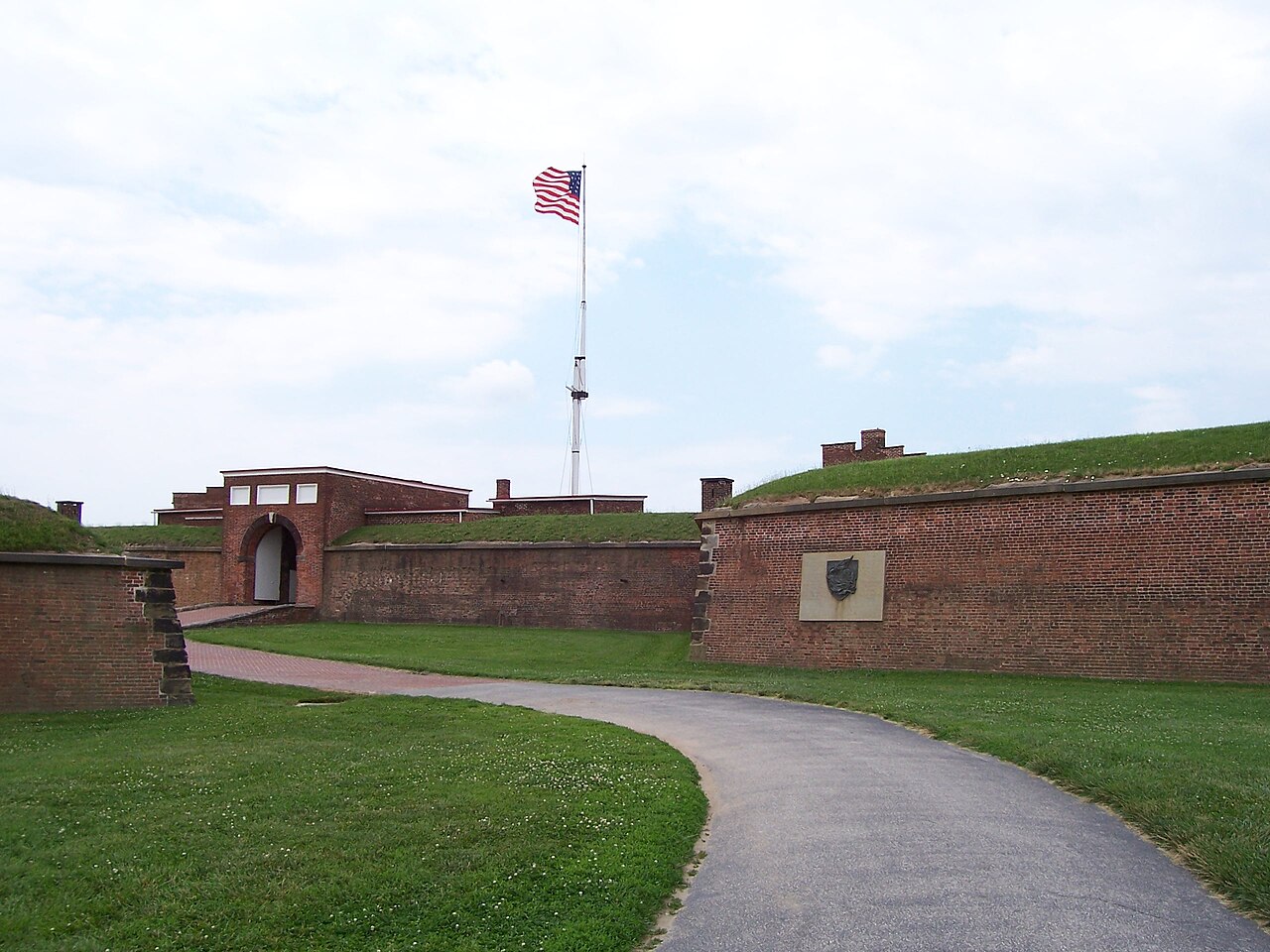
Fort McHenry is a historical American coastal pentagonal bastion fort on Locust Point, now a neighborhood of Baltimore, Maryland. It is best known for its role in the War of 1812, when it successfully defended Baltimore Harbor from an attack by the British Royal Navy from the Chesapeake Bay on September 13–14, 1814.
The fort was built in 1798 and was used continuously by U.S. armed forces through World War I and by the United States Coast Guard in World War II. It was designated a national park in 1925, and, in 1939, was redesignated a U.S. National Monument.
During the War of 1812, an American storm flag, 17 by 25 feet (5.2 m × 7.6 m), was flown over Fort McHenry during the British bombardment of the fort. The flag was replaced early on the morning of September 14, 1814, with a larger American garrison flag, 30 by 42 feet (9.1 m × 12.8 m). The flag's continued flying signaled that the fort continued to remain in American hands, leading British forces to withdraw and ending the Battle of Baltimore in an American victory.
The sight of the ensign inspired Francis Scott Key to write the poem "Defence of Fort M'Henry" that was later set to music in the song "To Anacreon in Heaven", which was later known and designated as "The Star-Spangled Banner", the national anthem of the United States.
Text adapted from “Fort McHenry” on Wikipedia, CC BY-SA 4.0.
Fort McHenry ranks #500 of 9,079 worldwide in the atlas's castle fame ranking, and #8 of the 110 mapped in United States. Founded 1776, it is older than 14% of the atlas's dated landmarks — one of 696 atlas entries founded in the 18th century. Its Wikipedia articles were opened 24,903 times in the last 60 days, more than 98% of the atlas. See how United States compares in the castle statistics.
View on the interactive castle map →