 Switzerland · 12th century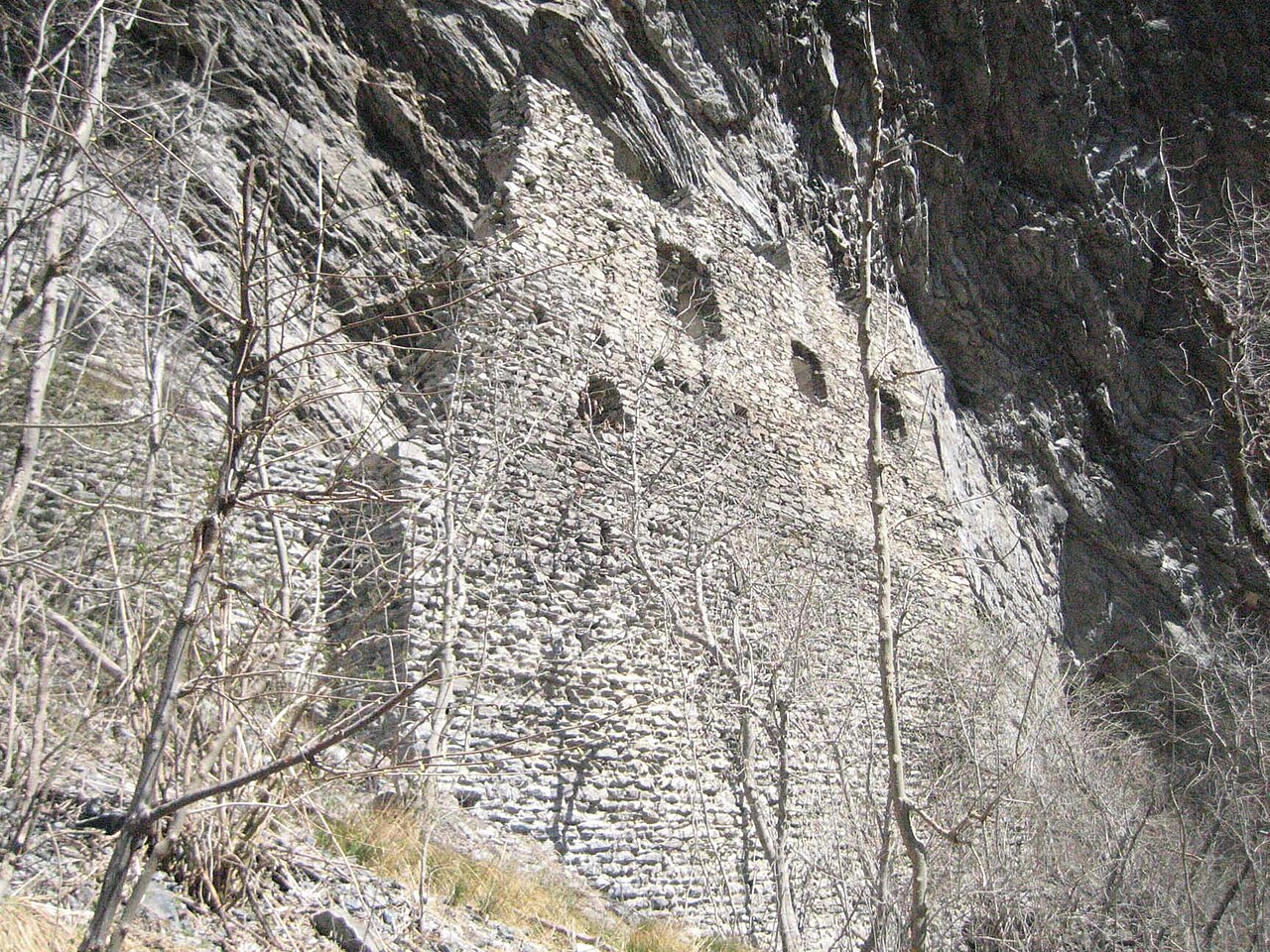
Fracstein Castle is a castle in the municipality of Seewis im Prättigau of the Canton of Graubünden in Switzerland. It is a Swiss heritage site of national significance.
The castle was probably built in the 11th or 12th century, perhaps for the Lords of Aspermont. Its location above a narrow part of the Prättigau valley means it was built to control and collect tolls from trade through the valley. The castle was extensively rebuilt in the 13th century and first appears in historical records in 1338. In that year the brothers Eberhardt and Ulrich von Aspermont, who had inherited the castle from their father, sold Fracstein to Count Friedrich V von Toggenburg. Friedrich then appointed Ulrich von Matsch as his vogt over the castle and surrounding lands. A few years later, in 1344, the Matsch and Toggenburg families divided their lands in the Prättigau, however Fracstein was specifically left as a shared castle. In 1436 the last Toggenburg Count, Frederick VII died and the castle was fully inherited by the Matsch family. They sold it to the Habsburgs in 1466. Soon thereafter the Habsburgs abandoned the castle and by 1570 it was a ruin. The castle church of St. Aper, located below and east of the castle, remained in use until about 1530.
During the Bündner Wirren the castle site was once again occupied. In 1621 the Austrians built a barricade near the old toll station and garrisoned the castle with a small force in the following year. Soon thereafter they were forced to abandon Fracstein by anti-Habsburg rebels. In October 1624 Prättigau forces briefly garrisoned the castle. In 1649 the villages of the Prättigau bought their freedom from the Habsburgs and Fracstein became part of Schiers. The communities agreed to pay for the upkeep of the road through the valley and the castle's bridge over the Landquart River, but allowed the castle to remain a ruin.
During the 1799 French invasion of Graubünden the Prättigau militia attempted to defend the narrow point in the valley at Fracstein, but were quickly forced to retreat. During the 19th century, the fortifications on the valley floor were mostly destroyed to provide space and building material for a railroad and a road through the valley.
During a renovation project in the main tower, a number of carvings from around 1300 were discovered.
Text adapted from “Fracstein Castle” on Wikipedia, CC BY-SA 4.0.
Fracstein Castle ranks #7,766 of 9,079 worldwide in the atlas's castle fame ranking, and #167 of the 213 mapped in Switzerland. Founded 1200, it is older than 75% of the atlas's dated landmarks — one of 756 atlas entries founded in the 12th century. 15 more atlas landmarks stand within 25 km. The nearest day-trip guide is Winterthur, 89 km away. It is one of the 26 landmarks on the atlas's regional map of Graubünden. See how Switzerland compares in the castle statistics.
View on the interactive castle map →