 Poland · 14th century
Gdańsk Castle ranks #5,150 of 9,040 worldwide in the atlas's castle fame ranking, and #189 of the 397 mapped in Poland. Founded c. 1340, it is older than 58% of the atlas's dated landmarks, one of 758 atlas entries founded in the 14th century. Its Wikipedia articles were opened 1,340 times in the last 60 days, more than 59% of the atlas. 2 more atlas landmarks stand within 25 km. The nearest day-trip guide is Gdańsk, 1 km away. See how Poland compares in the castle statistics.
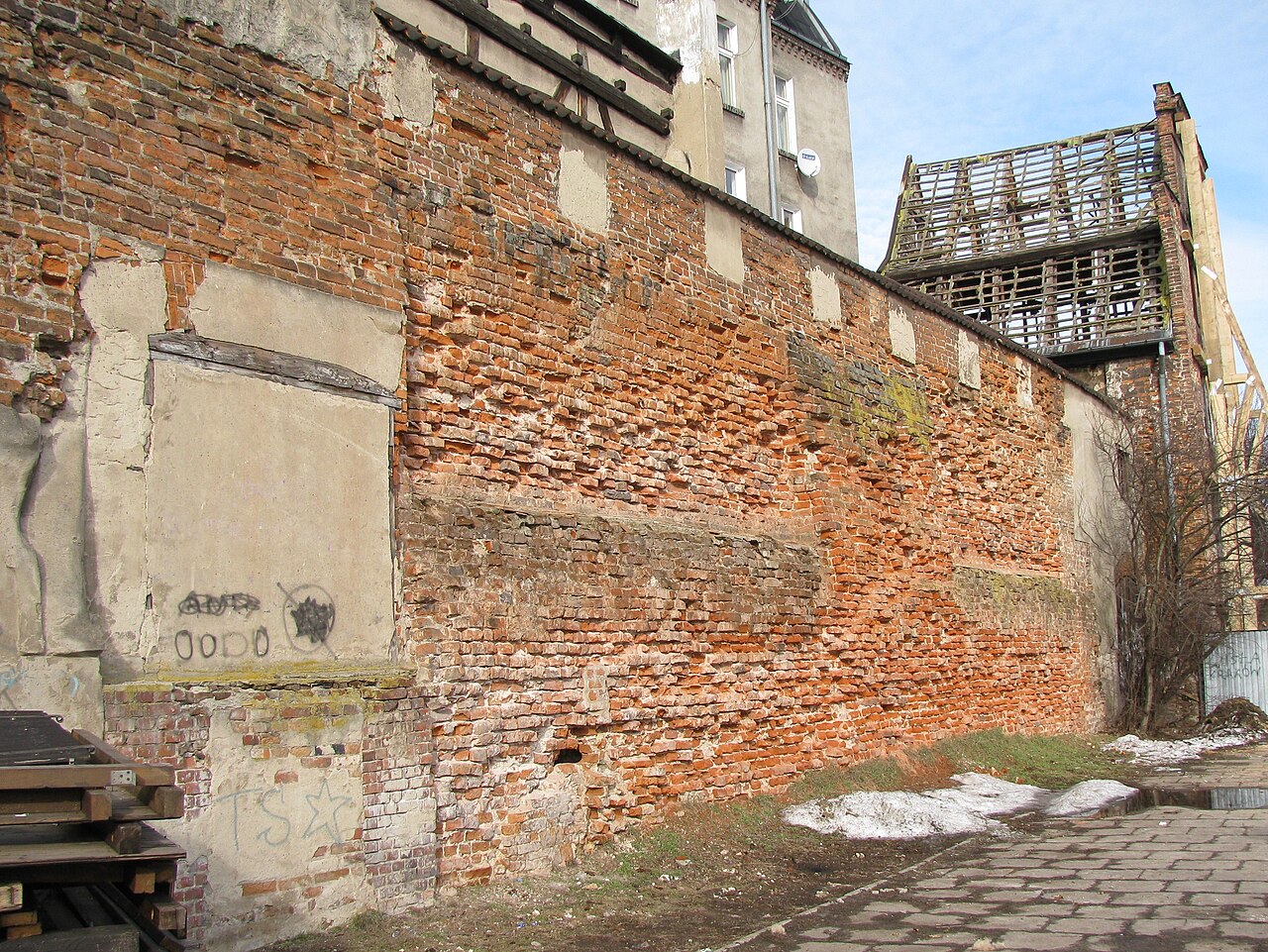
The Gdańsk Castle (Polish: Zamek w Gdańsku) was a large castle that existed in the modern-day Old Town of the city of Gdańsk (also known in German as Danzig) from the mid-14th century until it was taken down in 1454. It was constructed and managed by the State of the Teutonic Order. Some of its remnants are on the regional heritage list.
No plans or depictions of the Gdańsk Castle from its own time have survived. It is believed that the castle may have been partly depicted in a 14th-century painting titled The Ship of the Church, but interpretations of which parts of the city of Gdańsk are depicted in the painting vary heavily. However, numerous academic reconstructions of the castle's likely appearance have been created, and multiple elements of the castle are known of in detail.
The Gdańsk Castle was located northeast of the Main City and southeast of the Old Town. It was located in the modern-day Old Town, beside Wartka and Sukiennicza Streets. It was found on the shores of the Radunia Canal (constructed around the same time as the castle) and the Motława.
The central part of the castle was called the High Castle (Zamek Wysoki). It was the first part of the structure to be completed, being in use from c. 1350 onwards. It was expanded in the 1380s and 1390s, during which it suffered a major fire. It measured 60 metres (200 ft) by 63 metres (207 ft), with an internal courtyard surrounded by a cloister. The rooms here were typical for a medieval castle interior, such as a chapter house, refectory, and a set of dormitories, as well as, among others, a chapel, a treasury, a scriptorium, an armoury, a kitchen, a mixed-use basement–pantry, and a wardrobe.
To its north and west, the High Castle was surrounded by an outer bailey, surrounded by walls and wall towers; the wall tower positioned the furthest northwest, the today still extant Swan Tower (Baszta Łabędź), controlled access to the river port of Gdańsk. Locations in the outer bailey included a crossbow workshop, a sewer's shop, and the commander's stables. During the Polish–Lithuanian–Teutonic War of 1409–1411, a hospital was established in the outer bailey.
Between 1384 and 1437, the Gdańsk Castle was armed with 3 large guns, as well as multiple mid-sized and smaller ones (8 in 1384, 11 in 1413, 22 in 1428, and 60 in 1434).
Text adapted from “Gdańsk Castle” on Wikipedia, CC BY-SA 4.0.
View on the interactive castle map →