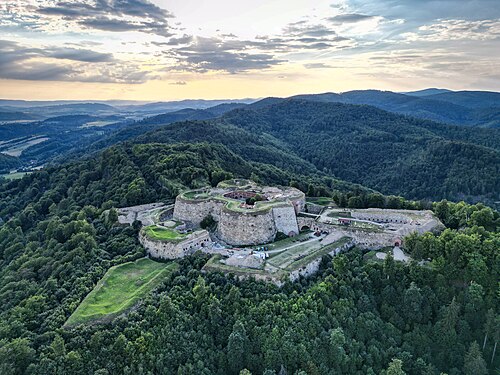
Fortress
Wisłoujście Fortress
 Poland · 15th century
- Founded
- 1482
- Heritage status
- immovable monument in Poland
- Location
- Gdańsk
- Coordinates
- 54.39586°, 18.67914°
- Open data
- Wikidata Q1409002
- Links
- Wikimedia Commons

Description
Wisłoujście Fortress (Polish: Twierdza Wisłoujście, German: Festung Weichselmünde) is a historic fortress located in Gdańsk by the Martwa Wisła river, by an old estuary of the river Vistula, flowing into the Bay of Gdańsk. The fortress is located close to the Wisłoujście borough, Westerplatte and the Port Północny (Northern Port). It is listed as a Historic Monument of Poland.
Different parts of the fortress are clearly in different architectural styles (predominantly Gothic) and in different styles of construction and building materials. This is the result of the fortress being rebuilt every time it was destroyed or badly damaged. The basement and foundation of the fortress is based on wooden crates (kaszyce), which are hidden underneath in the water. Rubble was heaped on top of these structures to strengthen them, providing a stable and strong base for the fortress. The heart of the fortress is a circular tower (currently devoid of the coping), which until 1785 was used as a lighthouse.
The lighthouse is surrounded by a brick flange (also known as a circular battery), whose inner walls are sealed together with the officers' living quarters. Around the battery there is a four-bastion Fort Carré, which is led by a gatehouse with a postern from 1609. The north-western side of the fort-carré is adjoined to the Martwa Wisła river, while the rest of the fortress is separated off from land by a sconce known as the Szaniec Wschodny (Eastern Sconce). The sconce is lined up with five bastions, two of which are ravelins - one of which survived. The Fort carré as well as the Eastern Sconce are surrounded by a moat, sourced by the Martwa Wisła river.
From about 1721 until 1889, the lighthouse tower was topped with a later-Baroque coping. After its burning due to a fire caused by lightning, the coping was reconstructed and coated with shale, which survived up until 1945. The tower also had formerly a clock, dating back to the eighteenth century.
In 1945, due to artillery strikes, the tower was almost completely destroyed, the coping and officers' headquarters and upper levels were also devastated. The only parts of the fortress which were left untouched, were the walls of the Fort Carré. In 1959 the tower was added to the Register of Heritage Sites, and reconstruction of the fortress began.
Text adapted from “Wisłoujście Fortress” on Wikipedia, CC BY-SA 4.0.
In the rankings
Wisłoujście Fortress ranks #1,863 of 9,902 worldwide in the atlas's castle fame ranking, and #56 of the 455 mapped in Poland. Founded 1482, it is older than 45% of the atlas's dated landmarks, one of 596 atlas entries founded in the 15th century. Its Wikipedia articles were opened 2,391 times in the last 60 days, more than 77% of the atlas. 2 more atlas landmarks stand within 25 km. The nearest day-trip guide is Gdańsk, 6 km away. See how Poland compares in the castle statistics.
Castles nearby
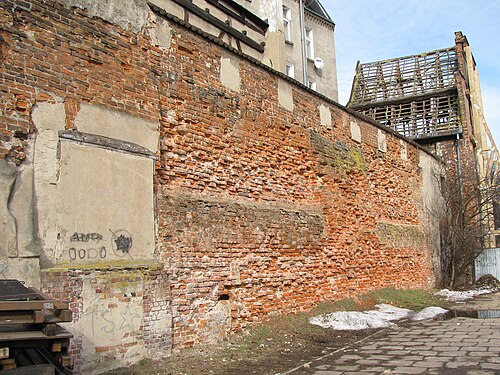
- Gdańsk Castle5 km · Poland
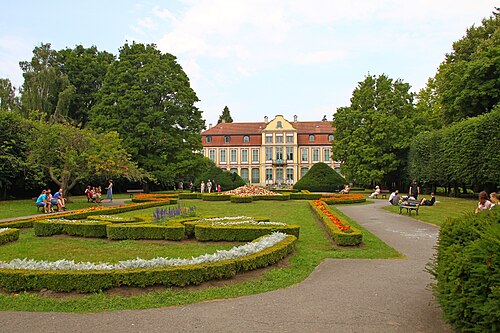
- Abbot's Palace (Oliwa)8 km · Poland
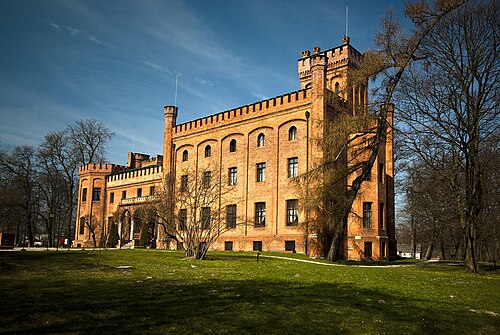
- Rzucewo Palace35 km · Poland
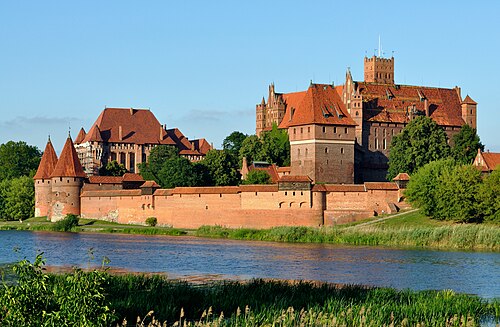
- Malbork Castle46 km · Poland
More castles in Poland
- Fort Srebrna GóraPoland · 18th century
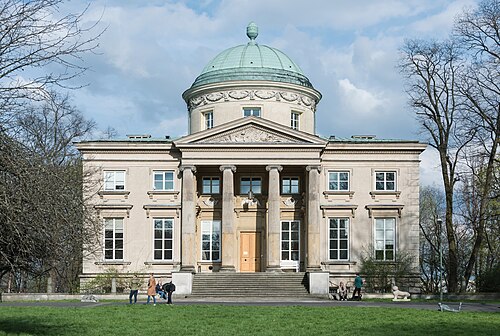
- KrólikarniaPoland · 18th century
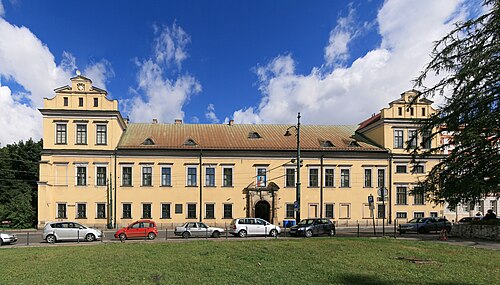
- Bishop's Palace, KrakówPoland · 13th century
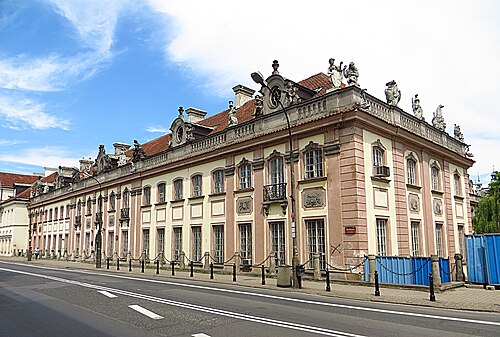
- Branicki Palace, WarsawPoland · 18th century