Palace & château
Gifhorn Castle
🇩🇪 Germany · 16th century
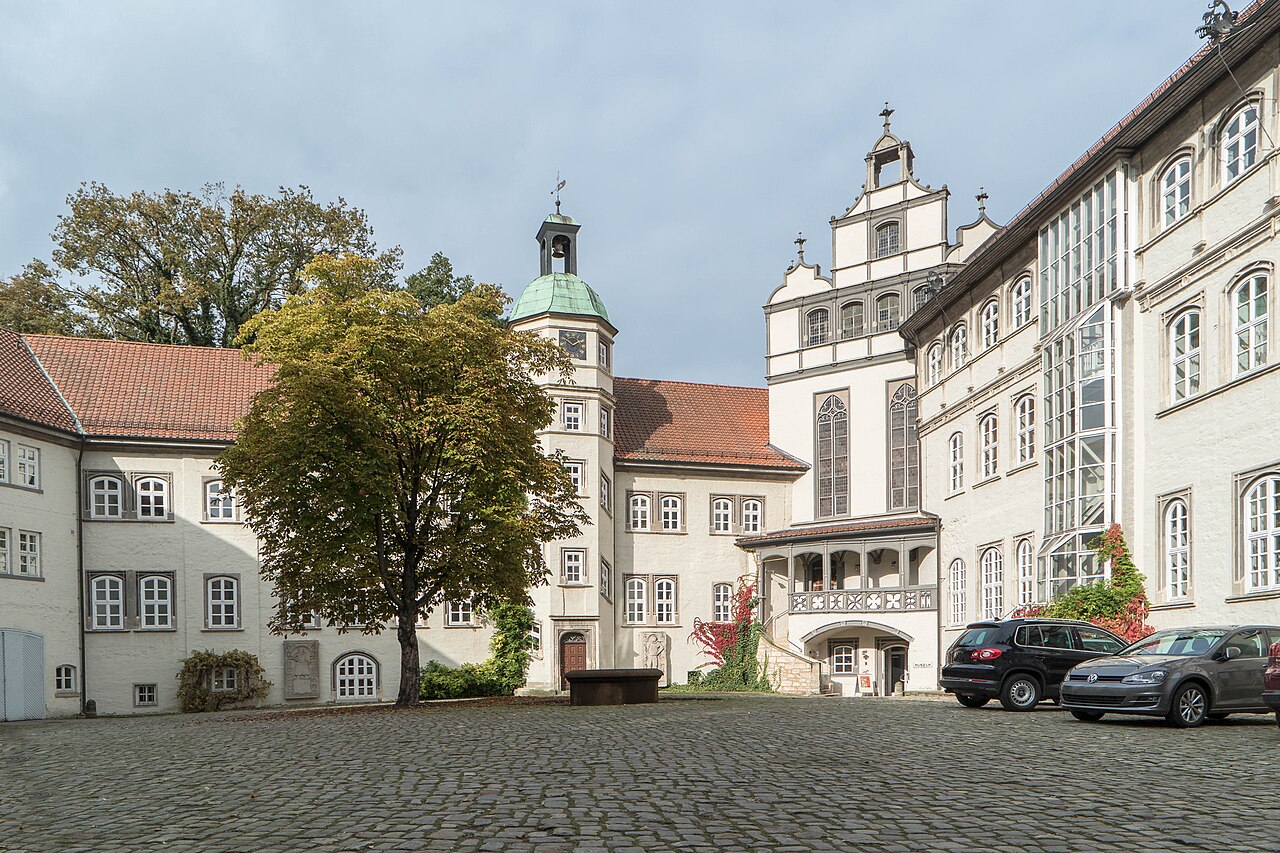
Gifhorn Castle (German: Schloss Gifhorn) is a castle in Gifhorn, Germany, built between 1525 and 1581 in the Weser Renaissance style. The castle was fortified until 1790 with moats, ramparts and bastions and was never captured. In the 16th century it was the Residenz of the Duchy of Gifhorn under Duke Francis of Brunswick-Lüneburg for just 10 years.
This well-fortified castle was built in the shape of a trapezium. It was surrounded by ramparts and a moat up to 50 metres wide. The immediate vicinity could be flooded to create a swamp. Stone bastion towers were built on the four corners of the site. These were linked to the castle by underground rampart passages (Wallgänge) in the form of casemates.
A 45 metre long section is preserved today that led to the north bastion. Today it is used to house exhibitions for the castle museum. The original entrance to the castle was over a bridge on the narrow side of the castle moat in the southeast, that led to the gatehouse. Today the main entrance is through the old south bastion which has been reconstructed using sections of wall arranged in a circle. The following castle buildings are grouped around the inner courtyard:
The gatehouse (Torhaus) is the oldest building and was completed in 1526, one year after work began on the castle. Due to its oversized dimensions it was probably originally planned as a single building. The roof, with its semi-circular gables is extraordinary and none like it has been preserved anywhere else. Until the 18th century the entrance to the castle was through the gatehouse; after that it was used as a grain store.
The Ablagerhaus is the largest building in the east wing and acted from the 18th century as a residence for senior Gifhorn officials such as the Amtshauptmann. Its name, which means 'visit house', is derived from the fact that the occupants of its rooms had to vacate them when there was a lordly visit (Ablager) e.g. by royal hunting parties. This building contains the Great Hall (Rittersaal).
The castle chapel (Schlosskapelle) was built in 1547 and was the first religious building built for Protestant services in Germany. It contains the sarcophagus of Duke Francis on a gallery (Empore) below a window and a life-size, kneeling statue of the duke. The sarcophagus of his wife, Clara of Lauenburg, is empty, because she died during a trip to her Pomeranian home in Barth.
Text adapted from “Gifhorn Castle” on Wikipedia, CC BY-SA 4.0.
Gifhorn Castle ranks #6,121 of 8,764 worldwide in the atlas's castle fame ranking, and #518 of the 618 mapped in Germany. Founded 1525, it is older than 44% of the atlas's dated landmarks — one of 827 atlas entries founded in the 16th century. 2 more atlas landmarks stand within 25 km. See how Germany compares in the castle statistics.
View on the interactive castle map →Frequently asked questions
Where is Gifhorn Castle?
Gifhorn Castle stands in Germany, at 52.4896°, 10.5471°.
When was Gifhorn Castle built?
The atlas dates its founding to 1525. Earlier structures may have stood on the site; this is the earliest documented founding year.
How famous is Gifhorn Castle?
In this atlas's fame ranking: #6,121 of 8,764 worldwide, and #518 in Germany. Fame here combines how many Wikipedia language editions cover a landmark with how many people read them.
What is the nearest castle to Gifhorn Castle?
Wolfsburg Castle, about 18 km away.
More castles in Germany
- Gimborn Castle Germany · 13th century
- Hackhausen Castle Germany
- Haneburg Germany · 17th century
- Helfenstein Castle Germany
More palaces & châteaux
- Hohenaschau Castle Germany
- Imperial Palace Gelnhausen Germany · 12th century
- Isenburg Castle Germany · 16th century
- Landshut Residence Germany · 16th century