 Japan · 16th century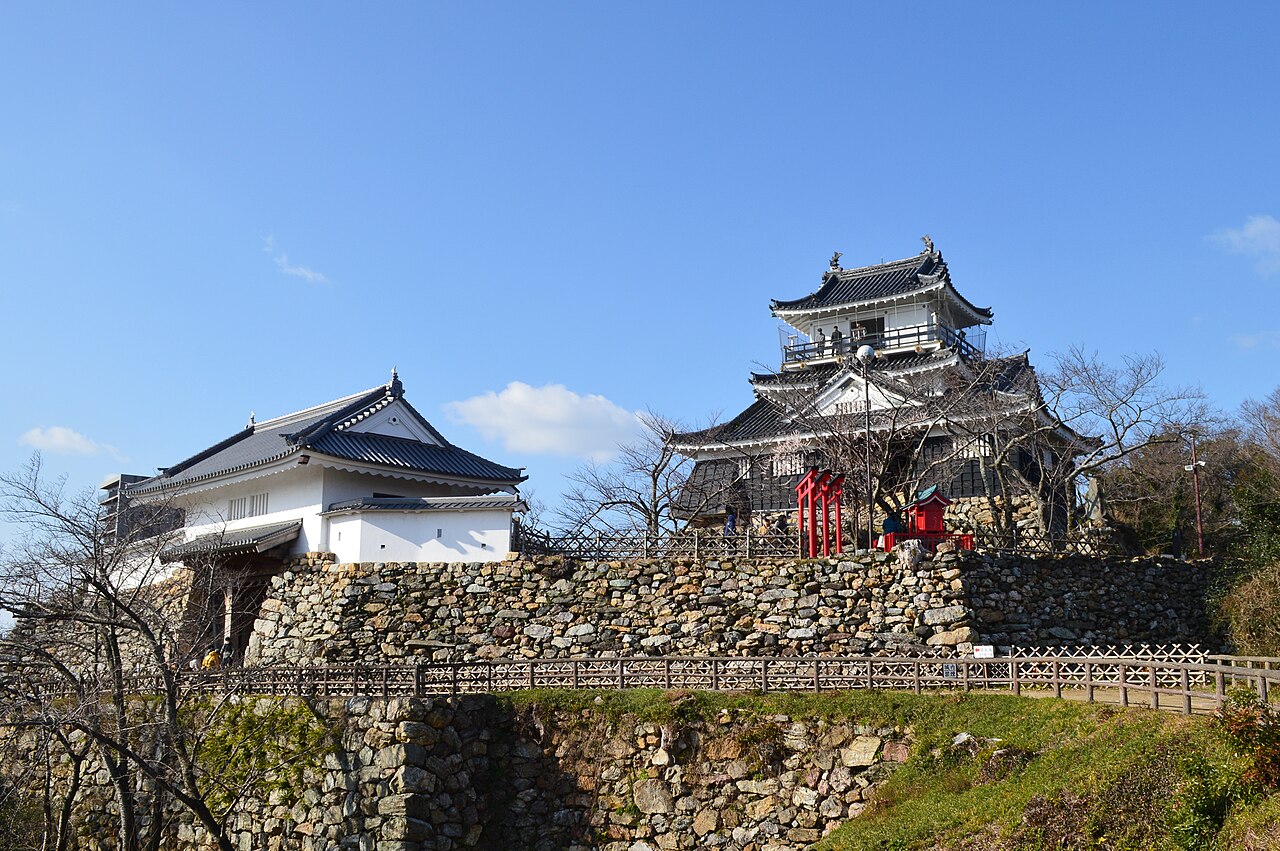
Hamamatsu Castle (浜松城, Hamamatsu-jō) is a hirayama-style Japanese castle ruin, with some replica castle buildings. It was the seat of various fudai daimyō who ruled over Hamamatsu Domain, Tōtōmi Province, in what is now central Hamamatsu, Shizuoka Prefecture, Japan under the Edo period Tokugawa shogunate. It is also called Shusse Castle (出世城, Shusse-jō).
Hamamatsu is at the edge of Mikatagahara plateau in the center of Tōtōmi Province, and was from ancient times a post station on the Tōkaidō highway connecting Kyoto with the eastern provinces of Japan. During the late Muromachi and Sengoku period, this area came under the control of the Imagawa clan, a powerful warlord from Suruga Province. It is uncertain when the original Hamamatsu Castle was constructed; however, it appears that a fortification was built on what is now the Hamamatsu Tōshō-gū, east of the present castle, by Imagawa Sadatsuke, the fourth head of the Enshū Imagawa clan from around 1504–1520. The early castle was called Hikuma Castle (引馬城 or曳馬城, Hikuma-jō) and was entrusted to Imagawa retainer Iio Noritsura.
After the fall of Imagawa Yoshimoto at the 1560 Battle of Okehazama, Iio Tsuratatsu rebelled against Imagawa Ujinao, but was defeated. However, the greatly weakened Imagawa clan was unable to withstand the combined forces for Tokugawa Ieyasu from Mikawa and Takeda Shingen from Kai. The former Imagawa territories in Tōtōmi were divided between the Tokugawa and Takeda in 1568. In December of the same year Tokugawa Ieyasu laid siege to Hikuma Castle and took it from Otazu no kata. He relocated his headquarters from Okazaki Castle to Hamamatsu in 1570, and started construction of a new castle on a site which partially overlapped that of the original Hikuma Castle.
Hamamatsu Castle was approximately 500 meters north–south by 450 meters east–west. The location has few natural barriers, but the castle utilizes the natural slope of the Mikatagahara plateau, with the donjon at the highest point in the northwest. To east was the inner bailey, followed by the second bailey and third bailey roughly in a straight line to the southeast. The stone walls were constructed in the nozura-zumi style using unshaped stones, with the ruins of the fortifications of the original Hikuma Castle also forming part of the outer defenses.
Tokugawa Ieyasu spent 17 years at Hamamatsu Castle, from age 29 to 45.
Text adapted from “Hamamatsu Castle” on Wikipedia, CC BY-SA 4.0.
Hamamatsu Castle ranks #1,463 of 9,035 worldwide in the atlas's castle fame ranking, and #77 of the 295 mapped in Japan. Founded 1532, it is older than 40% of the atlas's dated landmarks, one of 886 atlas entries founded in the 16th century. Its Wikipedia articles were opened 8,257 times in the last 60 days, more than 92% of the atlas. The nearest day-trip guide is Okazaki, 57 km away. See how Japan compares in the castle statistics.
View on the interactive castle map →