 Singapore · 19th century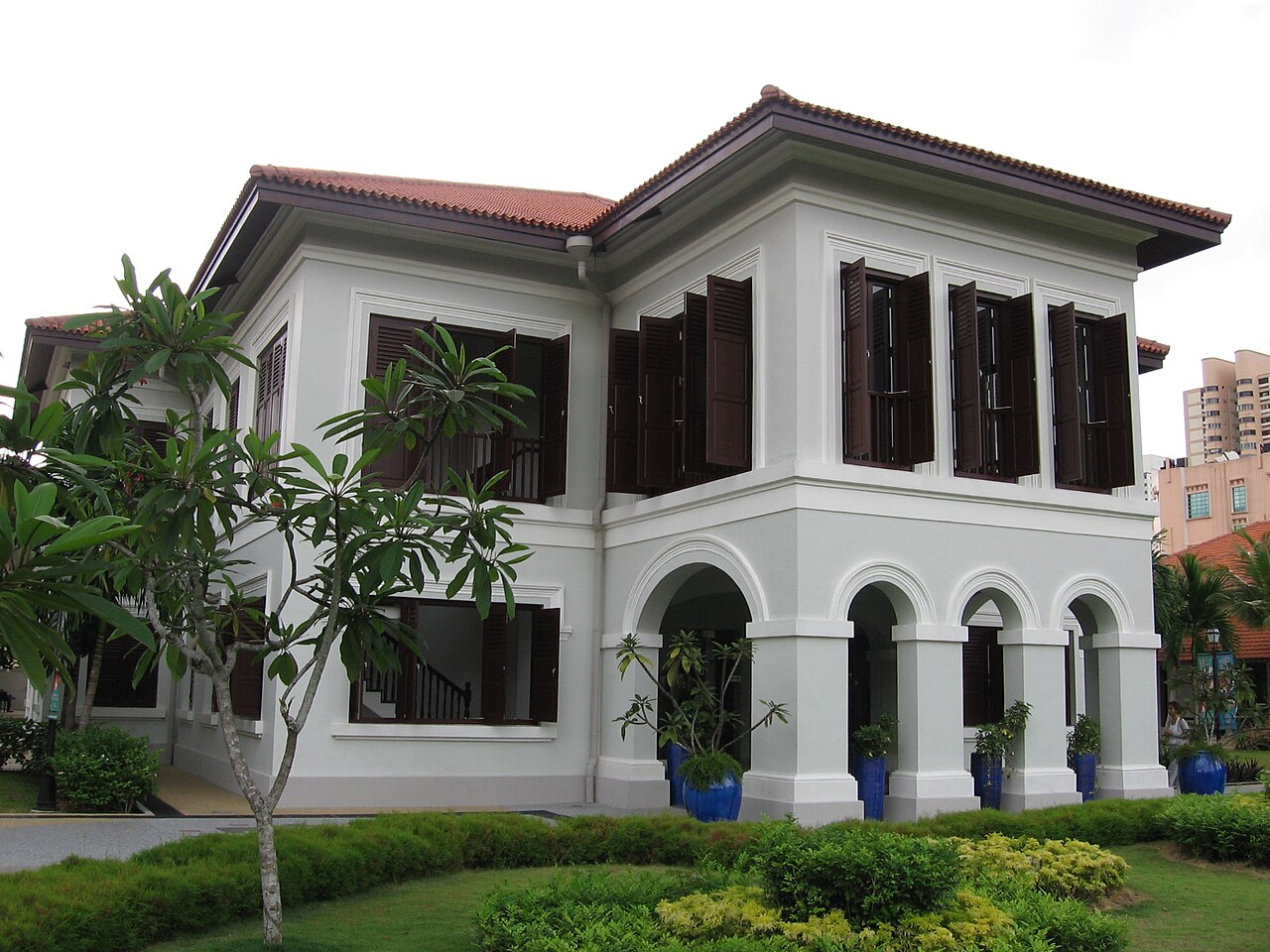
Istana Kampong Glam (Malay for "Kampong Glam Palace"; Jawi: ايستان کامڤوڠ ڬلم), also Istana Kampong Gelam, is a former Malay palace in Singapore. It is located near Masjid Sultan in Kampong Glam. The palace and compounds were refurbished into the Malay Heritage Centre in 2004. The palace was gazetted as a national monument on the eve of Singapore's Golden Jubilee, on 6 August 2015.
The original Istana Kampong Glam was built by Sultan Hussein Shah of Johor in 1819 on land of about 23 hectares (57 acres) in Kampong Glam that had been given to him by the British East India Company. It is believed to have been a wooden structure in the area to the east of Beach Road. When it was completed, it occupied an area twice the size of the present compound, which was reduced in 1824 for the construction of North Bridge Road. The Sultan lived there until he moved to Malacca in 1834.
The concrete structure that exists today was commissioned by Sultan Hussein's eldest son, Sultan Ali Iskandar Shah of Johor-Riau in 1835. It was built on the site of the original building between 1836 and 1843. The new two-storey palace is believed to have been designed by colonial architect George Drumgoole Coleman as some of its architectural features are similar to those of other buildings Coleman designed, although there is no definitive evidence that it was designed by him. Its design is a combination of the Palladian style, which was then popular in England, with traditional Malay motifs. The extensive compound of the Istana was enclosed by a perimeter wall, and small kampong-style houses were built around it for the Sultan's kin, servants and artisans.
After the completion of the Istana in 1843, Tengku Alam, Sultan Ali's eldest son, lived in it until his death in 1891. Leases of portions of the land on which the palace stood had been granted by Sultan Ali, and Tengku Alam continued to collect rents and supported the members of his father's family according to Malay custom. After his death he was buried in the royal grave at the nearby Sultan Mosque.
In 2026, the discovery of a stencilled sign and an 1891 newspaper article hints that the rebuilding of the Istana might only have been completed in 1890, a year before Tengku Alam's passing. Further testing of the building's age is pending.
Text adapted from “Istana Kampong Glam” on Wikipedia, CC BY-SA 4.0.
Istana Kampong Glam ranks #4,123 of 9,035 worldwide in the atlas's castle fame ranking, and #3 of the 3 mapped in Singapore. Founded c. 1836, it is older than 9% of the atlas's dated landmarks, one of 705 atlas entries founded in the 19th century. Its Wikipedia articles were opened 1,064 times in the last 60 days, more than 52% of the atlas. 3 more atlas landmarks stand within 25 km. See how Singapore compares in the castle statistics.
View on the interactive castle map →