Ruin
Kikuchi Castle
🇯🇵 Japan · 7th century
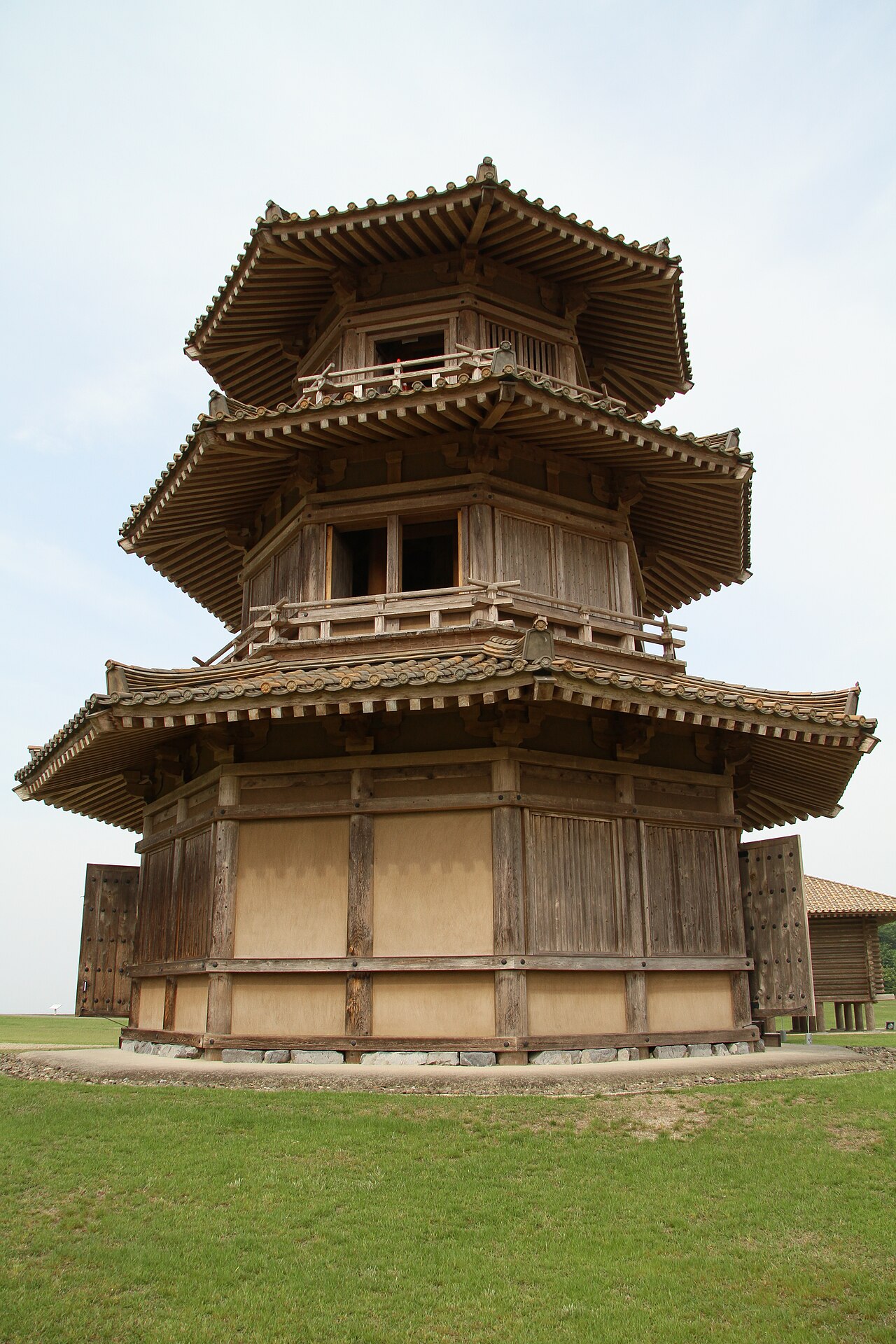
Kikuchi Castle (鞠智城, Kikuchi-jo) was an ancient castle (also known as a Korean-style fortresses in Japan (朝鮮式山城, Chōsen-shiki yamajiro) in the city of Kikuchi, Kumamoto Prefecture Japan. Its ruins have been protected as a National Historic Site since 2004.
After the defeat of the combined Baekje and Yamato Japan forces, at the hands of the Silla and Tang China alliance at the Battle of Hakusukinoe in 663, the Yamato court feared an invasion from either or both Tang or Silla. In response, a huge network of shore fortifications was constructed throughout the rest of the 600s, often with the assistance of Baekje engineers, generals and artisans. Unaware of the outbreak of the Silla-Tang War (670–676), the Japanese would continue to build fortifications until 701, even after finding out that Silla was no longer friendly with Tang. The name "kōgoishi" means "stones of divine protection," a name given them by the Meiji period archaeologist Tsuboi Shōgorō, who conjectured that they served as spiritual or practical protection for sacred sites.
Scholars after Tsuboi determined that the structures are most likely the remains of practical, military fortifications, and were unlikely to have significant spiritual connections, although much remains unknown about these structures and there is very little contemporary documentary evidence.
Kikuchi Castle first appears in historical records in an entry in the Shoku Nihongi dated from the second year of Emperor Mommu's reign (698), which states that the Dazaifu Government Office repaired Ōno Castle, Kii Castle and Kikuchi Castle; its actual date of construction remains unknown. Archaeological excavations indicate that it existed for at least a 300 year period, from the late 7th century to the mid-10th century. Therefore, it is believed to have been built at about the same time as Mizuki, Ōno, and Kii Castles. In addition, the remains of two octagonal buildings and the discovery of a bronze standing Bodhisattva statue suggest that refugees from Baekje were involved.
The fortifications are located on a plateau at an elevation of 90 to 171 meters. The circumference of the castle walls, including the natural cliffs, is about 3.5 kilometers, and the castle area is about 55 hectares. It is located about 62 kilometers south of Dazaifu in a straight line, making it the southernmost ancient mountain castle.
Text adapted from “Kikuchi Castle” on Wikipedia, CC BY-SA 4.0.
Kikuchi Castle ranks #4,892 of 8,134 worldwide in the atlas's castle fame ranking, and #238 of the 297 mapped in Japan. Founded c. 650, it is older than 96% of the atlas's dated landmarks — one of 31 atlas entries founded in the 7th century. Its Wikipedia articles were opened 1,378 times in the last 60 days, more than 57% of the atlas. 1 more atlas landmarks stand within 25 km. The nearest day-trip guide is Kumamoto, 23 km away. It is one of the 37 landmarks on the atlas's regional map of Kyushu. See how Japan compares in the castle statistics.
View on the interactive castle map →Frequently asked questions
Where is Kikuchi Castle?
Kikuchi Castle stands in Japan, at 33.00128°, 130.78883°.
When was Kikuchi Castle built?
The atlas dates its founding to c. 650. Earlier structures may have stood on the site; this is the earliest documented founding year.
How famous is Kikuchi Castle?
In this atlas's fame ranking: #4,892 of 8,134 worldwide, and #238 in Japan. Fame here combines how many Wikipedia language editions cover a landmark with how many people read them.
What is the nearest castle to Kikuchi Castle?
Kumamoto Castle, about 23 km away.
More castles in Japan
- Kunohe Castle Japan
- Kozukue Castle Japan · 15th century
- Ishida Castle Japan · 19th century
- Usuki Castle Japan · 16th century
More ruins
- Arikoyama Castle Japan · 16th century
- Kuniyoshi Castle Japan · 16th century
- Akagi Castle Japan · 16th century
- Hamada Castle Japan · 17th century