Ruin
Tsunomure Castle
🇯🇵 Japan · 13th century
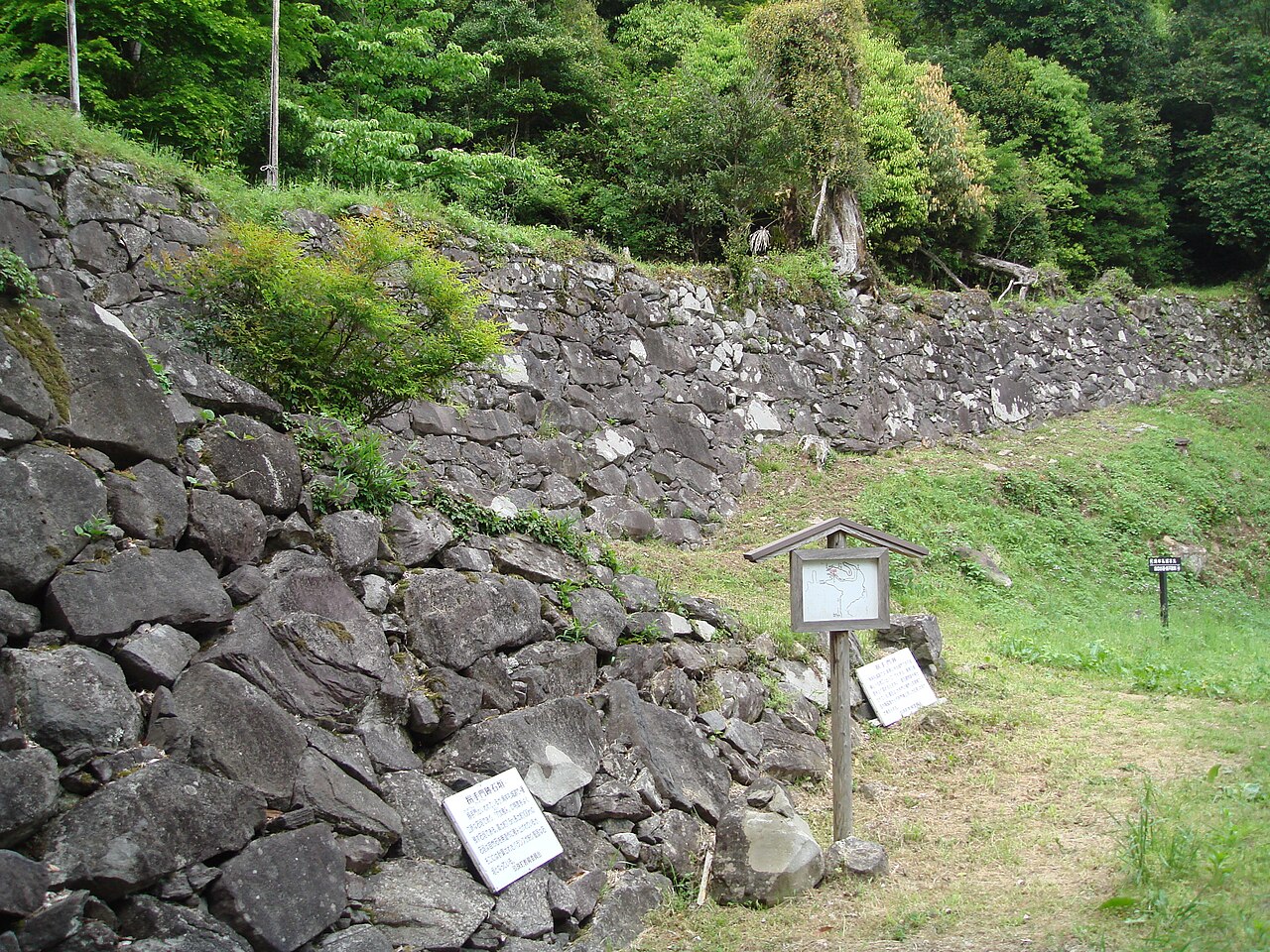
Tsunomure Castle (角牟礼城, Tsunomure-jō) was a yamajiro-style Japanese castle located in the town of Kusu, Ōita Prefecture, Japan. Its ruins have been protected as a National Historic Site since 2005. It is on the list "Continued 100 Fine Castles of Japan".
The Kusu Basin had been ruled by local warlords since the Heian period, and the 200-meter horn-shaped Mount Tsunomure dominated a strategic point for transportation between Bungo Province and Buzen Province, Mori Tomomichi is said to have built a fortification on this mountain during the Kōan era (1278-1288); however, the first time the castle can be confirmed in historical documentation is in 1475. Later, during the Sengoku period. it was reinforced due to the conflict between the Ōuchi clan in Buzen and the Ōtomo clan in Bungo. During the invasion of Bungo by Shimazu Yoshihiro in 1586, the castle was besieged by the Shimazu army but did not fall, and became famous as an impregnable castle.
However, when Ōtomo Yoshimune was dispossessed by Toyotomi Hideyoshi and exiled, his retainers suffered the same fate and Tsunomure Castle was also confiscated. Hideyoshi assigned the case to his old retainer Mori Takamasa. He constructed Hikuma Castle in Hita as his main stronghold and kept Tsunomure Castle as a secondary fortification, and gradually modernized its fortifications. The castle consisted roughly of four layers of enclosures. The central area was an irregular polygon-shaped area 50 meter long, with its north slope is protected by a stone wall. This wall has now collapsed, but it was originally 20 meters long and ten meters high. The total size of the castle was about 200 meter long and 100 meter wide.
Despite his dislike for Ishida Mitsunari, Mori Takamasa initially remained loyal to the Western Army and led his forces at the Siege of Tanabe in 1600. He defected to the Eastern Army shortly after the Battle of Sekigahara at the persuasion of Tōdō Takatora, and through his intercession was relocated by Tokugawa Ieyasu to the 20,000 koku holding of Saiki Domain in Bungo Province in 1601. This meant that he had to surrender both the Kusu and Hita areas. The Kusu area was given to the Kurushima clan, who were of a branch of the Murakami pirates who dominated the Seto Inland Sea during the Sengoku period.
Text adapted from “Tsunomure Castle” on Wikipedia, CC BY-SA 4.0.
Tsunomure Castle ranks #6,499 of 8,134 worldwide in the atlas's castle fame ranking, and #292 of the 297 mapped in Japan. Founded c. 1280, it is older than 67% of the atlas's dated landmarks — one of 861 atlas entries founded in the 13th century. The nearest day-trip guide is Kumamoto, 70 km away. It is one of the 37 landmarks on the atlas's regional map of Kyushu. See how Japan compares in the castle statistics.
View on the interactive castle map →Frequently asked questions
Where is Tsunomure Castle?
Tsunomure Castle stands in Japan, at 33.30936°, 131.1545°.
When was Tsunomure Castle built?
The atlas dates its founding to c. 1280. Earlier structures may have stood on the site; this is the earliest documented founding year.
How famous is Tsunomure Castle?
In this atlas's fame ranking: #6,499 of 8,134 worldwide, and #292 in Japan. Fame here combines how many Wikipedia language editions cover a landmark with how many people read them.
What is the nearest castle to Tsunomure Castle?
Nakatsu Castle, about 33 km away.
More castles in Japan
- Samegao Castle Japan
- Torigoe Castle Japan · 16th century
- Namioka Castle Japan · 14th century
- Furumiya Castle Japan · 16th century
More ruins
- Liman Castle Turkey
- Fort Elize Carthago Ghana · 18th century
- Petra Mlakou Castle Algeria
- Fortress of São João Brazil