 Czech Republic · 15th century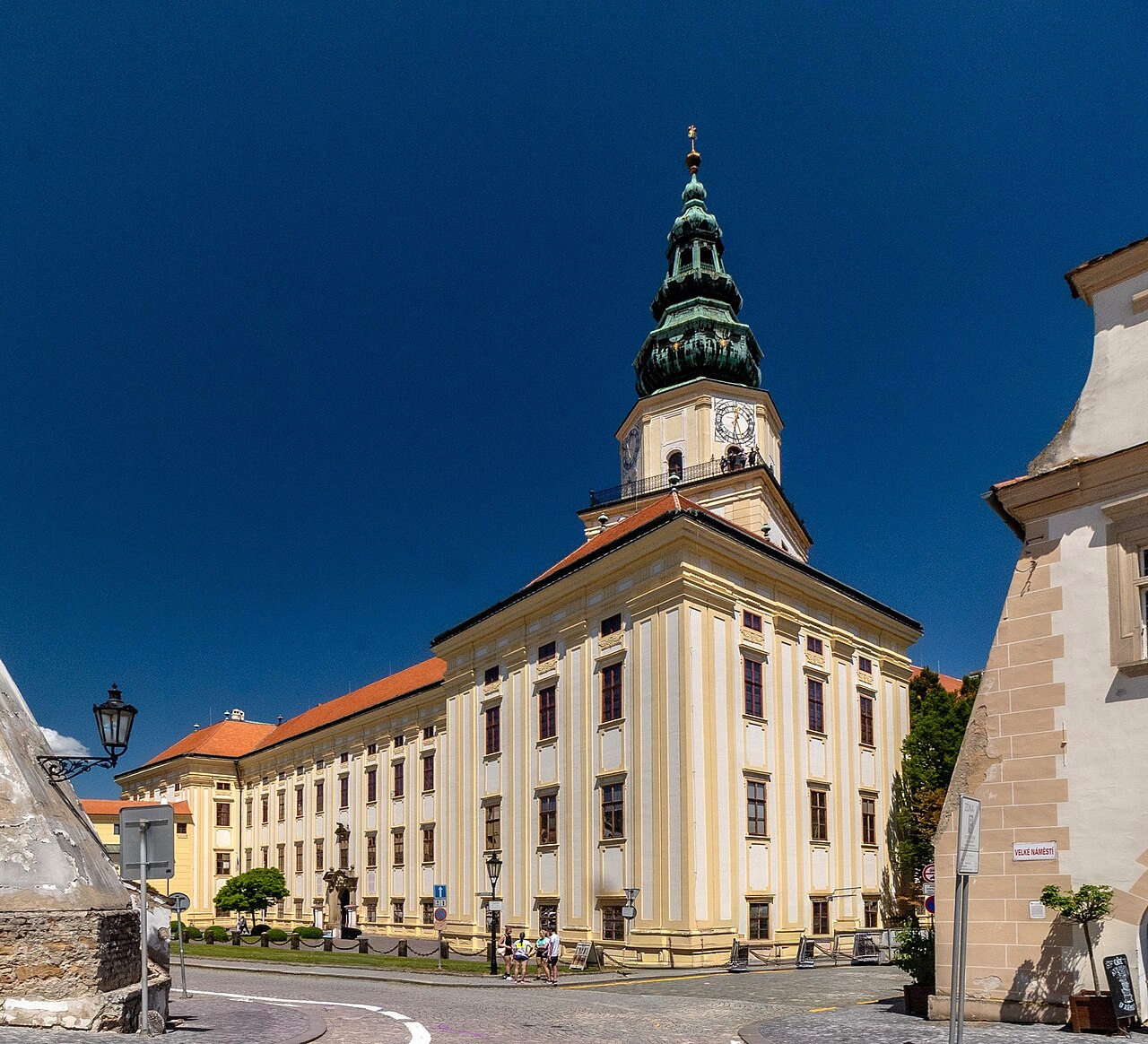
Kroměříž Castle (Czech: Zámek Kroměříž or Arcibiskupský zámek, German: Schloss Kremsier) is a castle in Kroměříž in the Czech Republic. It used to be the principal residence of the bishops and (from 1777) archbishops of Olomouc. UNESCO listed the gardens and castle as a World Heritage Site in 1998 because of its exceptionally well-preserved and outstanding Baroque gardens.
The town was owned by the bishops from the 13th century. During the Hussite wars they lost control, and regained it only in the 1470s. This prompted the replacement of the castle with a more comfortable residence by bishop Stanislav I Thurzo in 1500. The building was in the late Gothic style, with a modicum of Renaissance detail. During the Thirty Years' War, the castle was sacked by the Swedish army (1643).
It was not until 1664 that a bishop from the powerful Lichtenstein-Kastelkorn family charged architect Filiberto Lucchese with renovating the palace in a Baroque style. The chief monument of Lucchese's work in Kroměříž is the Pleasure Garden in front of the castle. Upon Lucchese's death in 1666, Giovanni Pietro Tencalla completed his work on the formal garden and had the palace rebuilt in a style reminiscent of the Turinese school to which he belonged.
After the castle was gutted by a major fire in March 1752, Bishop Hamilton commissioned two leading imperial artists, Franz Anton Maulbertsch and Josef Stern to decorate the halls of the palace with their works. In addition to their paintings, the palace still houses an art collection, generally considered the second finest in the country, which includes Titian's last mythological painting, The Flaying of Marsyas. The largest part of the collection was acquired by Bishop Karel in Cologne in 1673. The palace also contains an outstanding musical archive and a library of 33,000 volumes.
The castle and its grounds were nominated for the World Heritage List in 1998. As the nomination dossier explains, "the castle is a good but not outstanding example of a type of aristocratic or princely residence that has survived widely in Europe. The Pleasure Garden, by contrast, is a very rare and largely intact example of a Baroque garden".
Text adapted from “Kroměříž Castle” on Wikipedia, CC BY-SA 4.0.
Kroměříž Castle ranks #900 of 9,079 worldwide in the atlas's castle fame ranking, and #16 of the 243 mapped in Czech Republic. Founded 1497, it is older than 44% of the atlas's dated landmarks — one of 554 atlas entries founded in the 15th century. Its Wikipedia articles were opened 3,234 times in the last 60 days, more than 79% of the atlas. Wikidata records about 65,000 visitors in 2022. 3 more atlas landmarks stand within 25 km. The nearest day-trip guide is Olomouc, 34 km away. See how Czech Republic compares in the castle statistics.
View on the interactive castle map →