Castle
Kuroi Castle
🇯🇵 Japan
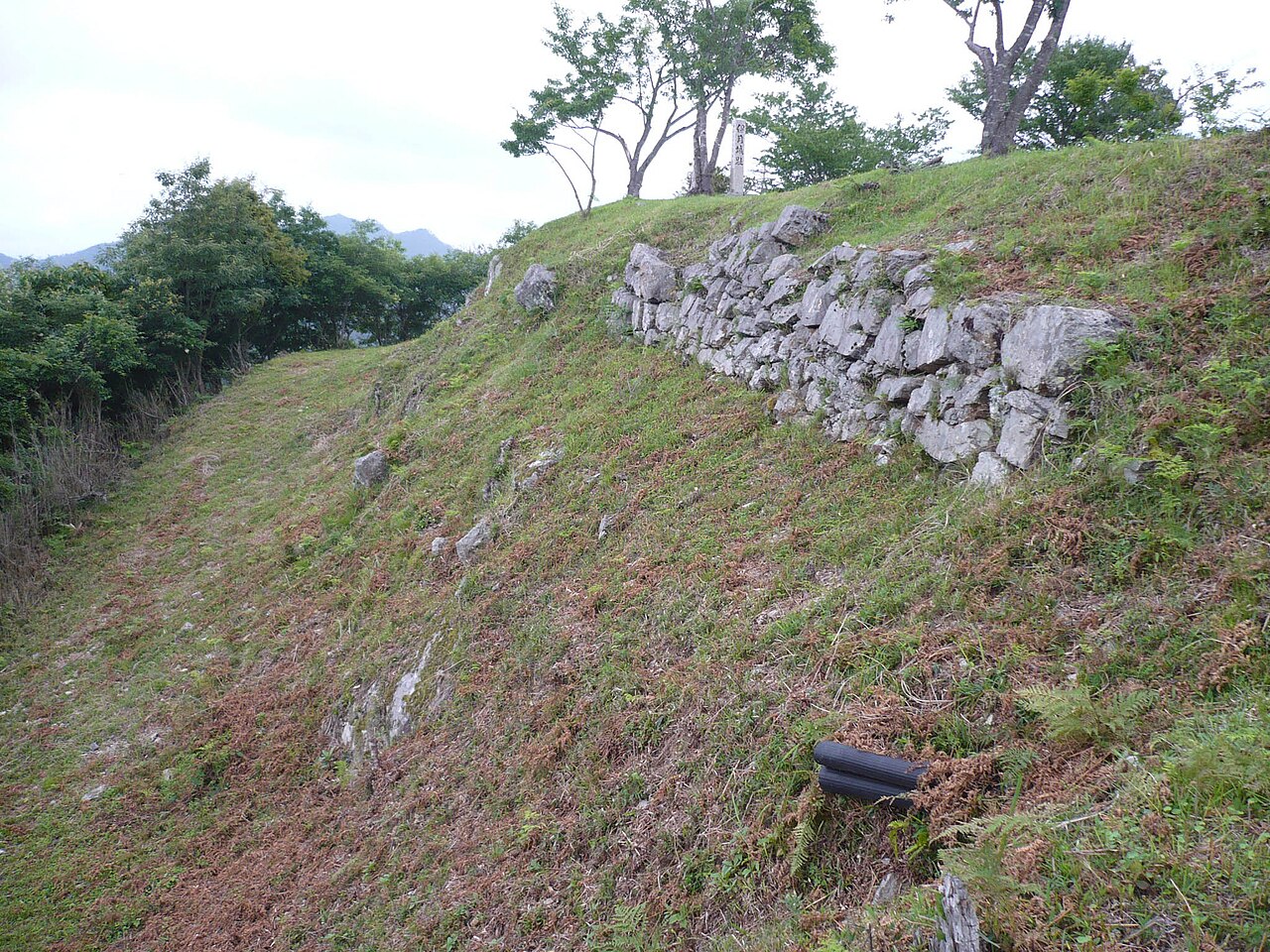
Kuroi Castle (黒井城, Kuroi-jō) was a Sengoku period Japanese castle located in what is now the Kasuga-cho neighborhood of the city of Tamba Hyōgo Prefecture, Japan. It was also called Hogetsu Castle (保月城, Hogetsu-jō) or Hōzuki Castle (保築城, Hōzuki-jō). Famous as the birthplace of Lady Kasuga, the wet nurse of Tokugawa Iemitsu, it ruins have been protected as a National Historic Site since 1989.
Kuroi Castle is located on a 350-meter mountain at the middle of Hikami basin, protected on three sides by rivers. the valley is a cul-de-sac to the northwest of the Sasayama basin, which contained Sasayama Castle. Spreading across three ridges of the mountain, the castle was one of the largest in Tanba Province, along with Yakami Castle and Yagi Castle. A fortification was originally built in this location in the early Muromachi period by the Akamatsu clan, who ruled the area for around 120 years. It then came into the hands of the Ogino clan, a cadet branch of the Akai clan, who in turn were a cadet branch of the Inoue clan, originally from Shinano Province.
Originally a minor clan, in the Sengoku period, as the power of the Hosokawa clan, the shugo of Tajima province and the Naito clan, the deputy shugo both waned due to internal conflicts and the aftermaths of the Onin War, the Akai clan expanded rapidly under its aggressive new chieftain, Akai Naomasa. Known as the "Red Demon" of Tanba, Akai Naomasa seized Kuroi Castle in 1554 by killing his grand-uncle, and over the next ten years expanded his holdings through marriage alliances, open warfare and stratagem to control the western half of the province. Using Kuroi Castle as his stronghold, he substantially expanded on its defenses. In 1570, Akai Naomasa dove back an invasion from the Yamana clan, shugo of Tajima Province, and in his counterattack invaded Tajima and seized Takeda Castle and Konosumiyama Castle.
The Yamane clan had pledge fealty to Oda Nobunaga, and these events made Nobunaga wary of the aggressiveness of the Akai clan. However, Nobunaga was tied down in conflict with the Takeda clan of Kai Province and it was not until his victory at the Battle of Nagashino in 1575 that he was able to turn his attention toTanba Province. Nobunaga ordered his general, Akechi Mitsuhide to take control of the province.
Text adapted from “Kuroi Castle” on Wikipedia, CC BY-SA 4.0.
Kuroi Castle ranks #4,243 of 8,134 worldwide in the atlas's castle fame ranking, and #212 of the 297 mapped in Japan. Its Wikipedia articles were opened 2,425 times in the last 60 days, more than 71% of the atlas. 3 more atlas landmarks stand within 25 km. The nearest day-trip guide is Kobe, 55 km away. It is one of the 71 landmarks on the atlas's regional map of Kansai. See how Japan compares in the castle statistics.
View on the interactive castle map →Frequently asked questions
Where is Kuroi Castle?
Kuroi Castle stands in Japan, at 35.17917°, 135.10406°.
How famous is Kuroi Castle?
In this atlas's fame ranking: #4,243 of 8,134 worldwide, and #212 in Japan. Fame here combines how many Wikipedia language editions cover a landmark with how many people read them.
What is the nearest castle to Kuroi Castle?
Fukuchiyama Castle, about 13 km away.
More castles in Japan
- Arikoyama Castle Japan · 16th century
- Kuniyoshi Castle Japan · 16th century
- Akagi Castle Japan · 16th century
- Hamada Castle Japan · 17th century
More castles
- Shingū Castle Japan · 17th century
- Tsurugaoka Castle Japan · 13th century
- Castle of Atienza Spain
- Konradsburg Germany · 11th century