Fortress
Ljubuški Fortress
🇧🇦 Bosnia and Herzegovina
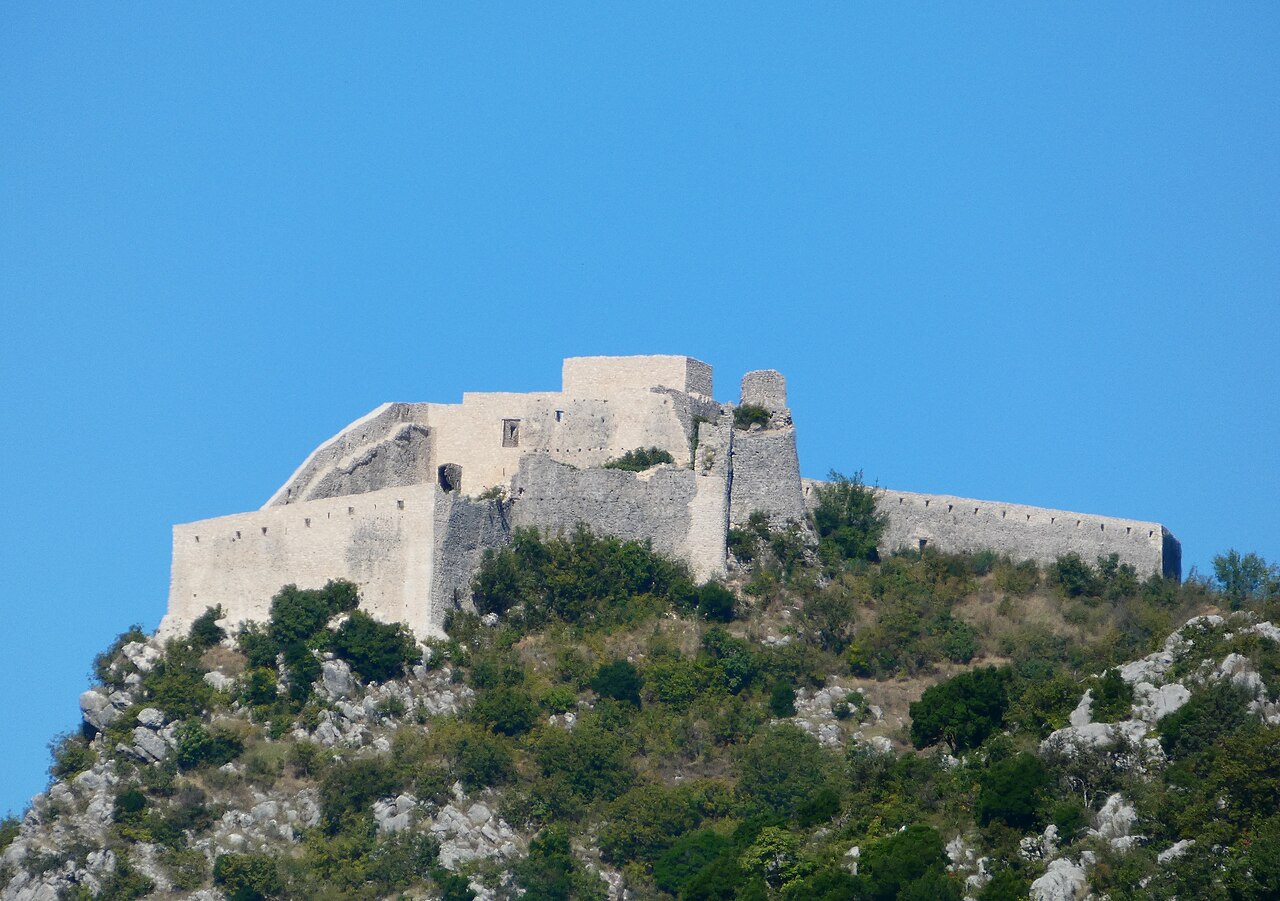
Ljubuški Fortress, also known as Herceg Stjepan's Fortress (Croatian: Trvđava Herceg-Stjepana) or the Old town of Ljubuški (Croatian: Stari grad Ljubuški) is a medieval fortress in the municipality of Ljubuški, Bosnia and Herzegovina.
The fortress of Herceg Stjepan Vukčić is located on the prominent top of the karstic rocky ridge of the Buturovice hill, which is located at the eastern end of Ljubuško polje. It was built on a solid, rocky position, at 396 meters a.s.l. In the period after the Bosnian War between 1992 and 1996, a macadam road to the foothills was built.
In the Middle Ages, Ljubuški was part of the župa of Večenike (Večerić). The fortress belonged to the Herzog of Saint Sava and Grand Duke of Bosnia, Stjepan Vukčić Kosača, and is mentioned in 1452 in connection with the battles between him and his sons, Knez Vladislav and Knez Vlatko. In the same year, Knez Vladislav sided with the Republic of Dubrovnik in the war against his father. Herceg Stjepan eventually took refuge in the fortress in Ljubuški. That year, Vladislav tried to conquer the town of Ljubuški from his father but failed. It was not until 1454 that it was again mentioned in the charter of the Aragonese king Alfonso V as civitas Lublano.
It is strange that it is not mentioned in the charters of 1444 and 1448, since all three of these charters list property within the Duke's territory, and it is assumed that it was built somewhere in that period, although it is possible that it was built in 1452.
In 1463, the Ottomans conquered Ljubuški for the first time, but held it only for a month, between June and July, but had to retreat due to insufficient supplies, and Knez Vlatko Hercegović quickly reclaimed the city to his rule. Between 1468 and 1477, the Ottomans definitively conquered Ljubuški. As early as 1477, it was a border fortress with a strong garrison which belonged to the Drina kadiluk. In the contract between the Ottoman Empire and Hungary in 1503, Ljubuški is mentioned as one of the border towns that remains under Ottoman rule. In the vakufnama of Nesuh-age Vučjaković written in February 1565, the city is mentioned as a k'ala (fortress). Nesuh-aga built a mosque in the city. It was mentioned as an independent kadiluk in 1633. In the 18th century, there was a nahiyah Ljubuški in the kadiluk of the same name, and the captaincy of the same name was also founded.
Text adapted from “Ljubuški Fortress” on Wikipedia, CC BY-SA 4.0.
Ljubuški Fortress ranks #5,811 of 8,764 worldwide in the atlas's castle fame ranking, and #35 of the 40 mapped in Bosnia and Herzegovina. 2 more atlas landmarks stand within 25 km. The nearest day-trip guide is Split, 97 km away. See how Bosnia and Herzegovina compares in the castle statistics.
View on the interactive castle map →Frequently asked questions
Where is Ljubuški Fortress?
Ljubuški Fortress stands in Bosnia and Herzegovina, at 43.20114°, 17.55791°.
How famous is Ljubuški Fortress?
In this atlas's fame ranking: #5,811 of 8,764 worldwide, and #35 in Bosnia and Herzegovina. Fame here combines how many Wikipedia language editions cover a landmark with how many people read them.
What is the nearest castle to Ljubuški Fortress?
Počitelj Citadel, about 16 km away.
More castles in Bosnia and Herzegovina
- Old Dubrovnik Fort Bosnia and Herzegovina · 13th century
- Kastel Fortress Bosnia and Herzegovina
- Ostrožac Castle Bosnia and Herzegovina · 16th century
- Bobovac Bosnia and Herzegovina · 14th century
More fortresses
- Fort Edward Canada · 18th century
- Fort Bourguignon Croatia · 19th century
- Fortress Gripe Croatia · 17th century
- Kaštilac Croatia · 16th century