 Japan · 15th century
Miki Castle ranks #2,103 of 9,040 worldwide in the atlas's castle fame ranking, and #129 of the 295 mapped in Japan. Founded 1492, it is older than 44% of the atlas's dated landmarks, one of 556 atlas entries founded in the 15th century. Its Wikipedia articles were opened 23,006 times in the last 60 days, more than 98% of the atlas. 1 more atlas landmarks stand within 25 km. The nearest day-trip guide is Kobe, 23 km away. It is one of the 69 landmarks on the atlas's regional map of Kansai. See how Japan compares in the castle statistics.
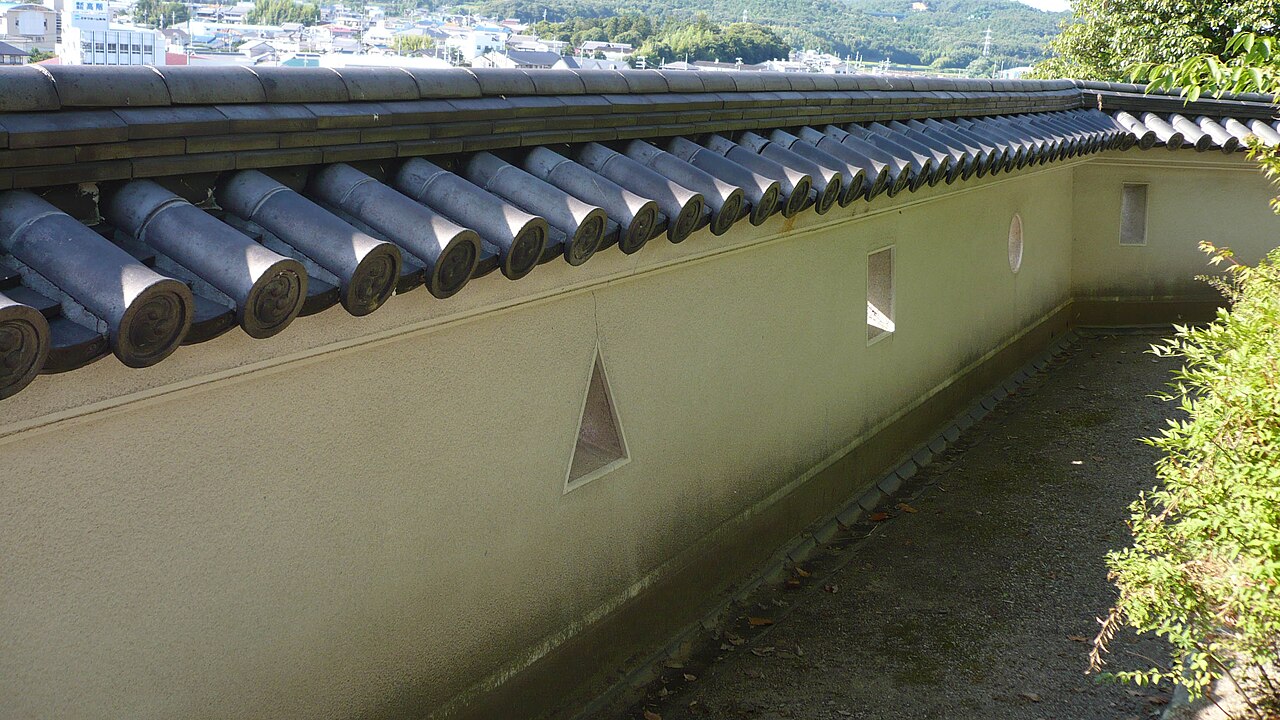
Miki Castle (三木城,, Miki-jō) was a Japanese castle in Miki, Hyōgo Prefecture, Japan. It was built by Bessho Nagaharu in the Sengoku period. Today some ruins and a partial reconstruction remain at the castle site, and its ruins have been protected as a National Historic Site, since 2013.
Miki Castle was located on a steep cliff facing the Minogawa River, a tributary of Kakogawa Rver, in the center of Miki city. This area was the center of eastern half of Harima Province and is separated from Kobe by the Rokko Mountains. Because of the flow of traffic and commerce made possible by the river and roads, Miki city considered as an important transportation hub and center of industry at that time. The castle was almost entirely surrounded by natural barriers such as mountains, valleys and cliffs, so only a portion to the southeast of the castle was exposed.
A fortification was first built in this location by Bessho Nagaharu in around 1492 to be the main stronghold of the clan. The Bessho were a cadet branch of the powerful Akamatsu clan, and controlled parts of Settsu and Harima on behalf of the Akamatsu. However the Akamatsu became a political threat to the Muromachi shogunate and Shogun Ashikaga Yoshinori attempted to deprive the clan of much of its territory to increase his own authority. Akamatsu Mitsusuke assassinated Ashikaga Yoshinori at a banquet in Kyoto, but his revolt was ultimately unsuccessful and the clan lost much of its territory. During the Ōnin War, as much of the former Akamatsu territory was given to the Yamana clan, but after much conflict the Akamatsu were able to retake Harima, and appointed Bessho clan as their deputy governor for the eastern half of Harima.
However, the much weakened Akamatsu, facing further threaten from the west and north, and riven by internal discord, were unable to maintain control over the Bessho clan, who soon emerged as an independent power in the region. Another former Akamatsu retainer, the Uragami clan, likewise became a power in western Harima, and attacked Miki Castle in 1530, temporarily expelling Bessho Nariharu (the grandson of Bessho Nagaharu). Later that year, Bessho Nariharu successfully fended off attacks from the Amago clan from the north. Around 1550, the Bessho faced a new threat from the east. The Miyoshi clan, who had grown dominate the Kinai region invaded Harima.
Text adapted from “Miki Castle” on Wikipedia, CC BY-SA 4.0.
View on the interactive castle map →