 Spain · 12th century
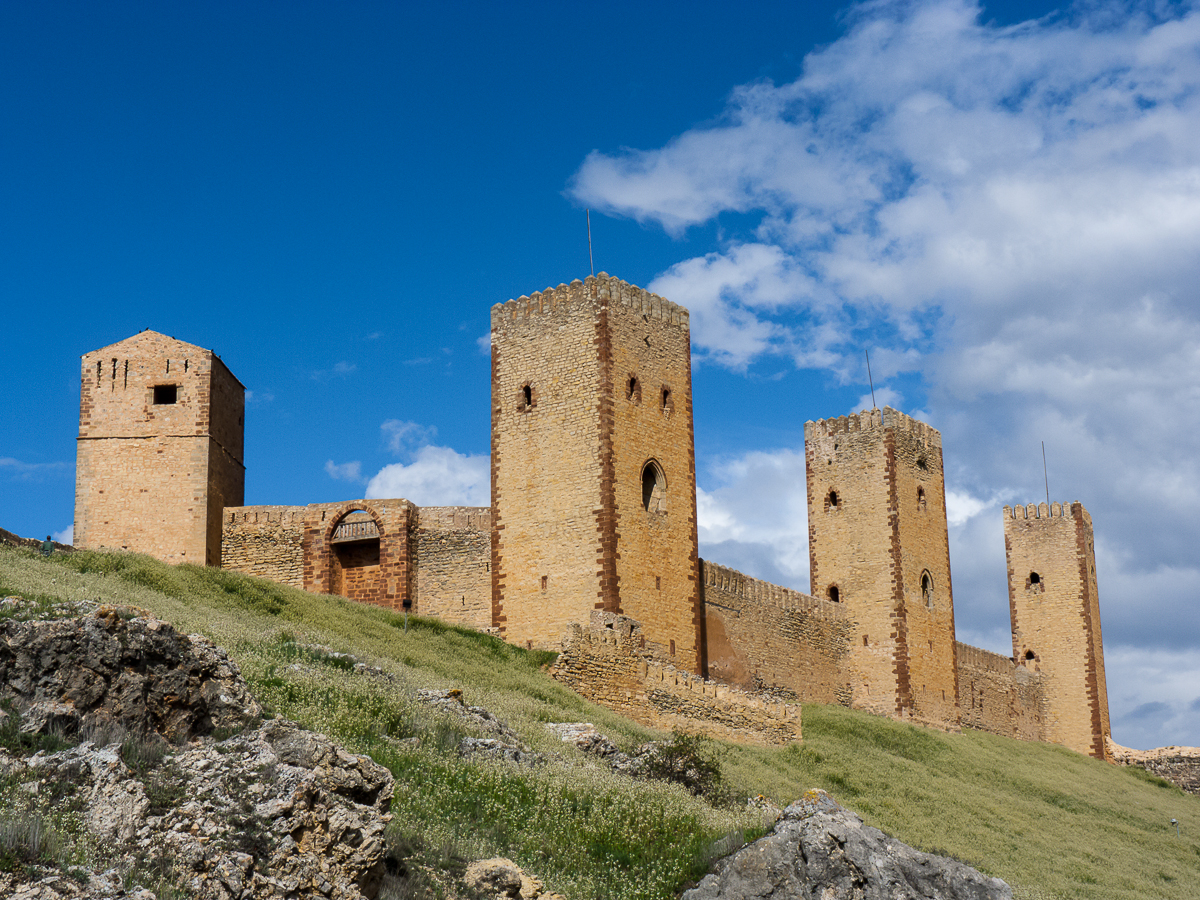
The Castle of Molina de Aragón (also called alcázar or alcazaba) is a fortification in Molina de Aragón, Castile-La Mancha, Spain. It was declared Bien de Interés Cultural in 1931.
It is located on a hill commanding the surrounding valley, and is formed by an external line of walls with four gates and numerous towers, which defends the internal fortress. The latter has six towers, of which four are currently in good conditions. Originally, the line of towers included a village. It originated as a Moorish fortress (10th-11th century), built over a pre-existing Celtiberian castle. The fortress was used as residence of the lords of the taifa of Molina. El Cid resided here when he was exiled from Castile. In 1129 it was conquered from the Moors by Alfonso I of Aragon, who gave it the Lara family.
Text adapted from “Castle of Molina de Aragón” on Wikipedia, CC BY-SA 4.0.
Molina de Aragón Castle ranks #3,341 of 9,035 worldwide in the atlas's castle fame ranking, and #129 of the 606 mapped in Spain. Founded c. 1150, it is older than 80% of the atlas's dated landmarks, one of 763 atlas entries founded in the 12th century. Its Wikipedia articles were opened 1,049 times in the last 60 days, more than 52% of the atlas. 1 more atlas landmarks stand within 25 km. See how Spain compares in the castle statistics.
View on the interactive castle map →