 Spain · 17th century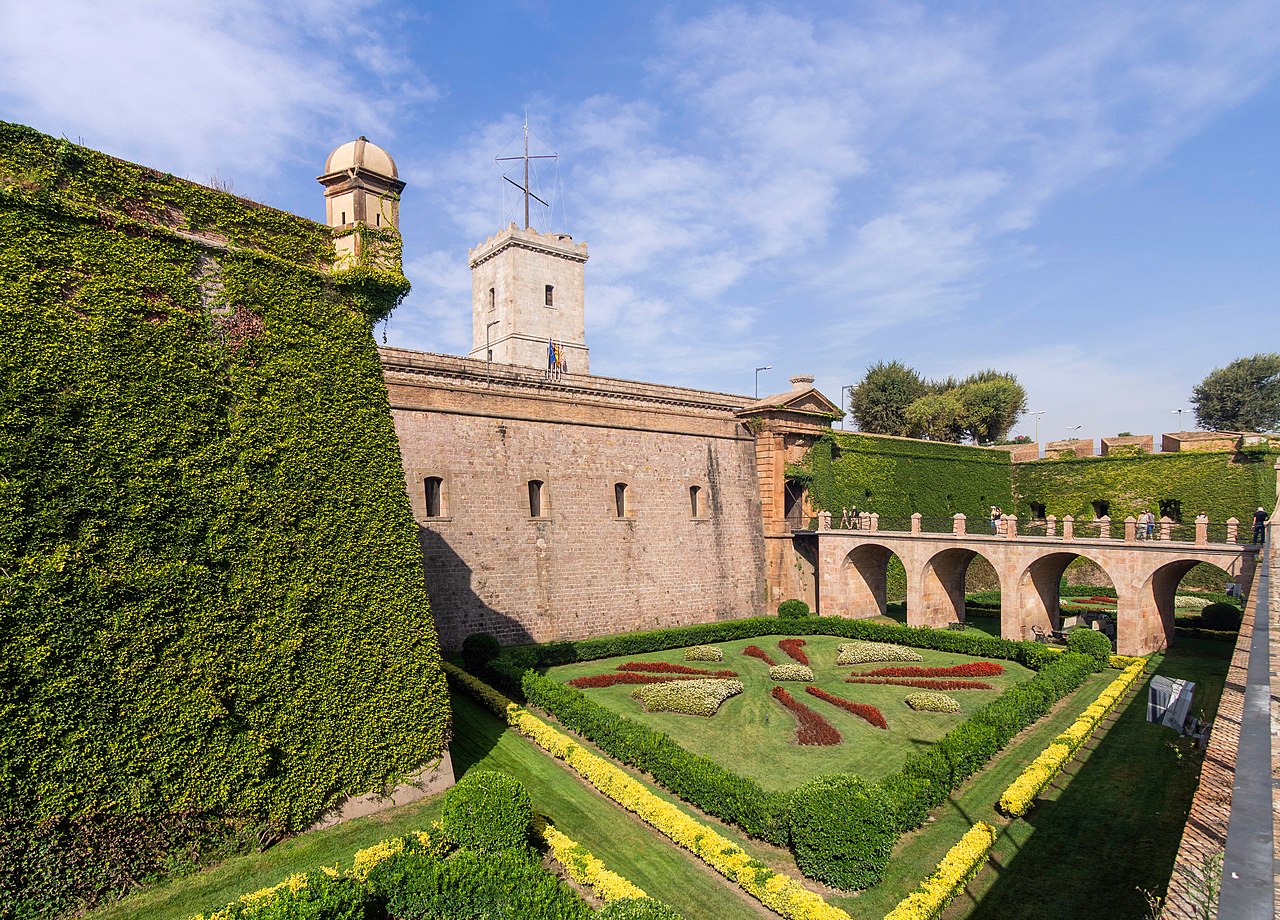
Montjuïc Castle (Catalan: Castell de Montjuïc, Spanish: Castillo de Montjuich) is an old military fortress, with roots dating back from 1640, built on top of Montjuïc hill in Barcelona, Catalonia, Spain. It currently serves as a Barcelona municipal facility.
The foundation stone for the basic fortification was laid out in 1640. A year later, in January 1641, the fort saw its first battle, during the Catalan Revolt when the Principality of Catalonia challenged Spain's authority. On orders from the King of Spain, Pedro Fajardo, heading an army of 26,000 men, proceeded to crush the revolt. The Spanish recaptured several cities, but they were defeated at the Battle of Montjuïc by Catalan, led by Francesc de Tamarit. At that battle, Colonel Shane O'Neill or known in Spain as Prince Juan O'Neill, died leading his regiment during the Battle of Montjuic near Barcelona, dying from a musket-ball wound to his chest near the town of Castelldefels. In his honor, the King of Spain granted the Colonel the death title of Viscount Montjuïc.
Fifty years later, in 1694, new bastions and battlements were erected and the fortress became a castle. In the Siege of Barcelona (1705) the fortress was captured by the British 6th Regiment of Foot led by Lt.-Col William Southwell, paving the way for the siege of Barcelona itself. Southwell was afterwards made Governor of the castle.
As an extraordinary engineer and with the rank of second lieutenant, Giovanni Antonio Medrano was assigned to the garrisons of Catalonia, Valencia and Murcia, specializing in the design of large territorial infrastructures and plants for the military defence, such as Montjuïc Castle in Barcelona which he drew up in 1730. With these new designs, the old fort was demolished in 1751 by the Spanish engineer and architect Juan Martin Cermeño, creating the current structure, still standing. The final shape of the castle took form during 1779 and 1799, when major construction works took place in order to improve the castle and accommodate the needs. It was also during this time that the castle was equipped with 120 cannons.
During the Napoleonic Wars, the French Army entered Barcelona, and, on orders from Napoleon, they also captured the castle without firing a shot as the troops guarding the castle were ordered not to fight the French.
Text adapted from “Montjuïc Castle” on Wikipedia, CC BY-SA 4.0.
Montjuïc Castle ranks #607 of 9,079 worldwide in the atlas's castle fame ranking, and #25 of the 607 mapped in Spain. Founded 1641, it is older than 27% of the atlas's dated landmarks — one of 721 atlas entries founded in the 17th century. Its Wikipedia articles were opened 13,789 times in the last 60 days, more than 96% of the atlas. 10 more atlas landmarks stand within 25 km. The nearest day-trip guide is Barcelona, 2 km away. See how Spain compares in the castle statistics.
View on the interactive castle map →