 Jordan · 12th century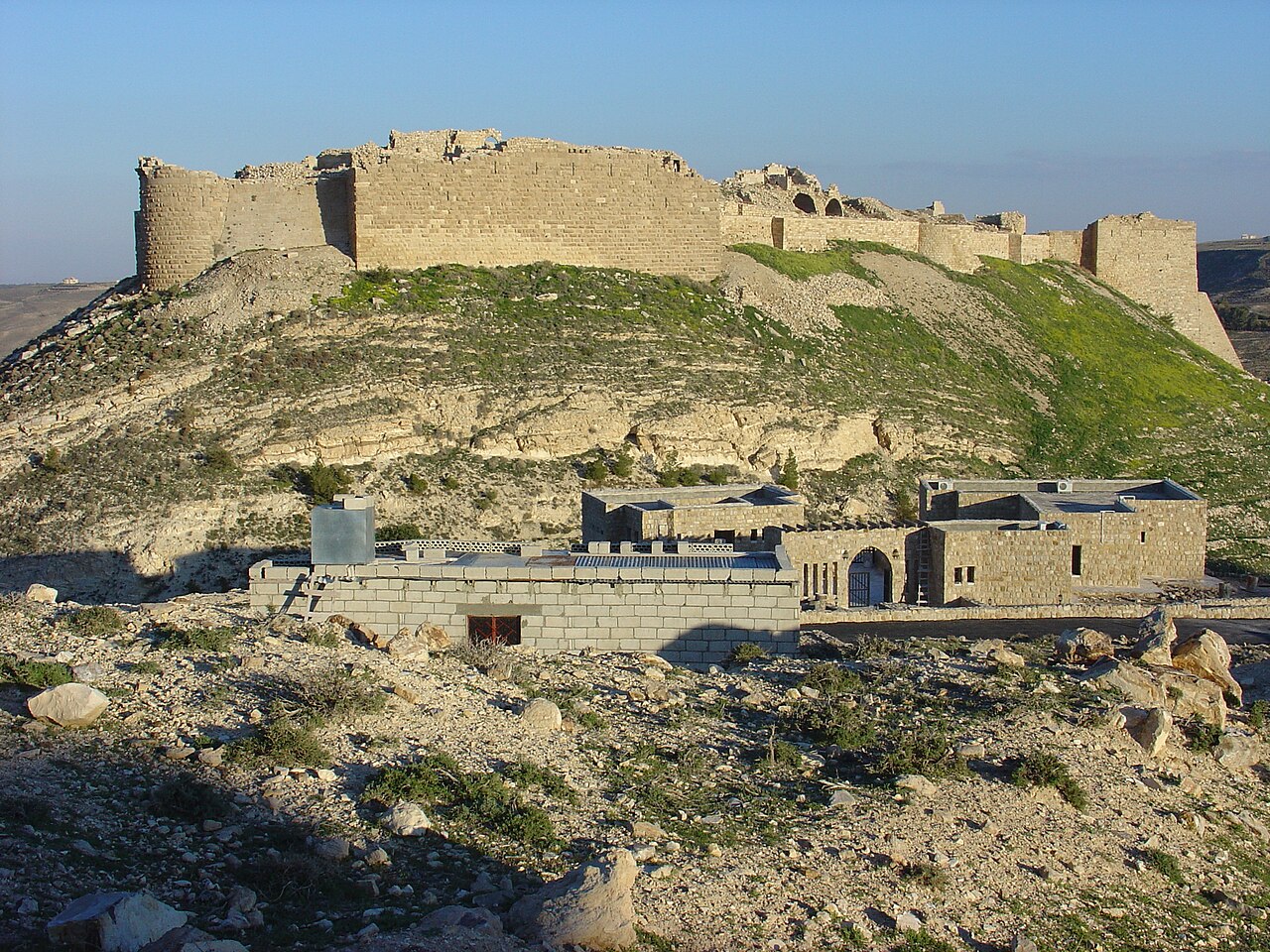
Montreal (Arabic: مونتريال; Latin: Mons Regalis, Mont Real), or Qal'at ash-Shawbak (قلعة الشوبك) in Arabic, is a castle built by the Crusaders and expanded by the Mamluks, nestled amid the mountains of Edom just east of the Arabah Valley, perched on the side of a rocky, conical mountain, looking out over fruit orchards below. The ruins are located next to the modern town of Shoubak in Jordan.
The Crusaders, who wrote their chronicles in Medieval Latin, Old French and Occitan, mentioned the castle as Castrum Saboach or Scobach, or as Mons Regalis, Mont Real, and Monreal. The second set of variants translate to 'Royal Castle' or 'King's Castle'.
The Arabic name is spelled variously as Shobak, Shawbak, Shaubak, Shubek, etc. The word castle or fortress translates in Arabic to qal'a.
As late as the end of the 20th century, the castle had never yet been fully excavated, but as of 2006 it was being investigated by an Italian archaeological team from the University of Florence.
The castle was built in 1115 by Baldwin I of Jerusalem during his expedition to the area when he captured Aqaba on the Red Sea in 1116. Originally called 'Krak de Montreal' or 'Mons Regalis', it was named in honor of the king's own contribution to its construction (Mont Royal). The castle is located on a round hilltop site that is separated from the rest of the plateau of Edom, which along with the Moab formed the core of Oultrejourdain. Despite appearance, the Edom plain was a relatively fertile location, which made the site, along with its strategic importance, highly desirable. The castle was strategically important due to the fact that it also dominated the main passage from Egypt to Syria.
This allowed whoever held the castle to tax not only traders, but also those who were on pilgrimages to Mecca and Medina. One of the major disadvantages of the site was the lack of a reliable source of water, an issue that the Crusaders encountered all over the Middle East. This problem was solved by the construction of a tunnel down the hill to two spring-fed cisterns. The tunnel allowed defenders to go and retrieve water without exposing themselves to any attackers.
It remained property of the royal family of the Kingdom of Jerusalem until 1142, when it became part of the Lordship of Oultrejordain.
Text adapted from “Montreal (castle)” on Wikipedia, CC BY-SA 4.0.
Montréal Castle ranks #717 of 9,079 worldwide in the atlas's castle fame ranking, and #4 of the 23 mapped in Jordan. Founded 1115, it is older than 85% of the atlas's dated landmarks — one of 756 atlas entries founded in the 12th century. Its Wikipedia articles were opened 4,760 times in the last 60 days, more than 86% of the atlas. 2 more atlas landmarks stand within 25 km. It is one of the 106 landmarks on the atlas's regional map of the Levant. See how Jordan compares in the castle statistics.
View on the interactive castle map →