 Poland · 14th century
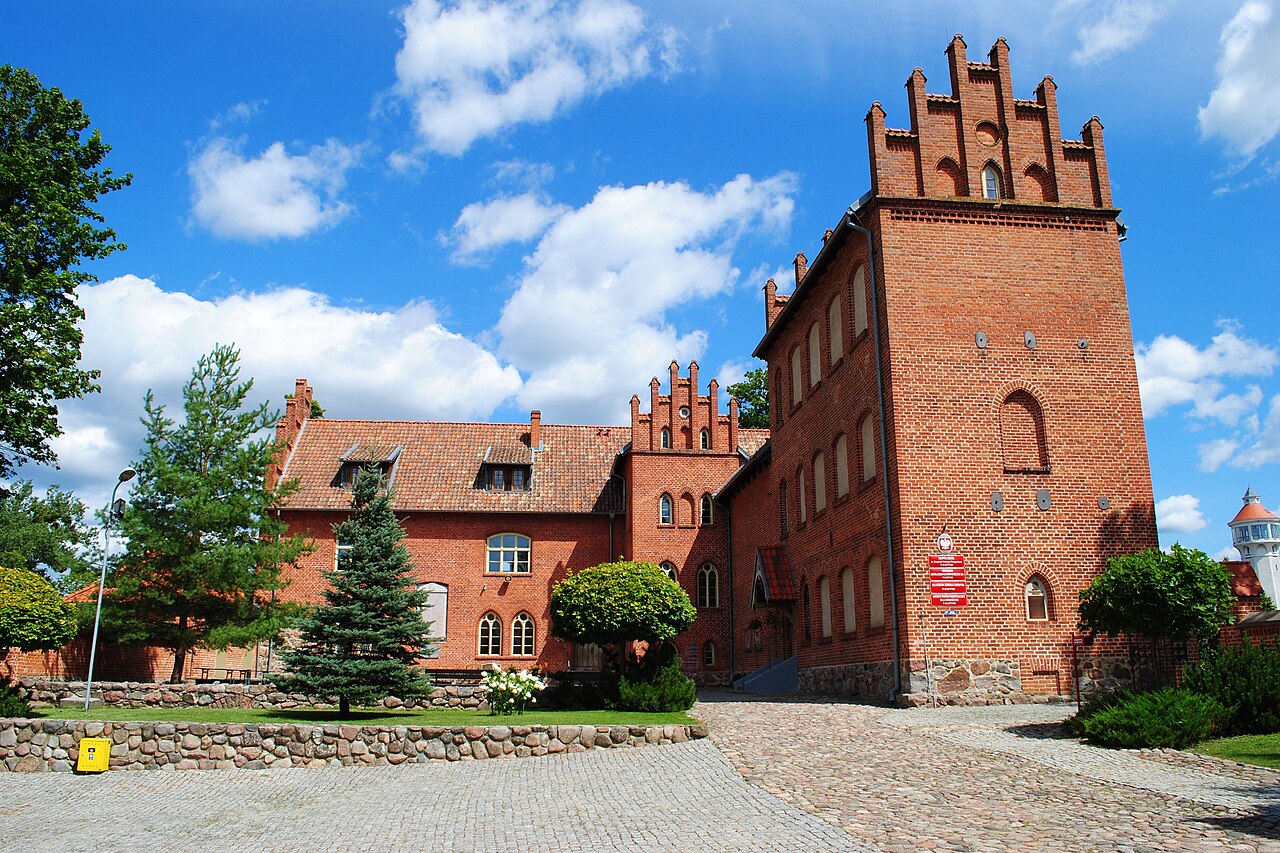
Olsztynek Castle ranks #6,486 of 9,040 worldwide in the atlas's castle fame ranking, and #247 of the 397 mapped in Poland. Founded 1350, it is older than 54% of the atlas's dated landmarks, one of 758 atlas entries founded in the 14th century. 2 more atlas landmarks stand within 25 km. It is one of the 25 landmarks on the atlas's regional map of Warmia and Masuria. See how Poland compares in the castle statistics.
The Teutonic castle in Olsztynek – a 14th-century building in Olsztynek, situated on a rise, on ulica Zamkowa.
It was built on the orders of the commander of Ostróda, Günther von Hohenstein, in 1349–1366 in the Gothic style, intended as the seat of a burgrave whose task was to collect tax dues and to control the trade route from south to north. Unlike other Teutonic castles, it was neither a monastery nor the seat of a commander. The castle was located on a site where a Prussian defensive stronghold had previously stood. Laid out on a quadrangular plan, it had a tower and circuit walls. The castle had three (or four) wings, which is also evident from a 17th-century copperplate engraving. Beneath the castle buildings were vaulted cellars. The main wing was on the north, on the town side. In 2006 archaeological research confirmed the existence of a southern wing.
After the completion of construction the Grand Master of the Teutonic Order Winrich von Kniprode stayed at the castle. In 1410 it was taken over by the townspeople and handed over to Władysław II Jagiełło. It was damaged during the war in 1414. In 1610 it was taken over by the town authorities, who set up an arsenal in it. Destroyed by the Tatars in 1656. At the end of the 18th century it fell into ruin and around 1793 it was partly demolished.
In 1847–1849 an eastern wing in the Neo-Gothic style was added to the castle buildings and it was converted into a gymnasium, whose directors included the historian Max Toeppen, and whose pupils included Herman Pełka and Emil Behring, the first Nobel Prize laureate in medicine, in 1901, for the discovery of the action of antitoxins (a commemorative plaque in the gymnasium courtyard). After the Second World War fragments of the castle incorporated into the school building and cellars with cross vaults have survived.
Machine-translated from “Zamek w Olsztynku” on the Polish Wikipedia, CC BY-SA 4.0.
View on the interactive castle map →