 Slovakia · 13th century
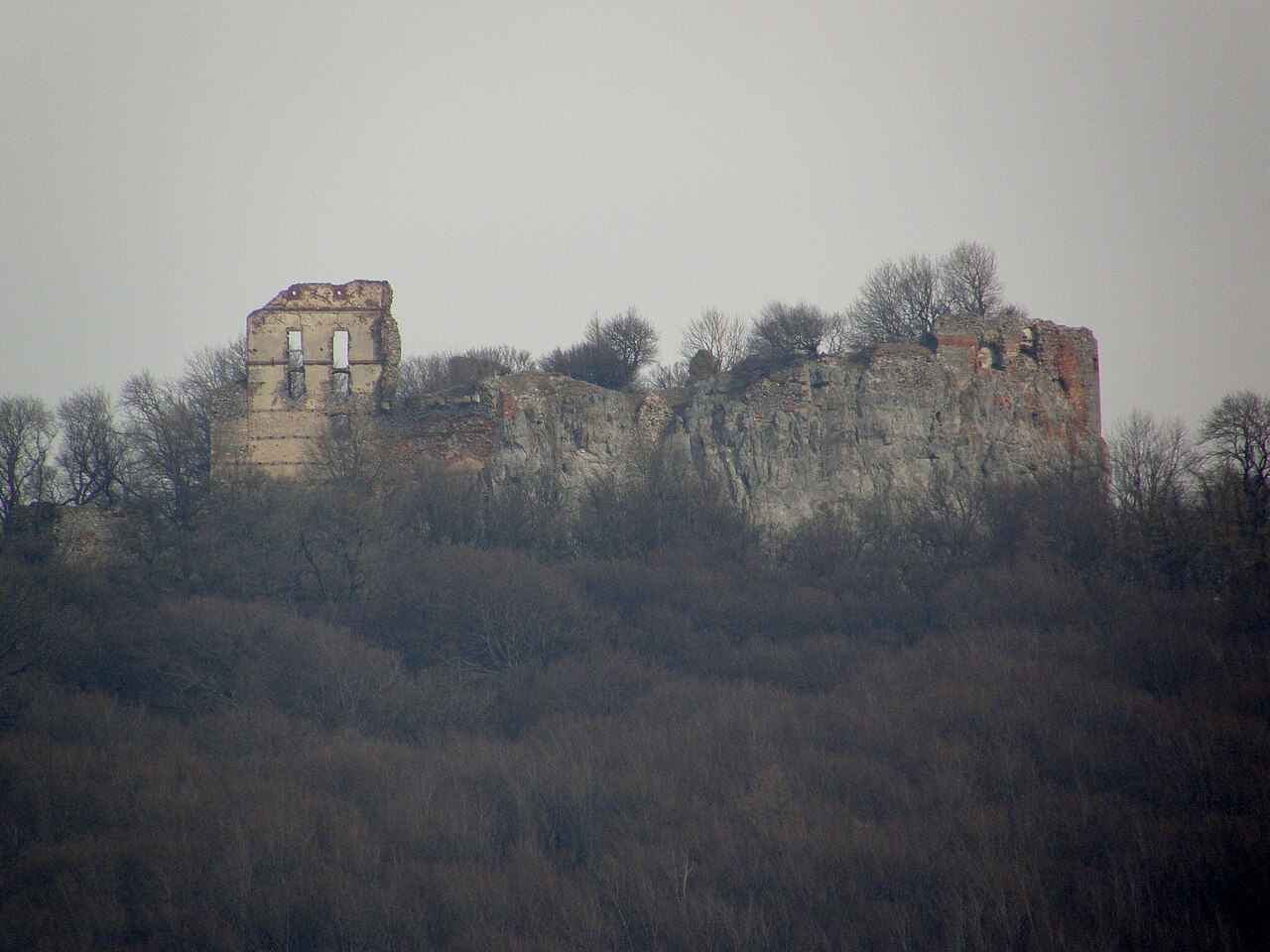
Pajštún Castle or Pajštún (Slovak: Pajštúnsky hrad, Hungarian: Pozsonyborostyánkő, German: Peilenstein) is a ruined medieval castle in the municipality of Borinka in the Bratislava region of Slovakia. It is located on the western edge of the Little Carpathians at an altitude of 486 m. Because of its proximity to Bratislava, the castle is a popular hiking destination for the city's inhabitants.
The exact origins of the Pajštún castle are unclear with some historians considering it to be the same castle as the Stupava castle. The castle is standing above Stupava but is not included in the administrative territory of this town. Other historians situate the origins of the castle in the last third 13th century with Rugerius of Tallesbrunn giving the order to build it. Pajštún was a part of a regional castle system aimed at defending the north-western border of the Kingdom of Hungary. The original name of the castle was probably the German Peilenstein. The current Slovak name, Pajštún, is likely a corrupted version of the original German word.
One of the first known records mentioning the castle (or the village below) comes from 1314 in connection to its owner, Otto from Telesprun. Many sources often, mistakenly, date the first mention of the castle to 1273. The castle must have existed before 1390, when it was donated by Sigismund of Luxemburg as a hereditary property to Peter Szentgyörgyi. After this family died out in 1543, the castle was owned by Gáspár Serédy.
Around 1550 the ownership of the castle was given to Eck Salm, a faithful servant of king Ferdinand I and the head of the Pozsony County. In 1592, with the consent of emperor Rudolf II, the pawned castle was paid of to the family Slam by Miklós Pálffy. Three years after his death in 1600, his widow, Mária Fugger, and his three sons received the royal donation of Pajštún castle. When the family property was divided in 1619, the Pajštún castle went to Pál Pálffy. As the condition of the castle had been progressively worsening, and with the looming Turkish danger at the time, Pálffy had the castle rebuilt between 1640 and 1645.
He entrusted the most important Italian artists and builders available in the Habsburg monarchy with the reconstruction of the castle. The Italian engineer Filiberto Luchese led the renovation which fundamentally transformed the original 13th-century core of the castle.
Text adapted from “Pajštún Castle” on Wikipedia, CC BY-SA 4.0.
Pajštún Castle ranks #4,209 of 9,035 worldwide in the atlas's castle fame ranking, and #52 of the 135 mapped in Slovakia. Founded c. 1300, it is older than 60% of the atlas's dated landmarks, one of 1090 atlas entries founded in the 13th century. Its Wikipedia articles were opened 999 times in the last 60 days, more than 50% of the atlas. 25 more atlas landmarks stand within 25 km. The nearest day-trip guide is Bratislava, 14 km away. See how Slovakia compares in the castle statistics.
View on the interactive castle map →