Palace & château
Palace of the Dukes of Lorraine
🇫🇷 France · 15th century
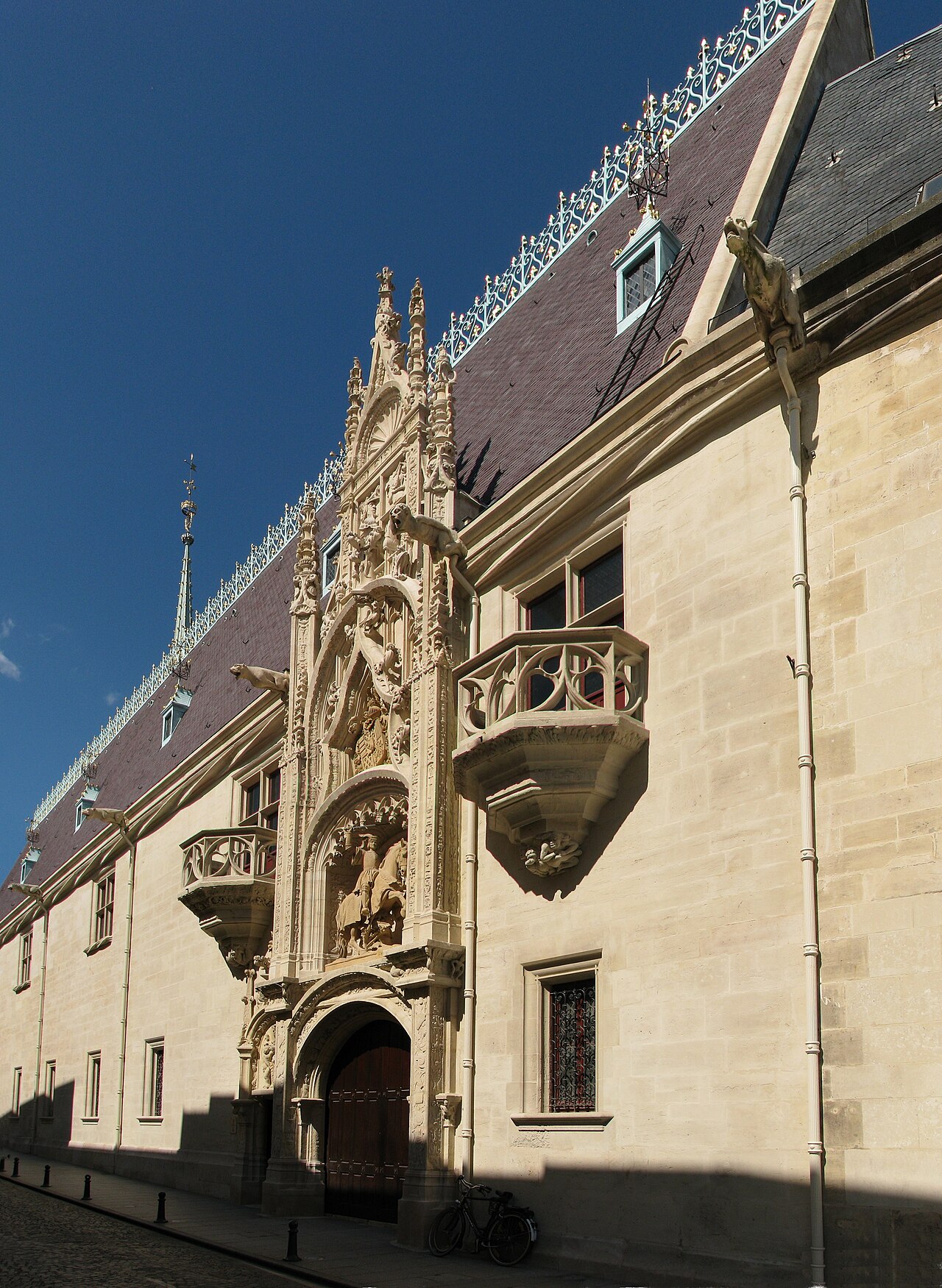
The Ducal Palace of Nancy (French: Palais ducal du Nancy) is a former princely residence in Nancy, France, which was home to the Dukes of Lorraine. It houses the Musée Lorrain, one of Nancy's principal museums, dedicated to the art, history and popular traditions of Lorraine until the early 20th century. It has been listed since 1840 as a monument historique by the French Ministry of Culture.
The palace was built in the 15th century for René II, Duke of Lorraine.
In the 18th century the palace was partly demolished under the rule of Leopold, Duke of Lorraine in preparation of greater projects he intended, but never completed. After the House of Habsburg had ceded Lorraine to French control in exchange for Tuscany, the new duke Stanisław Leszczyński resided in Lunéville. After Stanisław's death, his Duchy was inherited by his son-in-law, King Louis XV of France, and incorporated in his dominions.
The palace used to have St George's Collegiate Church, which was the house chapel and also the burial place of members of the house of Lorraine. The chapel does not exist anymore. The functions of the house chapel was then given to the Church of Saint-François-des-Cordeliers, which is located next to the palace.
The first level of the structure contains reception and dining rooms used by the Dukes, known as the Galerie des Cerfs. On the ground floor, there is an open-vaulted gallery overlooking the garden, while a portal marks the Grande Rue entrance. Also built in Gothic style, its décor suggests that it is one of the earliest examples of work from the Renaissance period in nowaday's eastern France.
In 1848 the palace was converted to house the Musée Lorrain. The museum's collections include artefacts from the Gallo-Roman and Merovingian civilisations of the east of France, religious and funeral sculptures and stained-glass windows from the Medieval period, as well as armaments from the 14th and 15th centuries. The museum also includes a collection of Renaissance art including works by Ligier Richier and sculptures relating to the history of the Palace itself, as well as of major works by Georges de La Tour and Jacques Callot, and a rare collection of Jewish ritual objects.
Text adapted from “Palace of the Dukes of Lorraine” on Wikipedia, CC BY-SA 4.0.
Palace of the Dukes of Lorraine ranks #4,468 of 8,764 worldwide in the atlas's castle fame ranking, and #365 of the 675 mapped in France. Founded c. 1450, it is older than 49% of the atlas's dated landmarks — one of 490 atlas entries founded in the 15th century. Its Wikipedia articles were opened 1,336 times in the last 60 days, more than 57% of the atlas. The nearest day-trip guide is Nancy, 1 km away. See how France compares in the castle statistics.
View on the interactive castle map →Frequently asked questions
Where is Palace of the Dukes of Lorraine?
Palace of the Dukes of Lorraine stands in France, at 48.69694°, 6.18028°.
When was Palace of the Dukes of Lorraine built?
The atlas dates its founding to c. 1450. Earlier structures may have stood on the site; this is the earliest documented founding year.
How famous is Palace of the Dukes of Lorraine?
In this atlas's fame ranking: #4,468 of 8,764 worldwide, and #365 in France. Fame here combines how many Wikipedia language editions cover a landmark with how many people read them.
What is the nearest castle to Palace of the Dukes of Lorraine?
Château de Lunéville, about 26 km away.
More castles in France
- Palais ducal de Nevers France
- Tour de Constance France · 16th century
- Château du Vieux-Windstein France · 12th century
- Château de Lutzelhardt France · 13th century
More palaces & châteaux
- Biesdorf Palace Germany · 19th century
- Elisabethenburg Palace Germany · 17th century
- Faber-Castell-Schloss Germany · 19th century
- Jagdschloss Kranichstein Germany · 16th century