 Italy · 17th century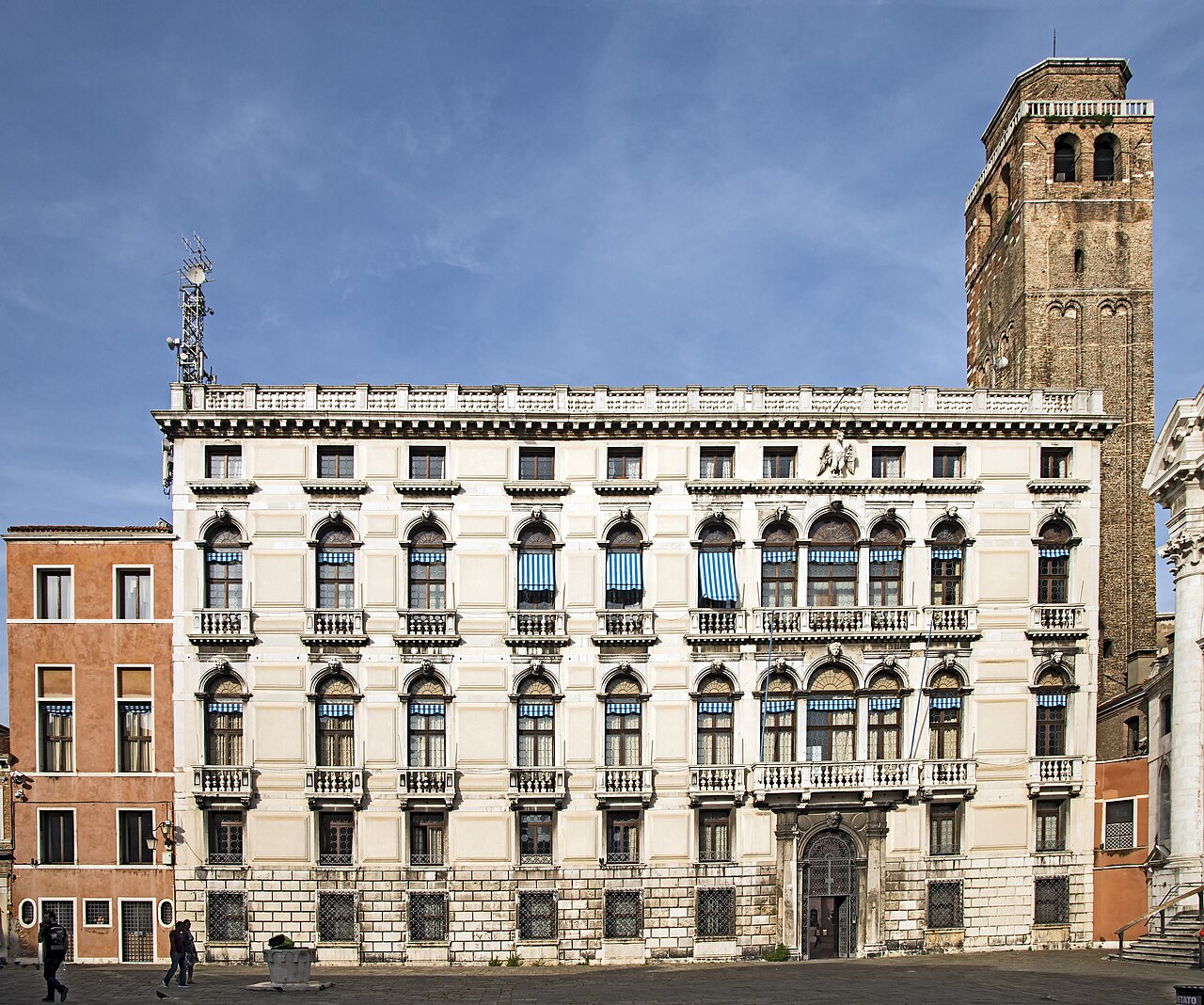
Palazzo Labia is a baroque palace in Venice, Italy. Built in the 17th–18th century, it is one of the last great palazzi of Venice. Little known outside of Italy, it is most notable for the remarkable frescoed ballroom painted 1746–47 by Giovanni Battista Tiepolo, with decorative works in trompe-l'œil by Gerolamo Mengozzi-Colonna.
In a city often likened to a cardboard film set, the Palazzo is unusual by having not only a formal front along the Grand Canal, but also a visible and formal facade at its rear, and decorated side as well, along the Cannaregio Canal. In Venice, such design is very rare. The palazzo was designed by the architect Andrea Cominelli (by Alessandro Tremignon according to others). The principal facade is on the Cannaregio Canal while a lesser three bayed facade faces the Grand Canal. A later facade probably designed by Giorgio Massari is approached from the Campo San Geremia.
Text adapted from “Palazzo Labia” on Wikipedia, CC BY-SA 4.0.
Palazzo Labia ranks #1,678 of 9,079 worldwide in the atlas's castle fame ranking, and #125 of the 560 mapped in Italy. Founded c. 1700, it is older than 21% of the atlas's dated landmarks — one of 721 atlas entries founded in the 17th century. Its Wikipedia articles were opened 2,234 times in the last 60 days, more than 72% of the atlas. 42 more atlas landmarks stand within 25 km. The nearest day-trip guide is Venice, 1 km away. See how Italy compares in the castle statistics.
View on the interactive castle map →