 Italy
Italy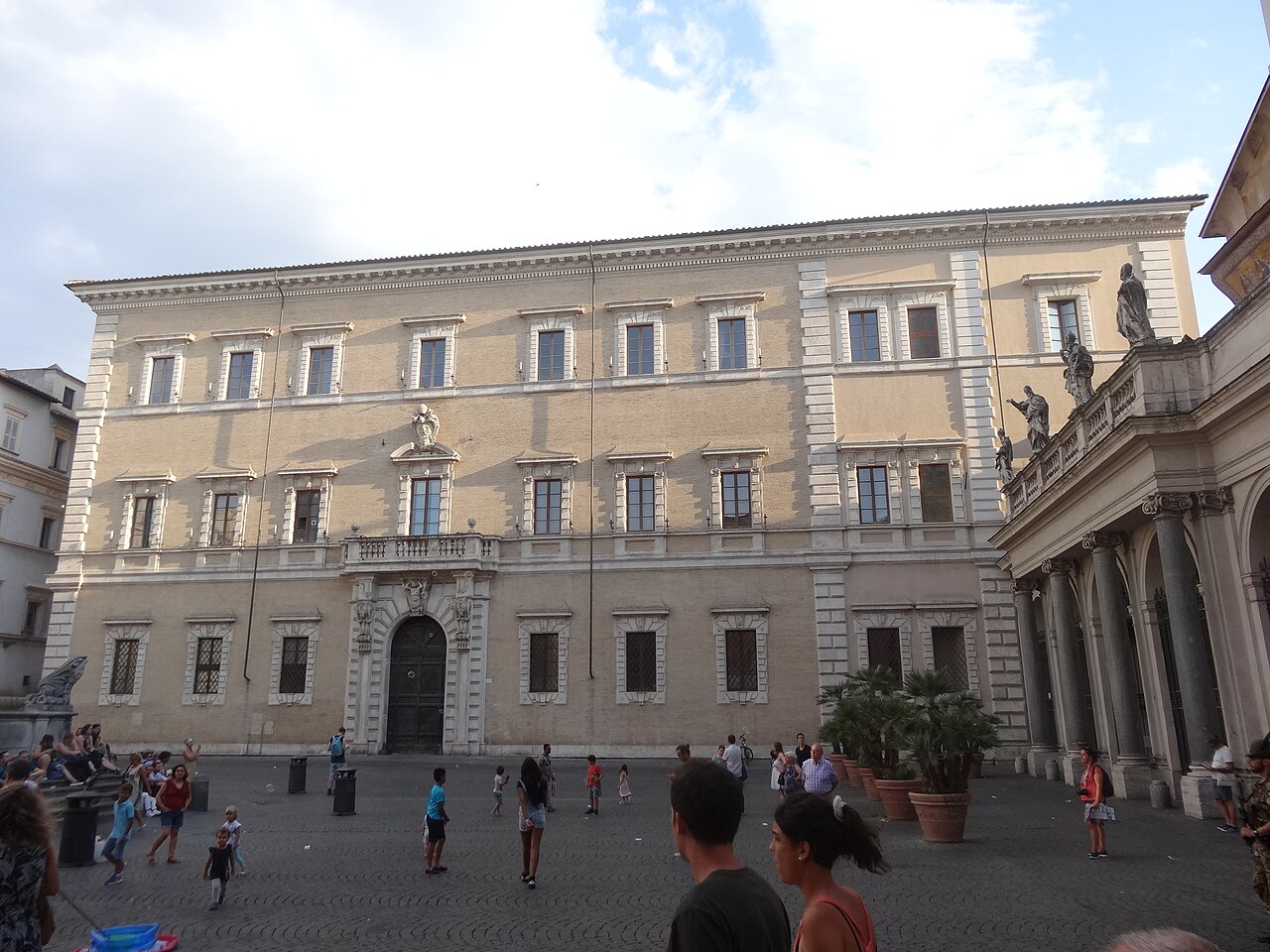
The Palazzo San Callisto (also known as the Palace of Saint Callixtus) is a Baroque palace in the Trastevere neighborhood of Rome and one of the extraterritorial Properties of the Holy See. The original Palazzo is located in the Piazza di Santa Maria in Trastevere, the later extensions have their entrance in Piazza di San Callisto. The entire complex is one of the areas of the Holy See regulated by the 1929 Lateran Treaty signed with the Kingdom of Italy. As such it has extraterritorial status.
In the courtyard of the palace is the well where, according to tradition, Pope Callixtus I was martyred in the year 222.
Text adapted from “Palazzo San Callisto” on Wikipedia, CC BY-SA 4.0.
Palazzo San Callisto ranks #2,385 of 9,079 worldwide in the atlas's castle fame ranking, and #181 of the 560 mapped in Italy. Its Wikipedia articles were opened 1,409 times in the last 60 days, more than 60% of the atlas. 65 more atlas landmarks stand within 25 km. The nearest day-trip guide is Rome, 1 km away. See how Italy compares in the castle statistics.
View on the interactive castle map →