 Thailand · 19th century
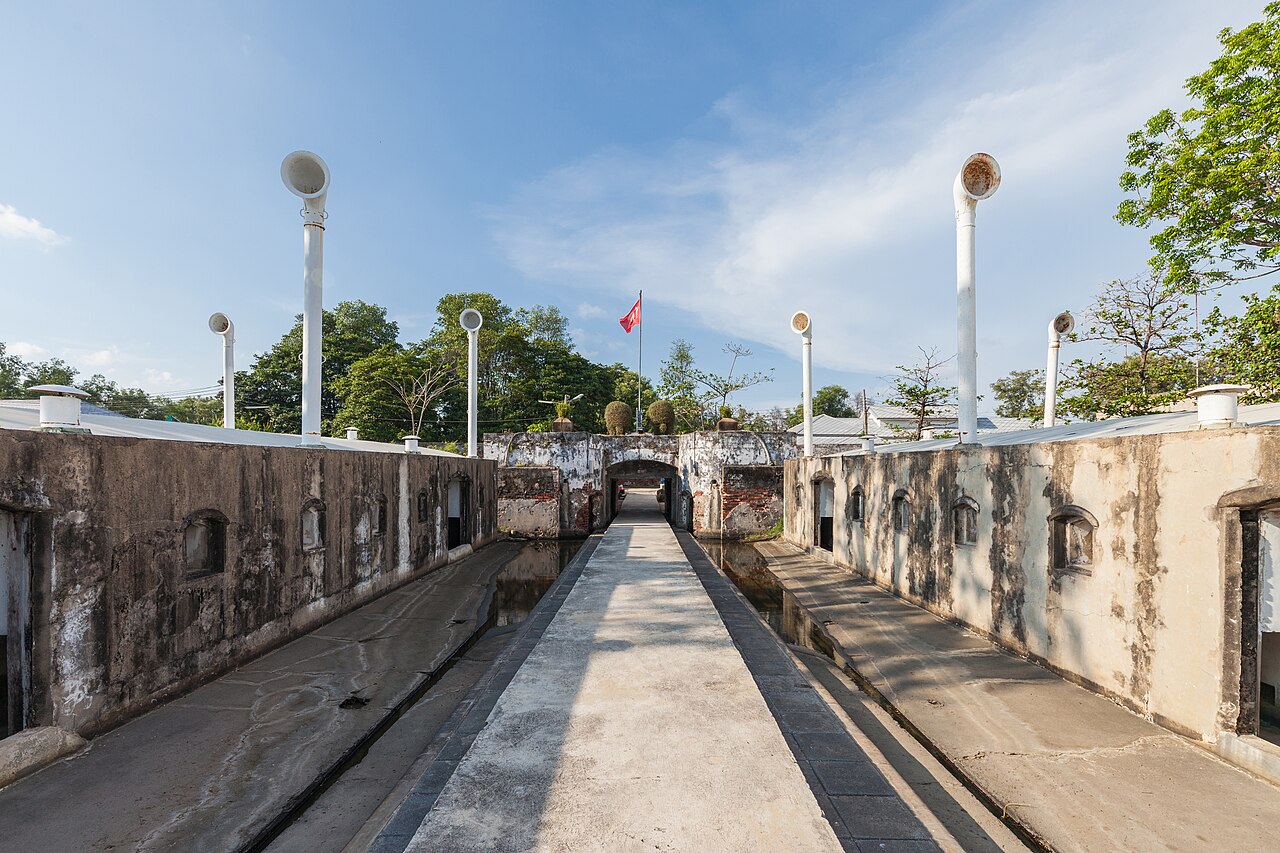
Phi Suea Samut Fort ranks #7,951 of 9,040 worldwide in the atlas's castle fame ranking, and #19 of the 21 mapped in Thailand. Founded 1819, it is older than 10% of the atlas's dated landmarks, one of 705 atlas entries founded in the 19th century. 12 more atlas landmarks stand within 25 km. The nearest day-trip guide is Bangkok, 19 km away. See how Thailand compares in the castle statistics.
Phi Suea Samut Fort is situated on a river island in the Chao Phraya River, south of Phra Samut Chedi, Samut Prakan province. King Rama II graciously ordered it to be built in 1819, standing between 2 shipping channels, but the construction of the fort at that time was not completed. Later, in 1822, he graciously ordered his son, Prince Chetsadabodin, to carry out improvements to Phi Suea Samut Fort to make it better, until, in the reign of King Chulalongkorn, he graciously ordered the Front Palace to go and make further alterations once more.
The fort itself is shaped like a butterfly, with the butterfly's tail end used as the entrance. Later the shipping channel on the west became shallow, so that large ships could not pass through, and the site of the fort therefore appears to lie close to the Thonburi bank.
When the fort was first built, the armament of the fort consisted of muzzle-loading guns, and breech-loading cannon began to be used instead in 1892, being disappearing guns of 6 inches, 3 in all, ordered from the Vickers Armstrong company of England, and Vice Admiral Phraya Wichit Nawi (William Bunyakalin) was the engineer who installed these guns, following the installation of cannon of the same type at Phra Chulachomklao Fort.
This Phi Suea Samut Fort once fired in battle against a squadron of 2 French warships that intruded into the Chao Phraya River on 13 July 1893, which is one of the important events in Thai history.
Machine-translated from “ป้อมผีเสื้อสมุทร” on the Thai Wikipedia, CC BY-SA 4.0.
View on the interactive castle map →