 Belarus · 19th century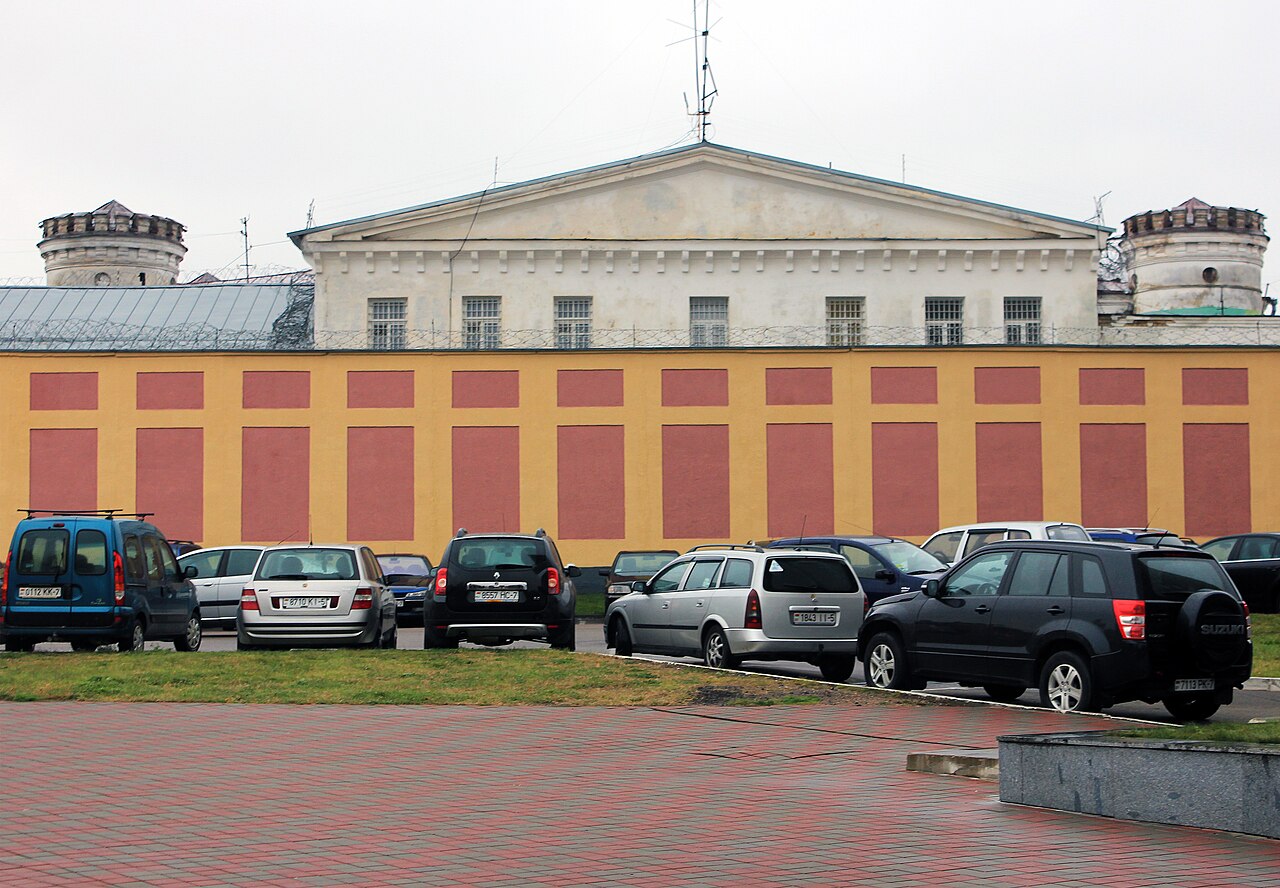
The Minsk Detention Center No. 1 or SIZO No. 1 (Russian: СИЗО No. 1, Belarusian: СІЗА No. 1), informally known as Volodarka, Belarusian pronunciation: Valadarka (Валадарка), is the central prison of Belarus located in Minsk.
The prison castle is known in Belarusian as Pishchalauski Castle (Пішчалаўскі замак), also spelled Pischalauski Castle, a name derived from the landlord who built it, Rudolph Pischallo. The Russian version of the name is Pishchalovsky castle.
Its popular name, Volodarka, was coined after the October Revolution, when the street on which the building stood was renamed in honour of revolutionary leader V. Volodarsky. It is also sometimes called the Belarusian Bastille.
Operated by the Belarusian Ministry of Internal Affairs, SIZO No. 1 is the only facility that houses death row inmates. Their execution occurs at the prison.
The prison is also used as a pre-trial detention centre where arrested political activists are held.
The stone building was completed by 1824, and it was commissioned in spring 1825. The castle-shaped structure was purposely built as a prison by the landowner Rudolph Pischallo (also spelled Rudolf Pischalo), who entrusted architect Kazimir Khrschonovich (also spelled Casimir Hrschanovicha) with the design. The project was approved by Tsar Nicholas I himself. The main building is three stories high, flanked by four corner towers, and surrounded by the prison yard.
Vintsent Dunin-Martsinkyevich (c. 1808–1884), Belarusian writer and social activist (imprisoned 1864–1865) Felix Dzerzhinsky, future leader of the Soviet secret police, here repeatedly on transfer during his arrests for "revolutionary activity" Alés Harun (1887–1920), Belarusian writer (imprisoned 1907) Karuś Kahaniec (1868–1918), Belarusian writer (imprisoned 1905–1906 & 1910–1911) Jakub Kołas (1882–1956), Belarusian writer (imprisoned 1908–1911) Józef Piłsudski (1867–1935), future Polish statesman, held here while under investigation after being arrested in 1887 Ivan Pulikhov (Pulichaŭ; 1879–1906), revolutionary terrorist who attempted to assassinate the Minsk governor, hanged at the prison gates Masha Bruskina (1924–1941), Belarusian Jewish partisan, hanged publicly by the Nazis on October 26, 1941.
After the First World War, the prison was taken over by the Cheka-GPU.
Text adapted from “Pishchalauski Castle” on Wikipedia, CC BY-SA 4.0.
Pischalauski Castle ranks #988 of 9,079 worldwide in the atlas's castle fame ranking, and #9 of the 45 mapped in Belarus. Founded 1825, it is older than 10% of the atlas's dated landmarks — one of 717 atlas entries founded in the 19th century. Its Wikipedia articles were opened 7,320 times in the last 60 days, more than 91% of the atlas. 2 more atlas landmarks stand within 25 km. The nearest day-trip guide is Minsk, 1 km away. See how Belarus compares in the castle statistics.
View on the interactive castle map →