 Italy · 12th century
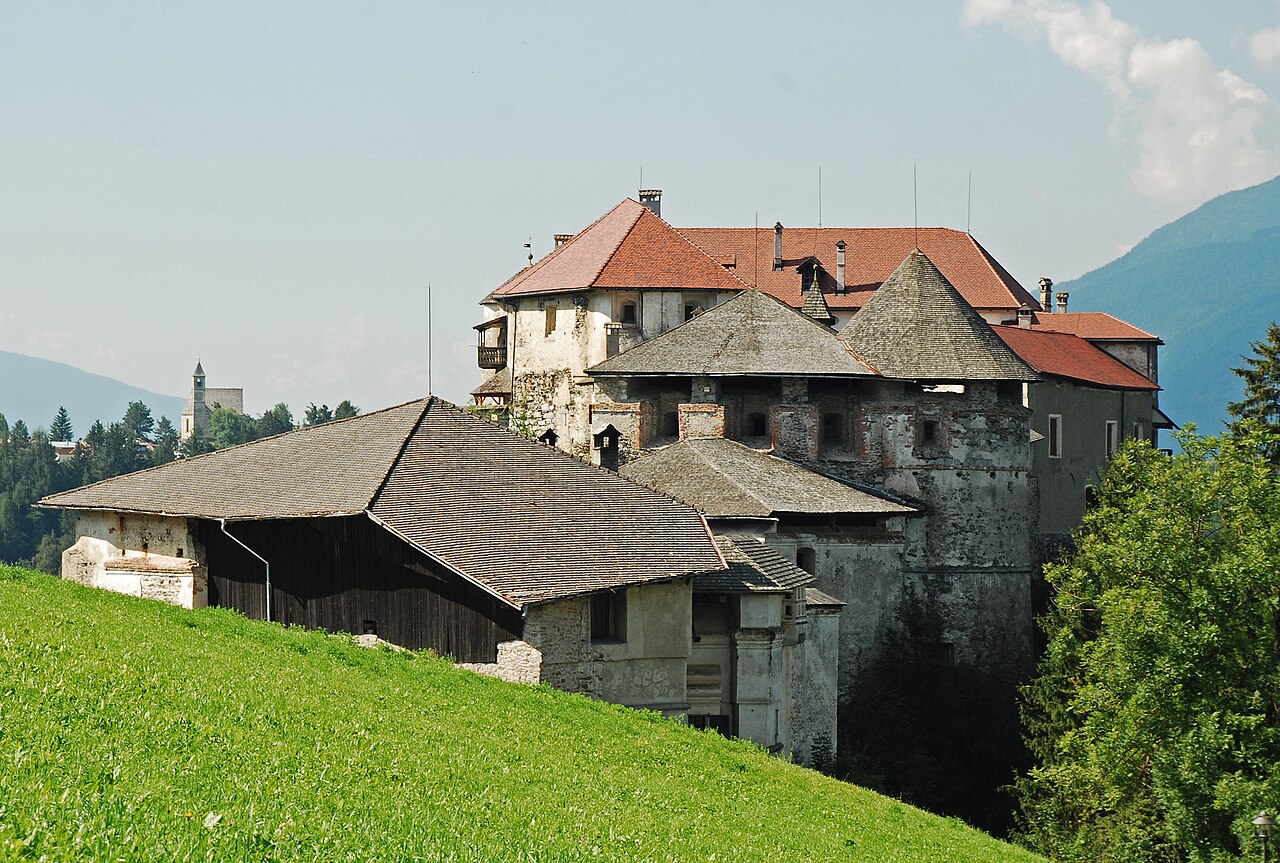
Rodenegg Castle ranks #5,395 of 9,040 worldwide in the atlas's castle fame ranking, and #391 of the 555 mapped in Italy. Founded c. 1125, it is older than 84% of the atlas's dated landmarks, one of 763 atlas entries founded in the 12th century. Its Wikipedia articles were opened 1,132 times in the last 60 days, more than 54% of the atlas. 10 more atlas landmarks stand within 25 km. The nearest day-trip guide is Innsbruck, 59 km away. It is one of the 30 landmarks on the atlas's regional map of South Tyrol. See how Italy compares in the castle statistics.
Rodenegg Castle lies north-east of Brixen in the municipality of Rodeneck in South Tyrol.
The castle is clearly visible from the Puster Valley road between Schabs and Mühlbach, extended lengthwise on a narrow rocky promontory which falls steeply away on three sides to the Rienz gorge.
It was built in the first half of the 12th century by Frederick I of Rodank and originally probably consisted only of a residential tower and a palas. The lords of Rodank were an important ministerial family which remained in possession of the castle until its extinction around 1300. Thereafter it was for almost 200 years under Tyrolean princely administration and appears in 1384 in the context of the Tyrolean seigneury (herschaft von Tyrol) as vest ze Rodenkchen. In 1491 the complex passed to the barons (and later counts) of Wolkenstein-Rodenegg, who enlarged it in the 16th century and developed it in the manner of a palace.
The topographical description by Marx Sittich von Wolkenstein of around 1600 devotes a separate section to the schloss Rottneckh and its judicial district. The founder of the Wolkenstein-Rodenegg line was Oswald von Wolkenstein; his descendants still own the castle today.
Rodenegg Castle is today in good condition; part of it is even still inhabited. Inside there are a museum and original furniture from the Late Renaissance period. The main attraction is the fresco cycle on the Iwein epic of Hartmann von Aue, discovered in 1972 and subsequently uncovered, which is regarded as the oldest secular wall painting in the German-speaking area (created between 1200 and 1230).
Machine-translated from “Schloss Rodenegg” on the German Wikipedia, CC BY-SA 4.0.
View on the interactive castle map →