Castle
Sabbionara Castle
 Italy · 11th century
- Founded
- 1053
- Heritage status
- Italian national heritage
- Location
- Avio
- Visitors
- ≈38,000 (2022)
- Coordinates
- 45.74641°, 10.95191°
- Open data
- Wikidata Q3662477
- Links
- OpenStreetMap · Wikimedia Commons

Description
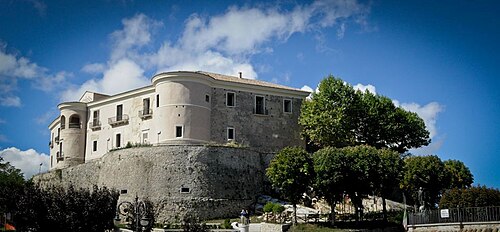
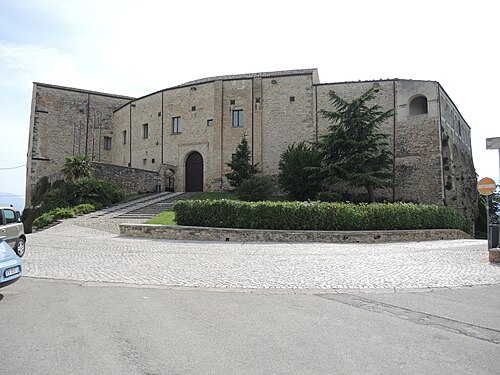
The Castle of Avio (also known as the Castle of Sabbionara, Italian: Castello di Avio, old German: Schloß Aue) is a medieval castle in the comune Avio, Trentino, northern Italy. It is currently held by the Fondo per l'Ambiente Italiano (FAI). It is one of the several castles commanding the Vallagarina valley of the Adige River. It features several rooms with medieval frescoes.
The castle is mentioned for the first time in a 1053 document as Castellum Ava. In the 12th century it was owned by the Castelbarco family, who ceded it to the Republic of Venice in 1411. The latter enlarged it and added a chapel dedicated to St. George, together with a façade showing the doge's coats of arms.
In 1509 the castle was conquered by the troops of Maximilian I of Austria who, after painting his insignia on the façade, gave it to the counts of Arco. After several changes of property, in the 17th century the counts of Castelbarco bought it back.
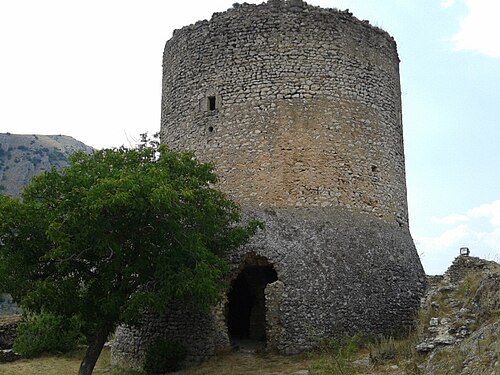
The castle features three lines of walls, with five towers. Among the latter, the so-called Torre della Picadora was the place where executions (through hanging) were carried on. In the interior is the massive mastio, surrounded by several edifices, including the baronial Palace.
The castle's rooms are decorated by a series of frescoes, undertaken in two different campaigns. The first is the "Chamber of Love" (Camera di Amore), dating to c.1330 and painted by an unknown workshop that had already worked in the Chiesa dei Domenicani in Bolzano. This room features scenes of love visible through the openings of a large painted brocade or curtain. Cupid, mounted on horseback, chases after a lover and shoots him with arrows. He is then shown making love to a young woman.
The second cycle was executed two or three decades later, c.1350, and features less elaborate paintings of battles.
Castelnuovo, E., ed. Castellum Ava. Il castello di Avio e la sua decorazione pittorica. Trent, 1987.
Dunlop, Anne. "A Certain Inborn Suffering: Chambers of Love." In Anne Dunlop, Painted Palaces: The Rise of Secular Art in Early Renaissance Italy. University Park, PA: Pennsylvania State University Press, 2009.
Dunlop, Anne. “The Look of Love.” In A Wider Trecento: Studies in 13th- and 14th-Century European Art Presented to Julian Gardner, eds. Louise Bourdua and Robert Gibbs, 154–165. Leiden and Boston: Brill, 2012.
Text adapted from “Castle of Avio” on Wikipedia, CC BY-SA 4.0.
In the rankings
Sabbionara Castle ranks #4,194 of 9,902 worldwide in the atlas's castle fame ranking, and #318 of the 624 mapped in Italy. Founded 1053, it is older than 89% of the atlas's dated landmarks, one of 458 atlas entries founded in the 11th century. Its Wikipedia articles were opened 2,383 times in the last 60 days, more than 77% of the atlas. Wikidata records about 38,000 visitors in 2022. 5 more atlas landmarks stand within 25 km. The nearest day-trip guide is Vicenza, 51 km away. See how Italy compares in the castle statistics.
Castles nearby
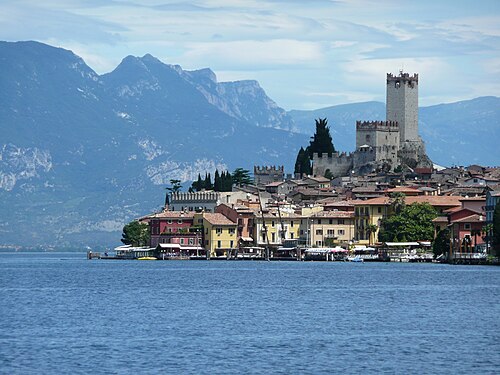
- Castello Scaligero11 km · Italy
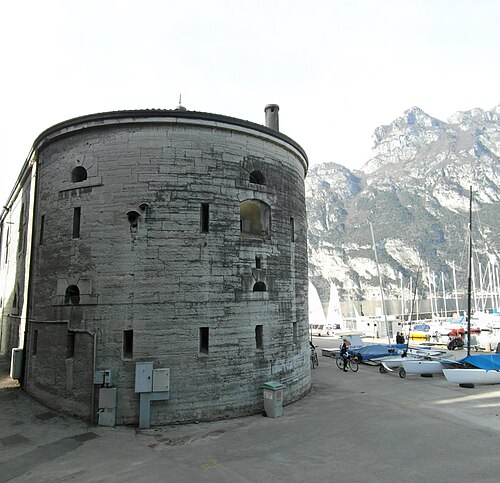
- Forte San Nicolò16 km · Italy
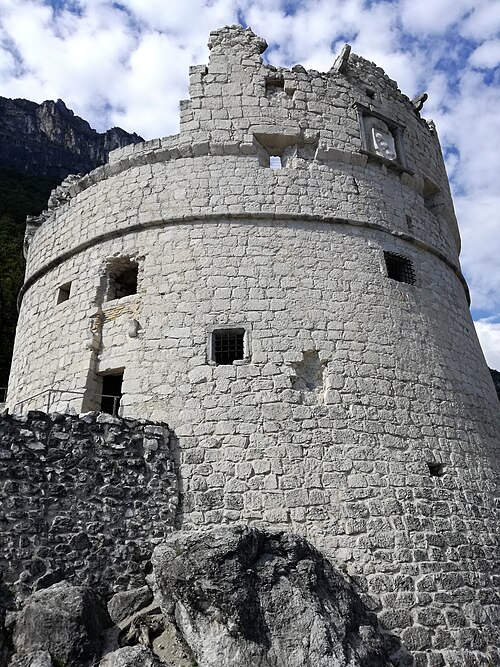
- Bastione18 km · Italy
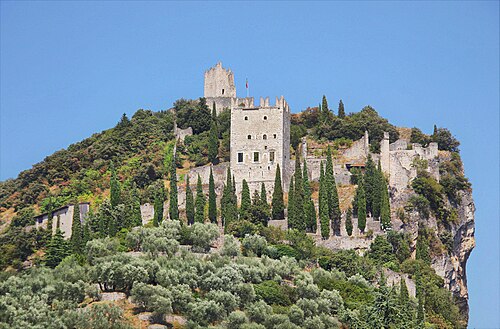
- Castello di Arco20 km · Italy
More castles in Italy
- Castello di BotestagnoItaly · 11th century
- Castle of GesualdoItaly · 12th century
- Castello De Sterlich-AliprandiItaly · 10th century