 Japan · 17th century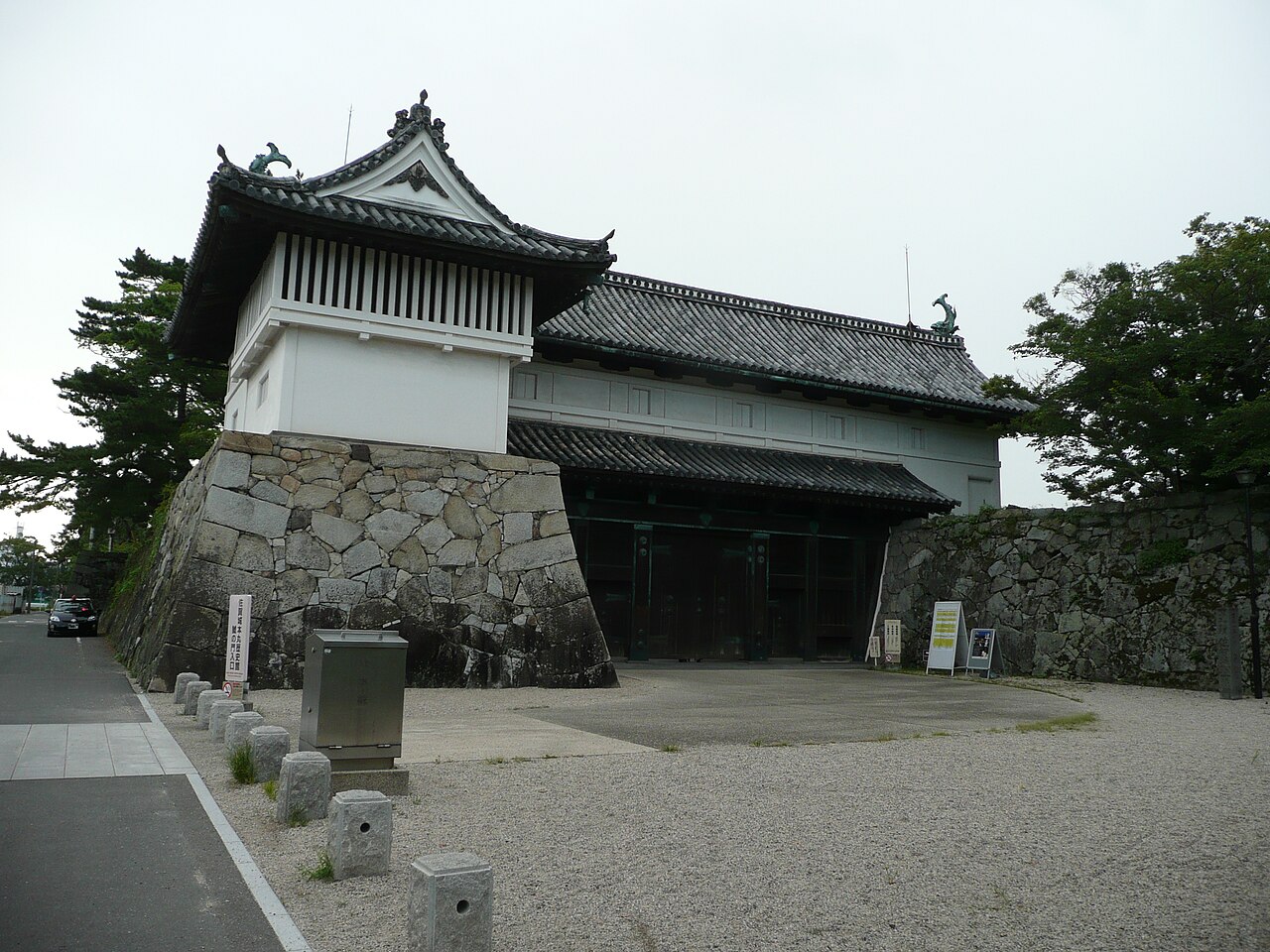
Saga Castle (佐賀城, Saga-jō) is a Japanese castle located in Saga City, Saga Prefecture, Japan. It is a hiraijirō, a castle built on a plains rather than a hill or mountain, and is surrounded by a wall rather than being built above a stone base. Saga castle was home to the Nabeshima clan, daimyō of Saga Domain. It was also known as "Submerged Castle" (沈み城, Shizumi-jō).
The location of Saga Castle was originally a fortified village under the control of the Ryūzōji clan, warlords of a small area of northern Kyūshū in the Muromachi period. After Ryūzōji Takanobu was defeated by a coalition of Shimazu and Arima forces in 1584, his retainer Nabeshima Naoshige gained control of the castle. Naoshige allied the clan with Toyotomi Hideyoshi and gained personal distinction during the Japanese invasions of Korea, during which time he befriended noted castle architect Katō Kiyomasa and future Shōgun Tokugawa Ieyasu. Following the Battle of Sekigahara, the Nabeshima clan was confirmed in its holdings in Hizen province, and Naoshige’s son, Nabeshima Katsushige became 1st daimyō of Saga Domain.
Naoshige began work on rebuilding the castle with the approval of the Tokugawa Shogunate beginning in 1602, with the work completed under Katsushige by 1611. The original structure included a five-storey donjon surrounded by a system of 80-metre wide moats. Unusually, the moats are not surmounted by stone walls, but by earthen ramparts tall enough to conceal the inner fortifications. These ramparts were also planted with pine and camphor trees for additional concealment, which lent the castle its nickname.
A fire in 1726 destroyed most of the castle structures, including the donjon. The palace portion was restored two years later in the outer bailey, which was the centre of the Saga domain government for most of the Edo period. Another fire occurred in 1835, after which the buildings were reconstructed by Saga domain’s final daimyō Nabeshima Naomasa.
After the Meiji Restoration, the castle remained the location for the local government offices. However, the castle was occupied in 1874 by former politician and samurai Etō Shinpei and his following of disgruntled samurai in the Saga Rebellion. The rebels were defeated by military force, during which most of the buildings in the castle were burned down.
Text adapted from “Saga Castle” on Wikipedia, CC BY-SA 4.0.
Saga Castle ranks #1,685 of 9,079 worldwide in the atlas's castle fame ranking, and #101 of the 296 mapped in Japan. Founded 1602, it is older than 31% of the atlas's dated landmarks — one of 721 atlas entries founded in the 17th century. Its Wikipedia articles were opened 3,769 times in the last 60 days, more than 82% of the atlas. 2 more atlas landmarks stand within 25 km. The nearest day-trip guide is Kumamoto, 62 km away. It is one of the 37 landmarks on the atlas's regional map of Kyushu. See how Japan compares in the castle statistics.
View on the interactive castle map →