Castle
Sevnica Castle
🇸🇮 Slovenia · 12th century
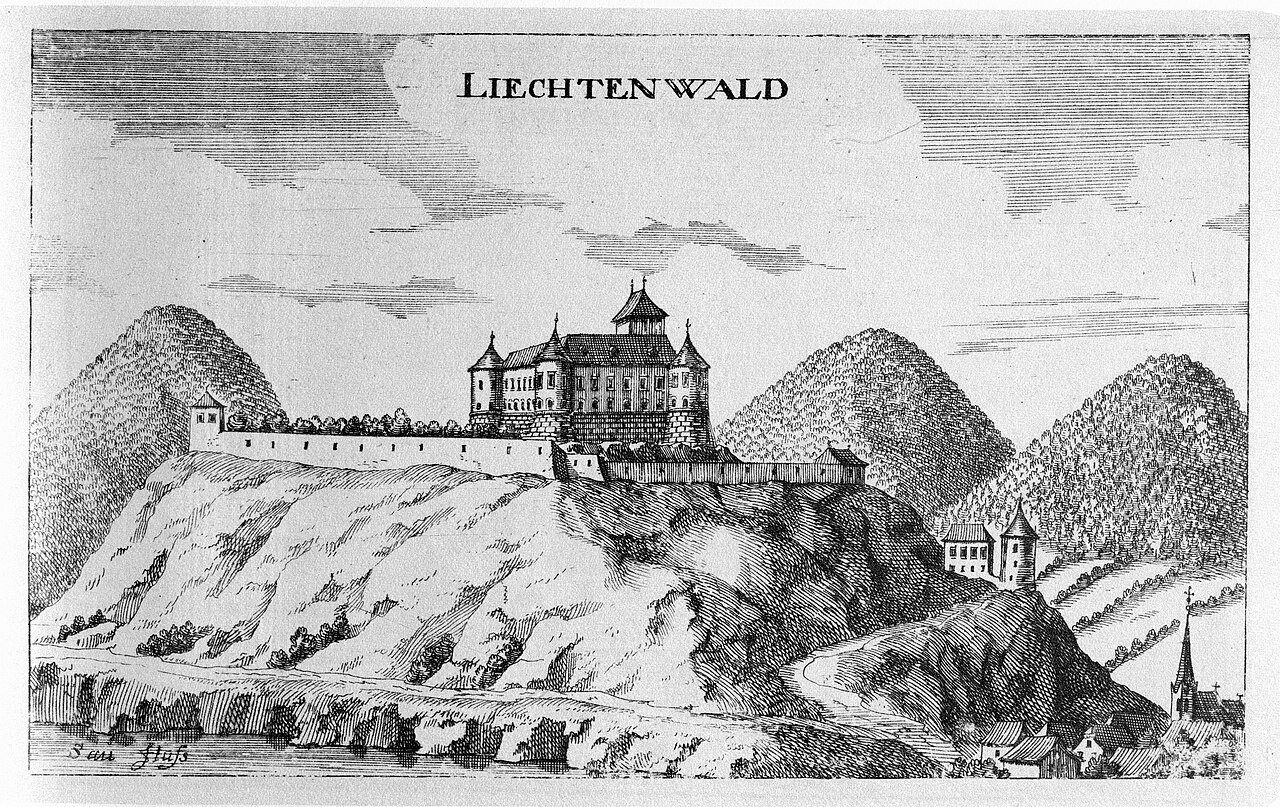
Sevnica Castle is a Slovenian castle in the Lower Sava Valley. Situated atop a hill, it dominates the old town of Sevnica and offers views of the surrounding countryside.
The Archdiocese of Salzburg held local estates since 1043 and Sevnica Castle was mentioned for the first time in its record in 1309 like “Castellum" Lichtenwald. The origin of the building was not documented but it was most probably built during the bishopric of Konrad the First von Abensberg (1106–1147), who rebuilt and colonized this area devastated by Hungarian invasions in the 10th century and in the beginning of the 12th century. We know nothing even about the appearance of the building at that time. The only remaining part of the building from that period, which has survived until this day, is the part of a tower nowadays included in the left wing of the castle. This tower did not stand by itself; it was probably part of a larger building. From the thickness of its walls (2.6 metres (8.5 ft)) it is believed to have been four or five storeys tall.
The office of the Archdiocese of Salzburg had been in the castle until 1479 when was appointed Archbishop Bernard the Second von Rohr, who came into conflict with the Emperor Frederick the Third. During the ensuing war, Bernard established alliance with the governor of Hungary Matthias Hunyady – Corvinus and he resigned to his custody not only Sevnica Castle with the belonging manor but also many other present-day Slovenian castles in Styria and Carinthia. Matthias Hunyady, whose army thereafter occupied considerable part of the Slovenian ethnic territory, was very popular with simple folk. Thanks to this, many stories about him were passed on by oral tradition and so he became Slovenian legendary King Matthias. After his death, the Peace of Bratislava in 1491 concluded the war and Sevnica Castle with its manor then became the possession of the emperor, but the new Emperor Maximilian the First returned it in 1494 to the Archdiocese of Salzburg.
In 1938, Viktor Tiller claimed that in the Middle Ages the castle was connected by a tunnel with Lower Castle in Sevnica, and that the inhabitants of the town usd this tunnel as a hiding place during Ottoman invasions.
In the middle of the 16th century the so-called Lutheran Cellar was built at the southeast side of Castle Hill (46°0′28.18″N 15°18′55.62″E).
Text adapted from “Sevnica Castle” on Wikipedia, CC BY-SA 4.0.
Sevnica Castle ranks #4,571 of 8,134 worldwide in the atlas's castle fame ranking, and #23 of the 44 mapped in Slovenia. Founded c. 1127, it is older than 85% of the atlas's dated landmarks — one of 564 atlas entries founded in the 12th century. Its Wikipedia articles were opened 1,111 times in the last 60 days, more than 51% of the atlas. 7 more atlas landmarks stand within 25 km. The nearest day-trip guide is Zagreb, 56 km away. See how Slovenia compares in the castle statistics.
View on the interactive castle map →Frequently asked questions
Where is Sevnica Castle?
Sevnica Castle stands in Slovenia, at 46.00787°, 15.31399°.
When was Sevnica Castle built?
The atlas dates its founding to c. 1127. Earlier structures may have stood on the site; this is the earliest documented founding year.
How famous is Sevnica Castle?
In this atlas's fame ranking: #4,571 of 8,134 worldwide, and #23 in Slovenia. Fame here combines how many Wikipedia language editions cover a landmark with how many people read them.
What is the nearest castle to Sevnica Castle?
Raka Castle, about 10 km away.
More castles in Slovenia
- Lihtenberk Castle Slovenia · 13th century
- Krumperk Castle Slovenia · 14th century
- Turjak Castle Slovenia · 13th century
- Metlika Castle Slovenia · 15th century
More castles
- Castle Pinckney United States · 18th century
- Trazegnies Castle Belgium · 11th century
- Reinhardstein Castle Belgium · 14th century
- Geeraard de Duivelsteen Belgium · 13th century