 Egypt · 12th century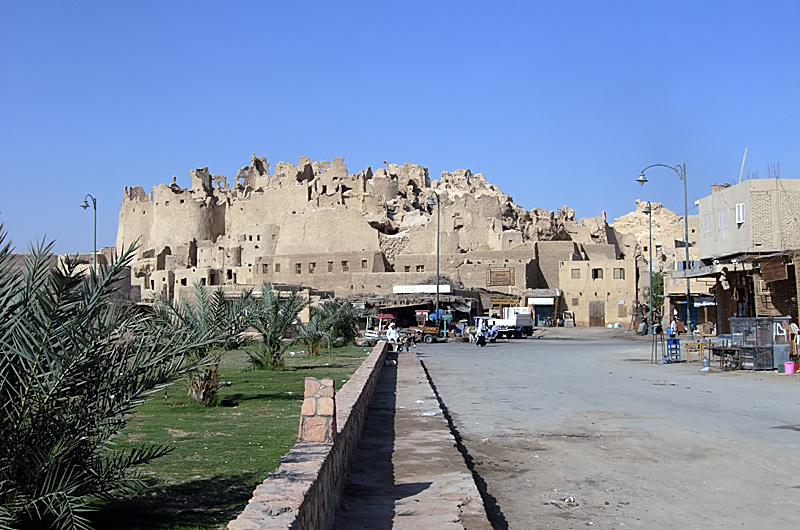
Shali is the old town and fortress in the heart of the Siwa Oasis in the Libyan Desert of Egypt, and is one of its most famous historical landmarks.
The history of the old town goes back thousands of years before Christ; it contains the Temple of Amun, built by the ancient Egyptians. Alexander the Great then came to that temple on entering Egypt to worship there and proclaim himself the son of Amun, knowing the importance of that god to both the Egyptians and the Greeks. He even directed that he be buried there, although it was never known whether this actually took place or not.
As for the fortress, it is an old stronghold of mud brick, built between the 12th and 13th centuries to repel the attacks of the Arabs and the nomadic tribes of the desert, since chaos prevailed in the Western Desert after the era of the Roman Empire, and the tribes raided one another to obtain food from the inhabited well areas, which led the people of Siwa to build a high fortress to protect it from invaders, most of whom were Arabs living near the Siwa Oasis. The Shali fortress is one of its most important tourist attractions.
Machine-translated from “شالي (سيوة)” on the Arabic Wikipedia, CC BY-SA 4.0.
Shali ranks #7,997 of 9,079 worldwide in the atlas's castle fame ranking, and #32 of the 37 mapped in Egypt. Founded c. 1200, it is older than 75% of the atlas's dated landmarks — one of 756 atlas entries founded in the 12th century. See how Egypt compares in the castle statistics.
View on the interactive castle map →