 Egypt · 14th century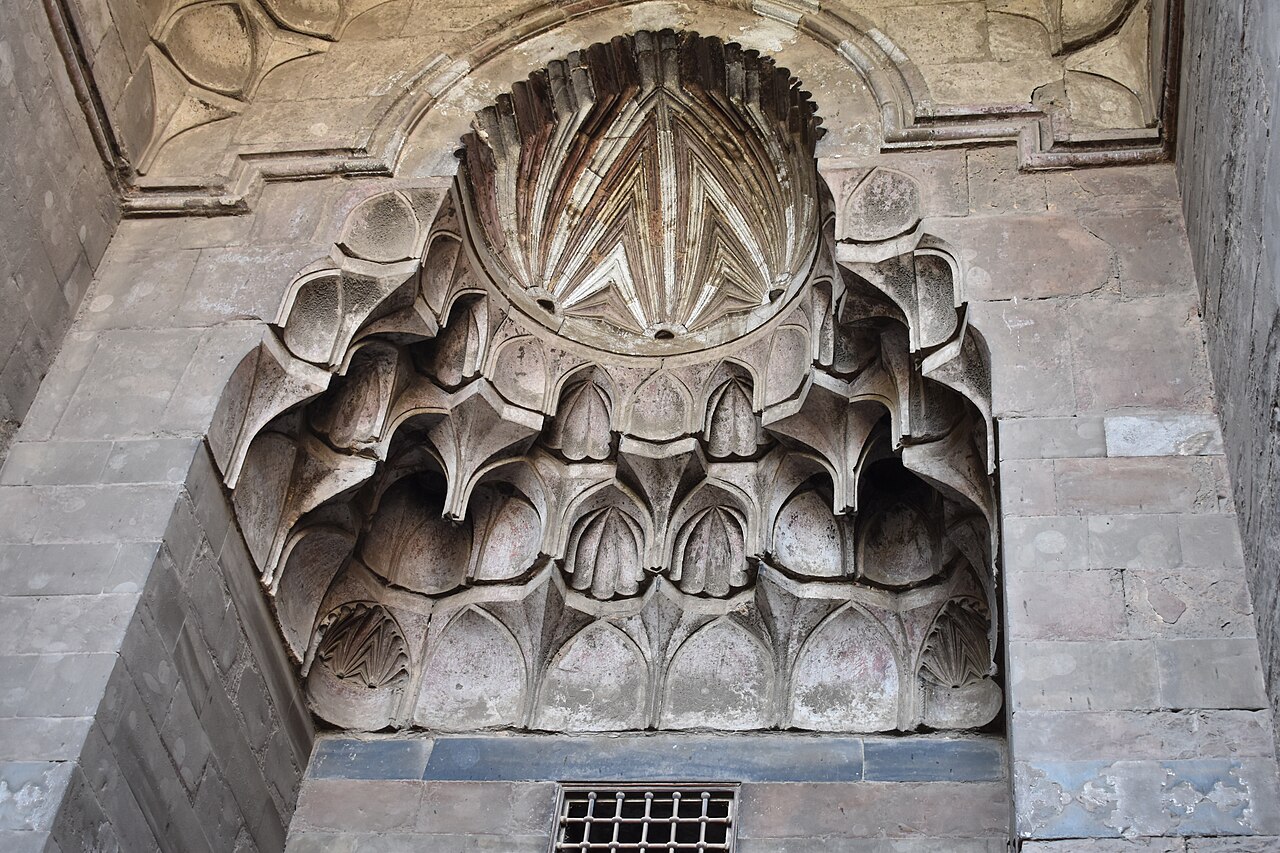
Palace of Yashbak, also known as the Palace of Amir Qawsun, is a semi-ruined palace in Medieval Cairo, Egypt, originally built between 1330 and 1337 CE for the Mamluk amir (high official) known as Qawsun. It was restored and expanded again in the 1480s by the amir Yashbak min Mahdi under the reign of Sultan Qaytbay.
The palace was built between 1330 and 1337 for amir Qawsun (full name: Sayf ad-Din Qawsun ibn Abdullah an-Nasiri as-Saqi) just north-west of Cairo's Citadel, in an area outside the main walled city which was developed during the prosperous reign of Sultan al-Nasir Muhammad. This area was once home to many such palaces of amirs and other powerful Mamluks, but Qawsun's palace is one of the few remaining examples today (along with the nearby Palace of Amir Taz). Qawsun's palace was actually commissioned by Sultan al-Nasir Muhammad himself for the benefit of Qawsun. The sultan commissioned more than one such palace in this area for his favourite amirs, apparently as part of his wider building program to develop a monumental royal quarter in the Citadel (which contained the sultan's own palace, the Qasr Ablaq, which overlooked the amirs' palaces below) and in the areas around it.
Qawsun himself was one of the most powerful amirs (commanders or high officials) under al-Nasir Muhammad and some of his successors, as well as al-Nasir's son-in-law. Another rival amir, Sunqur Sa'di, had built a madrasa and mausoleum for himself next to the site of Qawsun's palace in 1315–1321, but was later forced to leave Egypt after angering Qawsun. His structure still stands today and is also known as the Mausoleum of Hasan Sadaqa, who was later buried there instead.
In the late 15th century Yashbak min Mahdi, a powerful amir under Sultan al-Ashraf Qaytbay (1468–1496), restored and expanded Qawsun's palace for his own use, hence why it is also known today as the Palace of Yashbak.
Two thirds of the palace are ruined today, but some of its high walls and structure still stand. Its best-preserved element is its unusually massive and monumental entrance portal. This portal dates from two eras. The original entrance, from Qawsun's time, is a tall portal crowned with a hood of muqarnas sculpting and stone-carved patterns in ablaq (two-coloured) masonry.
Text adapted from “Palace of Yashbak” on Wikipedia, CC BY-SA 4.0.
Palace of Yashbak ranks #7,382 of 9,035 worldwide in the atlas's castle fame ranking, and #29 of the 36 mapped in Egypt. Founded 1337, it is older than 58% of the atlas's dated landmarks, one of 757 atlas entries founded in the 14th century. 15 more atlas landmarks stand within 25 km. The nearest day-trip guide is Cairo, 2 km away. See how Egypt compares in the castle statistics.
View on the interactive castle map →