 Iraq · 19th century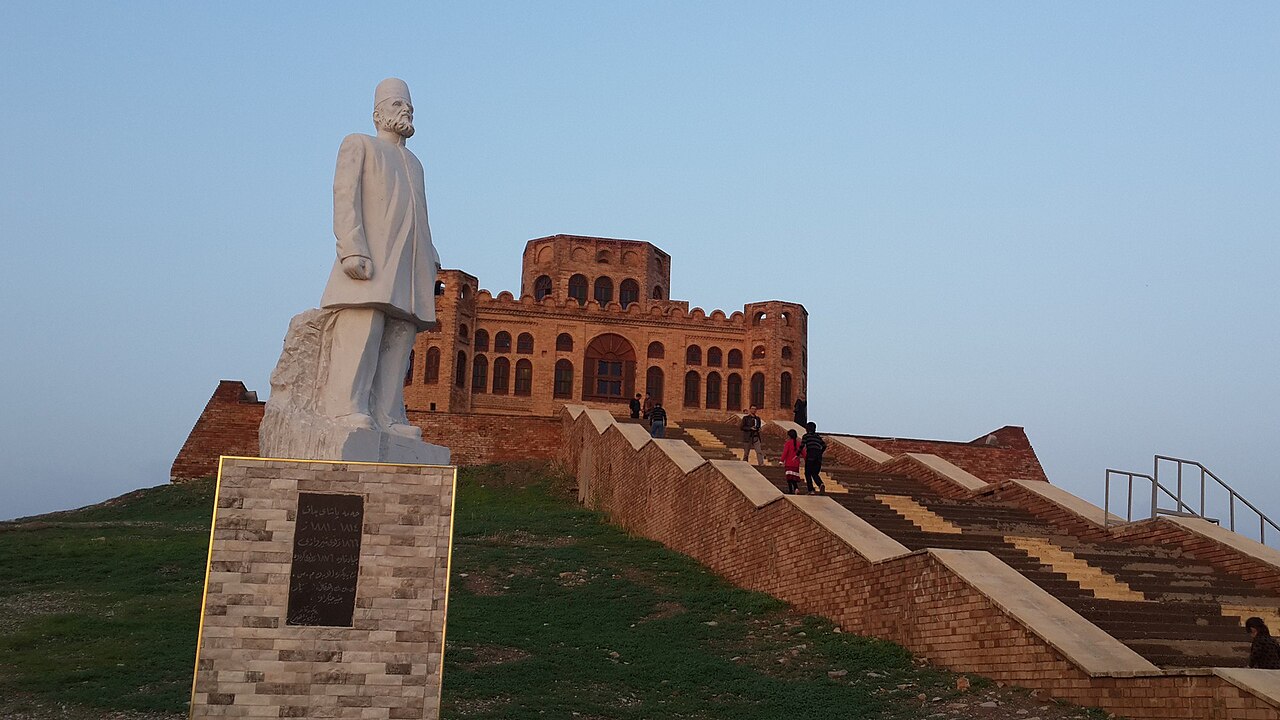
Sherwana Castle (Kurdish: قەڵای شێروانە, romanized: Qellay Şêrwane), also known as Shirwanah Castle, is a castle located in Kalar, Kurdistan Region, Iraq. Sherwana Castle is the ancestral home of the Jaff family.
It was built by Mohamed Pasha Jaff, Kurdish pasha serving the Ottoman Empire, during the 1800s. After the Mamluk Vali of Baghdad, Suleiaman Pasha, dealt a crushing defeat to the Persian occupation of Abbas Mirza Qajar of Northern Mesopotamia, and put to flight the Babans in 1850, Mohamed Pasha Jaff along with the Jaff nomads were allowed to dwell in the Shahrizor unharassed by the Ottomans or Persians in any way. A golden age began for the Jaff as they became a major power in all the region.
Their nomadic caravans were allowed pasture from Khanaqin and Qizil Rubat to Pênciwên in the Shahrizor region of Kurdistan. In these regions Mohammed Pasha Jaff from his position of power began to crack down on all of his enemies from the Pro Baban Jaff under Aziz Beg Jaff, who was the son of Kai Khasrow Beg Jaff to the rival tribe of the Hemevand, who were anti Ottoman and anti-everything. He would erect a fortress on the banks of the Shirwan river to guard against all of these foes in 1866.
This fortress is now known as the Şêrwane fortress. In 1868, he would be appointed by the Mamluk Vali Suliaman Pasha of Baghdad. The Jaff's rivals, Hamavands, would go to the Caucasus and fight under for the Russians against the Ottomans. The Russians would arm them and send them back to agitate the Shahrizor and create anarchy.
Osman Pasha Jaff's son, would be given the residence of the fortress, as his father concerned himself with the affairs of Gulanbar and Halabja, Mohammed Ali Beg Jaff. During World War I the Jaff and the Kurds would fall into obscurity as most of the war took place in the South between the Ottomans and British, fighting a back forth battle around Kut, which the Ottomans would deal the British their worst defeat during the war. The British would finally get the upper hand through other fronts, the Palestine front especially. The Ottomans would sign the Treaty of Mudros in 1917. The British would then occupy Mesopotamia, and the Ottoman Empire would cease to exist.
Text adapted from “Sherwana Castle” on Wikipedia, CC BY-SA 4.0.
Sherwana Castle ranks #3,953 of 9,035 worldwide in the atlas's castle fame ranking, and #11 of the 15 mapped in Iraq. Founded c. 1850, it is older than 7% of the atlas's dated landmarks, one of 705 atlas entries founded in the 19th century. See how Iraq compares in the castle statistics.
View on the interactive castle map →