Ruin
Søborg Castle
🇩🇰 Denmark · 12th century
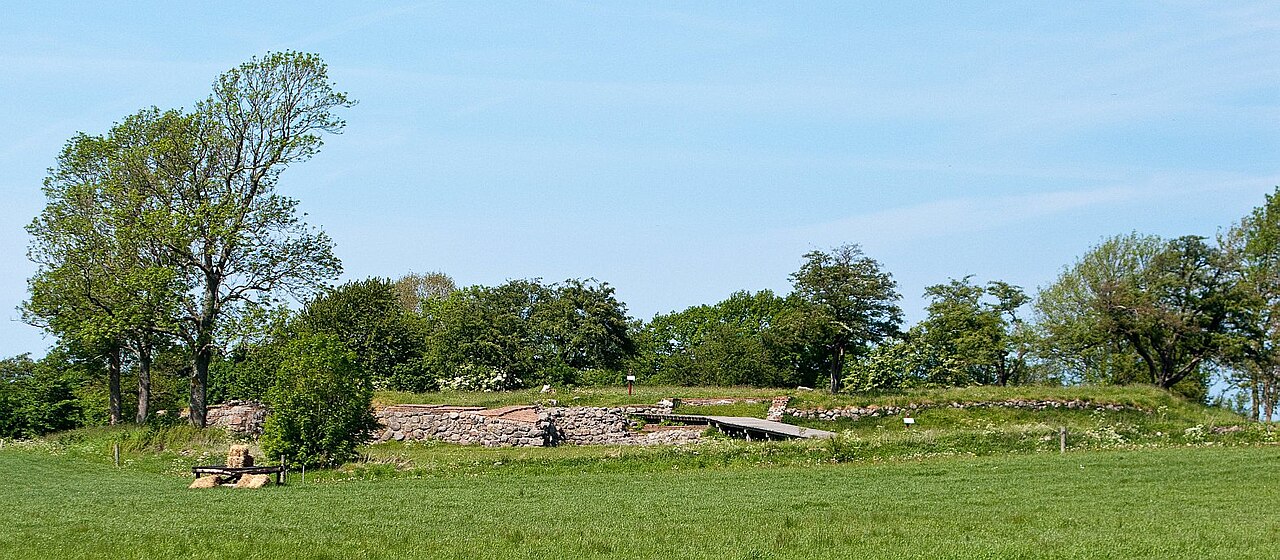
Søborg Castle (Danish: Søborg Slot, pronounced [ˈsøˌpɒˀ ˈslʌt]) is a ruined castle south of Gilleleje in North Zealand, Denmark. It was one of the strongest castles in Denmark and was also used as a prison. It was inhabited until the Count's Feud in 1535, when it is speculated that it was destroyed. In 1577, the feudal tenant was granted permission to use the ruins as a quarry.
Søborg Castle is first known from the 12th century, when ownership of the castle passed from the king to the Bishop of Roskilde. Bishop Valdemar was imprisoned at Søborg Castle from 1198 to 1206. Valdemar IV, Duke of Schleswig was confined at Søborg Castle in 1285–86.
Queen Margaret I of Denmark was born at the prison of Søborg Castle, where her father, King Valdemar IV of Denmark, had confined her mother, Helvig of Schleswig.
Traditionally, Archbishop Eskil of Lund is said to have expanded the previous buildings to a real castle with defensive walls and a moat. As Eskil was in close contact with Esrum Abbey, it is considered likely that he lived nearby at Søborgby. Saxo Grammaticus wrote that Eskil had built a castle in the den lethriske mose, but it is unknown whether that is a reference to Søborg. No-one has so far been able to make a clear connection between Eskil and Søborg either by archaeological finds or written sources. Such a connection is therefore a hypothesis only.
In the Middle Ages, the castle was on an island in a fjord with an outlet to the Kattegat by Gilleleje. Later, the fjord became Søborg Sø, which was drained 1872-1896 when a canal was dug to Gilleleje.
In 1985, Danish historian Robert Egevang (1939–2008) led an excavation of two trenches to determine the conditions between the octagon tower and the castle proper. A rampart approximately 11 metres (36 ft) wide is the oldest encirclement of the castle. Tiles have been found in the rampart, as well as in the octagon tower which was built at the same time. The excavations show that the castle proper was erected in the late 13th century, which would make it impossible that Eskil was the builder, as he died in 1181. The tiles are very unevenly made, evidence of their novelty in Denmark, after having only recently been introduced from Lombardy.
Text adapted from “Søborg Castle” on Wikipedia, CC BY-SA 4.0.
Søborg Castle ranks #3,806 of 8,134 worldwide in the atlas's castle fame ranking, and #45 of the 53 mapped in Denmark. Founded c. 1150, it is older than 81% of the atlas's dated landmarks — one of 564 atlas entries founded in the 12th century. Its Wikipedia articles were opened 2,051 times in the last 60 days, more than 68% of the atlas. 9 more atlas landmarks stand within 25 km. The nearest day-trip guide is Helsingborg, 26 km away. See how Denmark compares in the castle statistics.
View on the interactive castle map →Frequently asked questions
Where is Søborg Castle?
Søborg Castle stands in Denmark, at 56.09078°, 12.31017°.
When was Søborg Castle built?
The atlas dates its founding to c. 1150. Earlier structures may have stood on the site; this is the earliest documented founding year.
How famous is Søborg Castle?
In this atlas's fame ranking: #3,806 of 8,134 worldwide, and #45 in Denmark. Fame here combines how many Wikipedia language editions cover a landmark with how many people read them.
What is the nearest castle to Søborg Castle?
Fredensborg Palace, about 13 km away.
More castles in Denmark
- Borgring Denmark · 10th century
- Borreby Castle Denmark · 16th century
- Kronborg Castle Denmark · 15th century
- Amalienborg Denmark · 18th century
More ruins
- Burtnieki Castle Latvia · 14th century
- Drežnik Castle Croatia · 12th century
- Leighlinbridge Castle Ireland · 12th century
- Kilcash Castle Ireland