 Germany · 15th century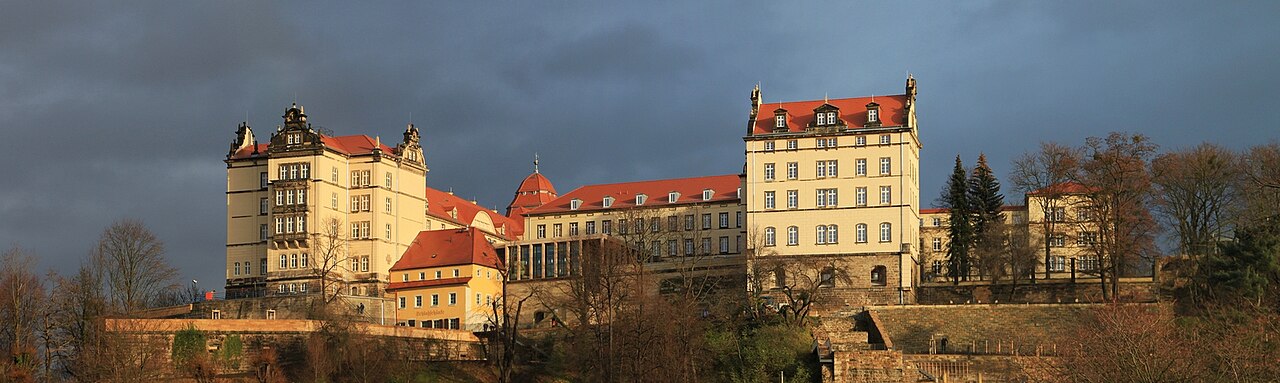
The Sonnenstein Castle is a castle in Pirna, near Dresden, Germany. It housed a mental hospital, which operated from 1811 to the end of World War II in 1945. During the War, it functioned as an extermination centre for the Nazi Aktion T4 program. It was shut down following the war, and reopened in 1970.
Sonnenstein castle, located at Pirna near Dresden, above the river Elbe, was built after 1460 (1460) on the site of a former medieval castle. Sonnenstein castle was used as a mental home since 1811. Among other patients, Sonnenstein was the asylum in which Daniel Paul Schreber wrote his Denkwürdigkeiten eines Nervenkranken in 1900–2. Because of the advanced methods practiced there, it received worldwide acclaim and served as a model for other institutions. Sonnenstein Asylum was one of the first 'therapeutic asylums'; activity rooms included billiards and music rooms.
From early 1940 until the end of June 1942, a part of the castle was converted into a killing centre. A gas chamber and crematorium were installed in the cellar of the former men's sanitary (building C 16). A high brick-wall on two sides of the complex shielded it from outside while a high hoarding (billboard) was erected on the other sides. Four buildings were located inside the shielding. They were used for offices, living rooms for the personnel etc. Sleeping quarters for the men who burned the bodies were provided for in the attic of building C 16. It is possible that other sections of the buildings were also used by T4.
From end of June 1940 until September 1942, approximately 15,000 persons were killed in the scope of the programme and the Sonderbehandlung 14f13. The staff consisted of about 100 persons. One third of them were ordered to the extermination camps in occupied Poland, because of their experiences in deception, killing, gassing and disposing of prisoners.
During August / September 1942 the Sonnenstein killing centre was liquidated and incriminating installations such as gas chambers and crematorium ovens dismantled. From October 1942 the buildings were used as a military hospital.
In the summer of 1947 some Action T4 members appeared as accused in the Dresdner Ärzteprozess (Doctor's Trial in Dresden). Professor Paul Nitsche, medical chief of T4, and two male nurses from Sonnenstein were sentenced to death.
Text adapted from “Sonnenstein Castle” on Wikipedia, CC BY-SA 4.0.
Sonnenstein Castle ranks #1,522 of 9,079 worldwide in the atlas's castle fame ranking, and #118 of the 711 mapped in Germany. Founded c. 1460, it is older than 46% of the atlas's dated landmarks — one of 554 atlas entries founded in the 15th century. Its Wikipedia articles were opened 3,321 times in the last 60 days, more than 80% of the atlas. 15 more atlas landmarks stand within 25 km. The nearest day-trip guide is Dresden, 18 km away. See how Germany compares in the castle statistics.
View on the interactive castle map →