 Netherlands · 18th century
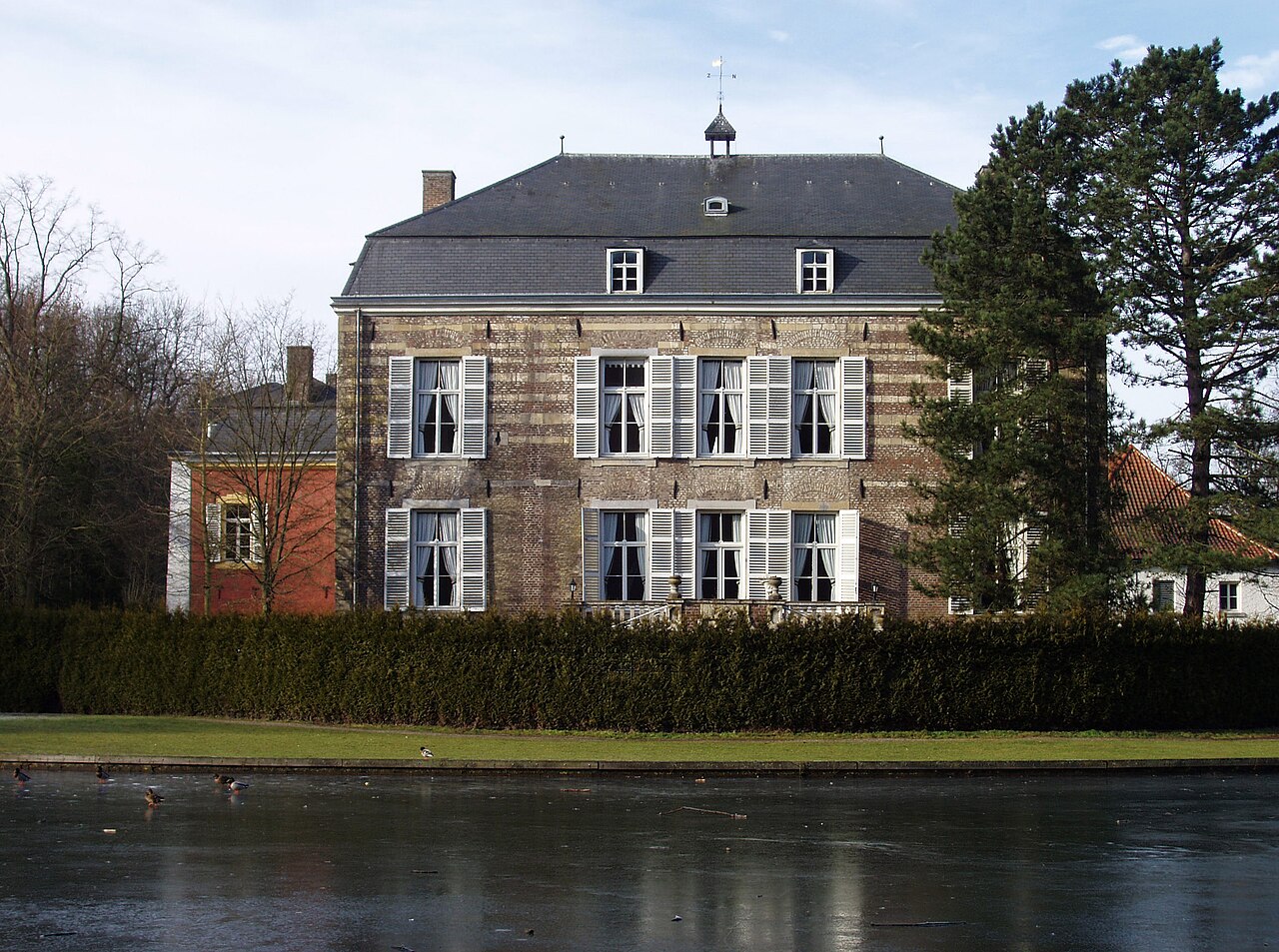
Strijthagen Castle ranks #7,733 of 9,040 worldwide in the atlas's castle fame ranking, and #136 of the 198 mapped in Netherlands. Founded c. 1750, it is older than 16% of the atlas's dated landmarks, one of 685 atlas entries founded in the 18th century. 39 more atlas landmarks stand within 25 km. The nearest day-trip guide is Aachen, 13 km away. See how Netherlands compares in the castle statistics.
Strijthagen Castle (German: Schloss Strijthagen or Schloss Streithagen) is a castle complex in the territory of the municipality of Landgraaf in Dutch Limburg.
It probably arose from a medieval predecessor complex of the von Strijthagen family, whose roots lay in the 13th century. Via the Judenkop family the castle of the time passed to the von Schaesberg family, under whom a new manor house was built. Because Michael von Schaesberg died completely in debt and without children, the complex came into the possession of two of his creditors and from them finally to the Aachen merchant Mathias Gerard von Clotz. He had the outer bailey rebuilt and the manor house converted in the Baroque style. The last structural changes to the complex took place at the beginning of the 20th century, when Friedrich Honigmann was the owner.
When in the 1960s severe damage to the fabric of the building appeared as a result of the neighbouring coal mining, the castle complex was threatened with demolition, but through a comprehensive restoration costing millions it could be preserved. Since 2016 the buildings have been the private property of a Russian artist couple, who use them as an art centre.
The two-part complex is the best-preserved noble residence in the municipality of Landgraaf and has been under monument protection since 21 February 1967. The watermill formerly belonging to the castle has been an independent Rijksmonument since as early as 17 January 1967.
Machine-translated from “Kasteel Strijthagen” on the German Wikipedia, CC BY-SA 4.0.
View on the interactive castle map →