 Greece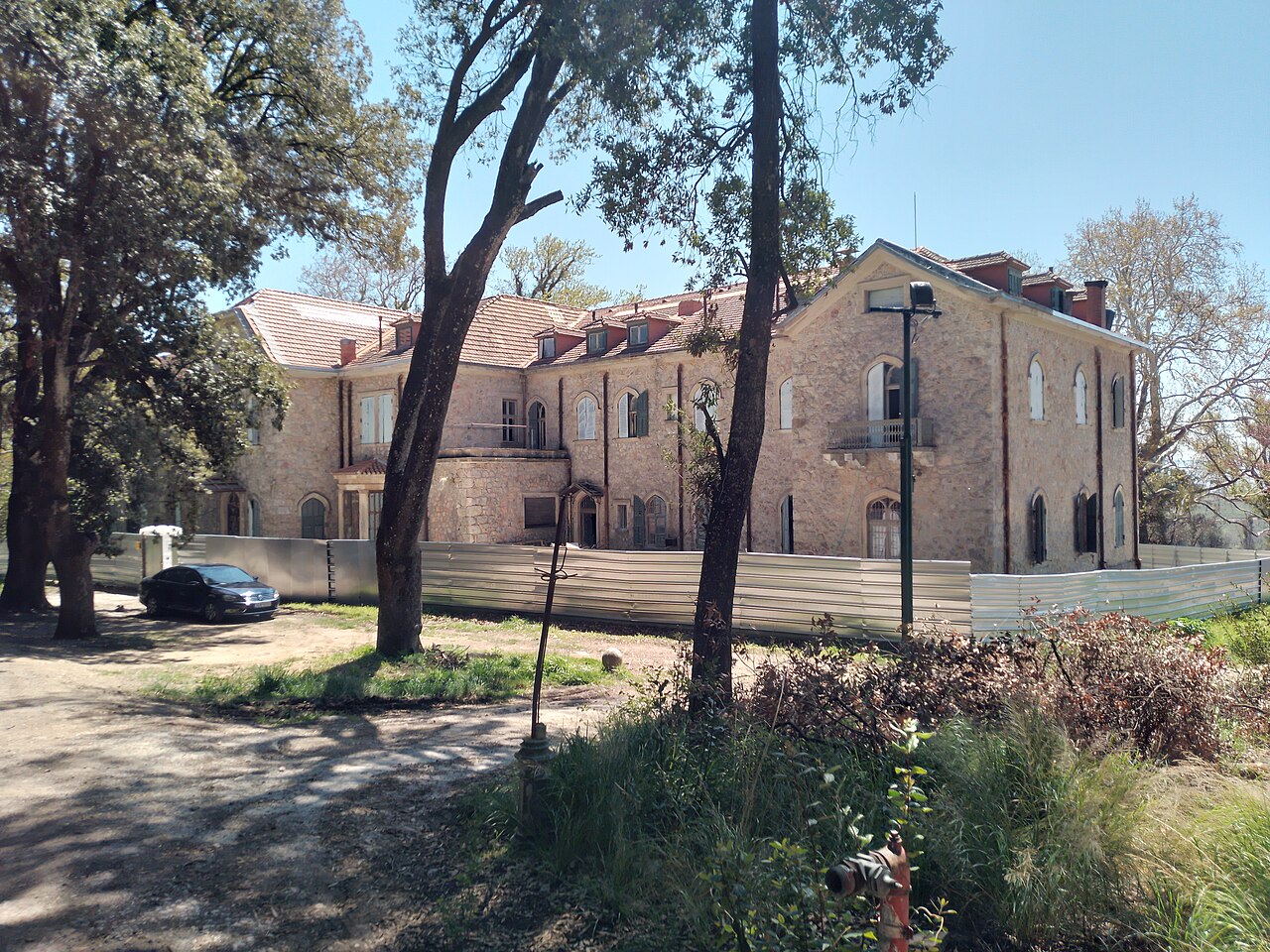
Tatoi (Greek: Τατόι, pronounced [ta.ˈto.i]) was the summer palace and 42 km2 (10,000 acres) estate of the former Greek royal family. The area is a densely wooded southeast-facing slope of Mount Parnitha, and its ancient and current official name is Dekeleia. It is located 27 km (17 mi) from the city centre of Athens and 2.5 km (2 mi) from Kifissia.
King George I purchased the estate in 1872, purchasing it with private funds he had brought from Denmark.
In July 1916, an arson attack ravaged Tatoi Palace. The royal family barely escaped the flames. Among the palace personnel and firefighters who arrived to deal with the blaze, sixteen people were killed.
During the Republican regime in the 1920s, most of the estate was confiscated from its owners. Around 1929-1930 the government allowed Dimitrios Gaziadis to film the movie The Apaches of Athens (1930) at the lavish estate. In 1936, it was returned to King George II following the monarchy's restoration.
During the Second World War, when the King was in exile and Greeks suffered considerable hardships under German occupation, the woods at Tatoi were chopped down for fuel and corpses were buried in shallow graves.
King George II regained possession of the estate in 1946. It passed down as private property to King Constantine II until 1994, when the royal estates were confiscated by the government of Andreas Papandreou.
In 1973, the property was abandoned completely. Lack of funding resulted in the cows and horses dying of starvation in the stables. The buildings were subject to vandalism and looting, resulting in significant losses. A former cowshed was filled with objects from Rododafni Castle, the mansion at Psychico, Mon Repos palace, and other royal residences. With permission of the Government, in 1993, the ex-King was able to remove nine cargo crates of objects: some of this appeared at auction at Christies in 2007. There remained 17,000 objects, including antiquities, old masters, and a life-size portrait of Queen Anne-Marie that are now in storage at the Ministry of Culture.
In June 2007, the Government of Greece said it intended to turn the former palace and grounds into a museum. However, it was reported in September 2012 that the government now intended to sell the palace and its estate in the face of mounting financial pressure.
Text adapted from “Tatoi Palace” on Wikipedia, CC BY-SA 4.0.
Tatoi Palace ranks #413 of 9,079 worldwide in the atlas's castle fame ranking, and #11 of the 134 mapped in Greece. Its Wikipedia articles were opened 19,400 times in the last 60 days, more than 97% of the atlas. 5 more atlas landmarks stand within 25 km. The nearest day-trip guide is Athens, 21 km away. See how Greece compares in the castle statistics.
View on the interactive castle map →