 Denmark · 10th century
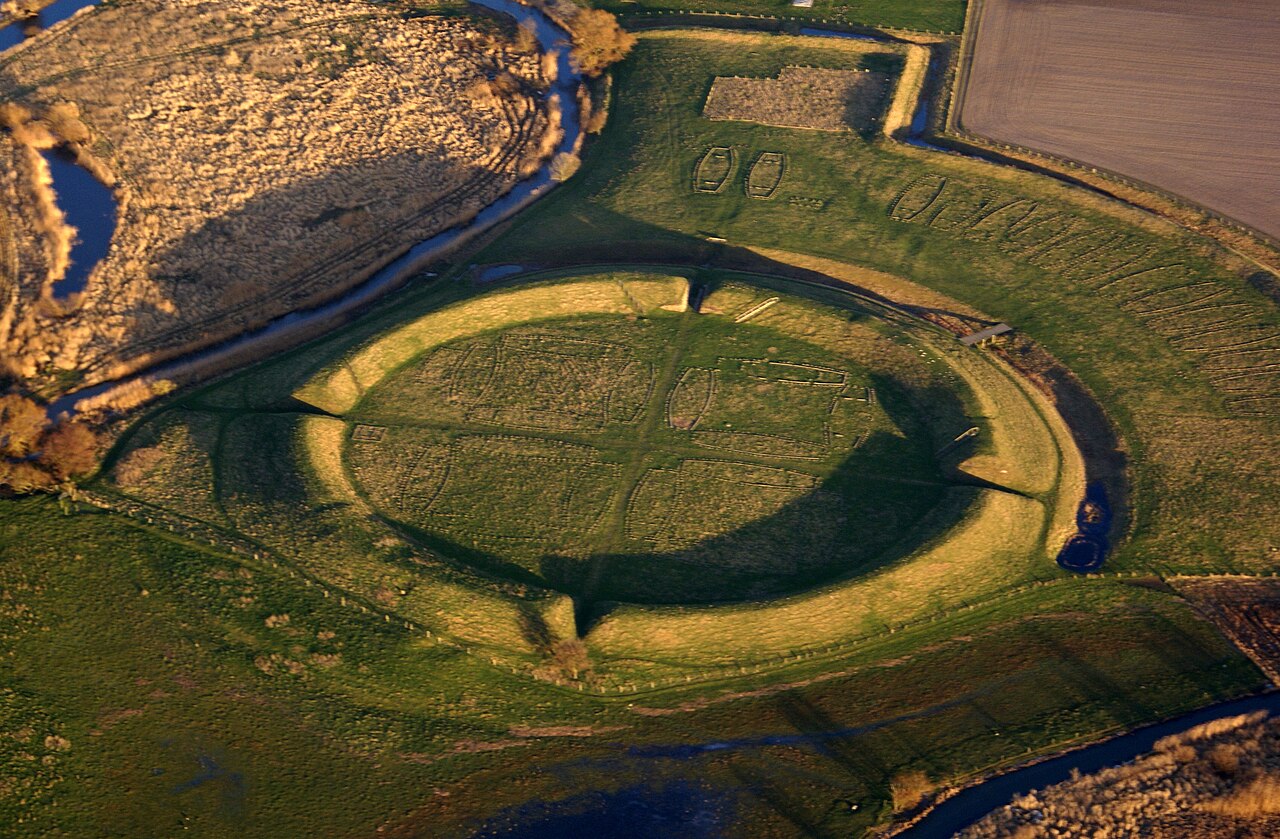
The Trelleborg (or Trælleborg), west of Slagelse on the Danish island of Zealand, is one of seven known Viking ring castles. When built, the fortress was situated on a peninsula that jutted into the swampy area between two rivers. The swamp was connected to the Great Belt by a lake and could be navigated by Viking ships. Trelleborg is believed to have been ordered by King Harald Bluetooth in the year 980 AD and it might have commanded the Great Belt and its sea traffic, between the islands of Zealand and Funen.
Trelleborg is the best preserved of the Viking ring fortresses. Since 1995, the Trelleborg Museum has presented the story of this particular fortress and the nearby area. Some of the artifacts found in connection with the archaeological excavations are on display at the museum, while others are on display at the Nationalmuseet in Copenhagen.
Along with four other Viking ring fortresses in Denmark, Trelleborg was inscribed on the UNESCO World Heritage List in 2023 because of its unique architecture and testimony to the strategic and military power of the House of Knýtlinga (Jelling Dynasty).
Text adapted from “Trelleborg (Slagelse)” on Wikipedia, CC BY-SA 4.0.
Trelleborg ranks #1,288 of 9,035 worldwide in the atlas's castle fame ranking, and #16 of the 59 mapped in Denmark. Founded 980, it is older than 92% of the atlas's dated landmarks, one of 192 atlas entries founded in the 10th century. Its Wikipedia articles were opened 3,657 times in the last 60 days, more than 81% of the atlas. 2 more atlas landmarks stand within 25 km. The nearest day-trip guide is Næstved, 36 km away. See how Denmark compares in the castle statistics.
View on the interactive castle map →