 India · 14th century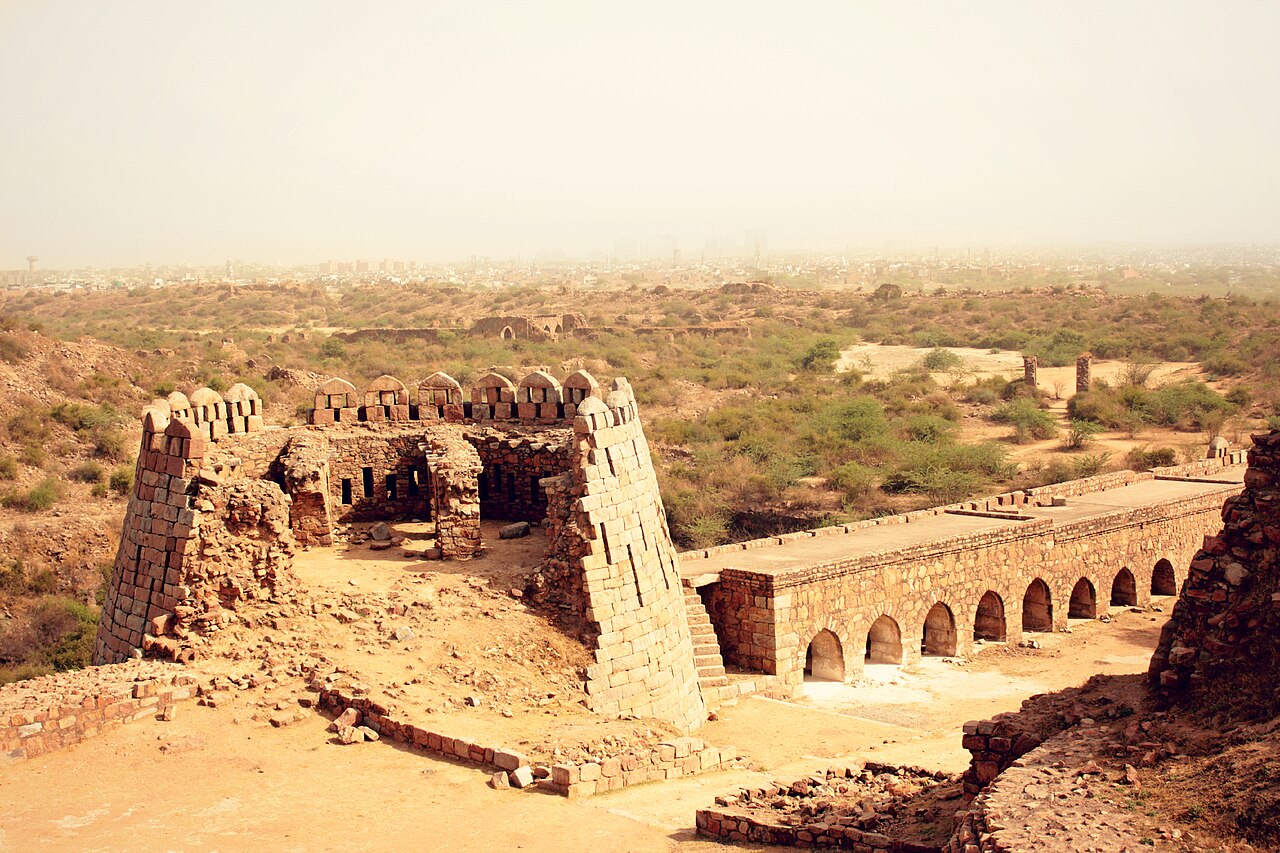
Tughluqabad Fort is a ruined fort in Delhi, India. Ghiyath al-Din Tughluq, the founder of the Tughlaq dynasty and ruler of the Delhi Sultanate, constructed it in 1321 when he established the third historic city of Delhi. However, it was later abandoned in 1327.
The fort lends its name to the nearby Tughluqabad residential-commercial area as well as the Tughluqabad Institutional Area. Ghiyasuddin Tughluq also built the Qutub-Badarpur Road, which connected the new city to the Grand Trunk Road. The road is now known as Mehrauli-Badarpur Road.
Its environs are an important biodiversity area within the Northern Aravalli leopard wildlife corridor stretching from Sariska Tiger Reserve to Delhi. Historical places around the sanctuary are Badkhal Lake, 6 km (3.7 mi) northeast, the tenth century ancient Surajkund reservoir and Anangpur Dam, Damdama Lake, Tughlaqabad Fort and Adilabad ruins (both in Delhi). It is contiguous to the seasonal waterfalls in Pali-Dhuaj-Kot villages of Faridabad, the sacred Mangar Bani and the Asola Bhatti Wildlife Sanctuary. There are several dozen lakes formed in the abandoned open pit mines in the forested hilly area of Delhi Ridge.
Text adapted from “Tughlaqabad Fort” on Wikipedia, CC BY-SA 4.0.
Tughlaqabad Fort ranks #1,073 of 9,079 worldwide in the atlas's castle fame ranking, and #39 of the 224 mapped in India. Founded 1321, it is older than 59% of the atlas's dated landmarks — one of 755 atlas entries founded in the 14th century. Its Wikipedia articles were opened 3,951 times in the last 60 days, more than 83% of the atlas. 9 more atlas landmarks stand within 25 km. The nearest day-trip guide is Delhi, 18 km away. See how India compares in the castle statistics.
View on the interactive castle map →