 India · 16th century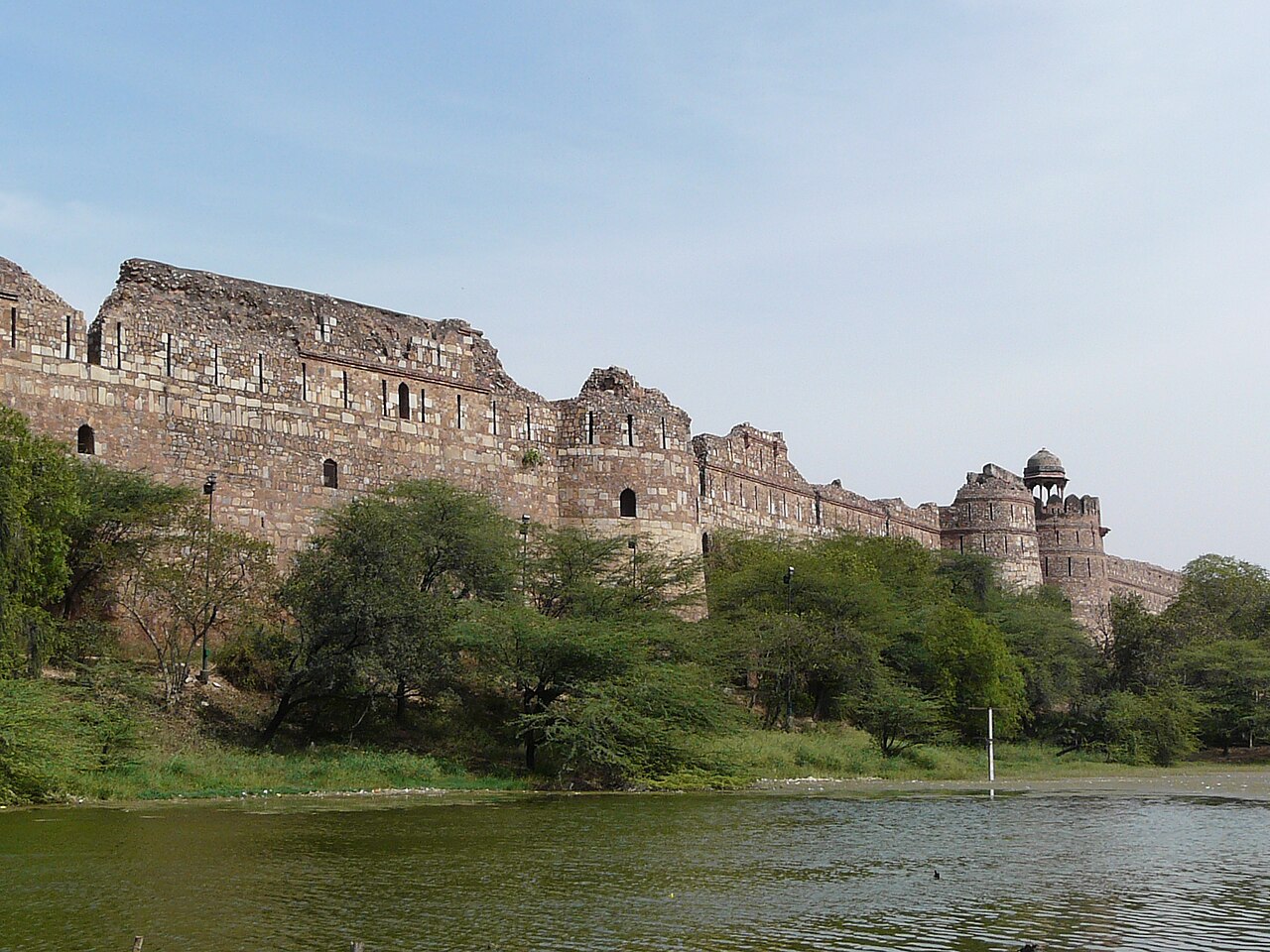
Purana Qila (lit. 'Old Fort') is one of the oldest forts in Delhi, India. It was built by the second Mughal Emperor Humayun and Surid Sultan Sher Shah Suri. The fort forms the inner citadel of the city of Dinpanah. It is located near the expansive Pragati Maidan exhibition ground and is separated from Dhyanchand Stadium by Mathura Road, Delhi.
Excavations point to traces and continued habitation from the 1000 BC, during the Painted Grey Ware period. The first two rounds of excavations – in 1954–55 and 1969–72 – by B. B. Lal, then director of the Archaeological Survey of India (ASI), had unearthed traces of Painted Grey Ware culture. Historian Alexander Cunningham identified the fort with that of Indraprastha, though he referred to the present structure as built by Muslim rulers. Even till the early part of the 20th century, Purana Qila was known as Pandavon Ka Qila (Pandava's fort) and the entire complex as Indraprastha village. It must be remembered that coordinating material archaeological culture with literary and bardic literature is methodologically almost always impossible.
The origins of the Purana Qila lie in the walls of Dinpanah, the new city of Delhi was being constructed by Mughal emperor Humayun, in the general vicinity of the ancient Indraprastha ruins. Abul Fazl stated that he built the fort in the place of that of ancient Indraprastha. The founder of the Sur Empire, Sher Shah Suri, defeated Humayun and made changes to the fort, strengthening its fortifications and completing its walls. He also had another fort built there called Shergarh, where the governor resided. His project, however, was a continuation of Humayun's construction of a citadel for a royal city. He also built many structures inside the fort.
Additions to the fort have been believed to have been made even after his rule. The extent of his contribution to the fort's construction is disputed. The historical attribution of its construction is also uncertain judging from primary sources. Muhammad Khwandamir said that Humayun laid the foundation of the city on a mound near Yamuna. The construction of the walls and fortifications were almost finished by Humayun's time. Tarikh-i-Da'udi states that Sher Shah Suri's royal city remained incomplete upon his death and he had named his fort Shergarh.
Text adapted from “Purana Qila” on Wikipedia, CC BY-SA 4.0.
Purana Qila ranks #662 of 9,035 worldwide in the atlas's castle fame ranking, and #27 of the 223 mapped in India. Founded c. 1550, it is older than 36% of the atlas's dated landmarks, one of 886 atlas entries founded in the 16th century. Its Wikipedia articles were opened 8,253 times in the last 60 days, more than 92% of the atlas. 9 more atlas landmarks stand within 25 km. The nearest day-trip guide is Delhi, 7 km away. See how India compares in the castle statistics.
View on the interactive castle map →