 Sweden · 16th century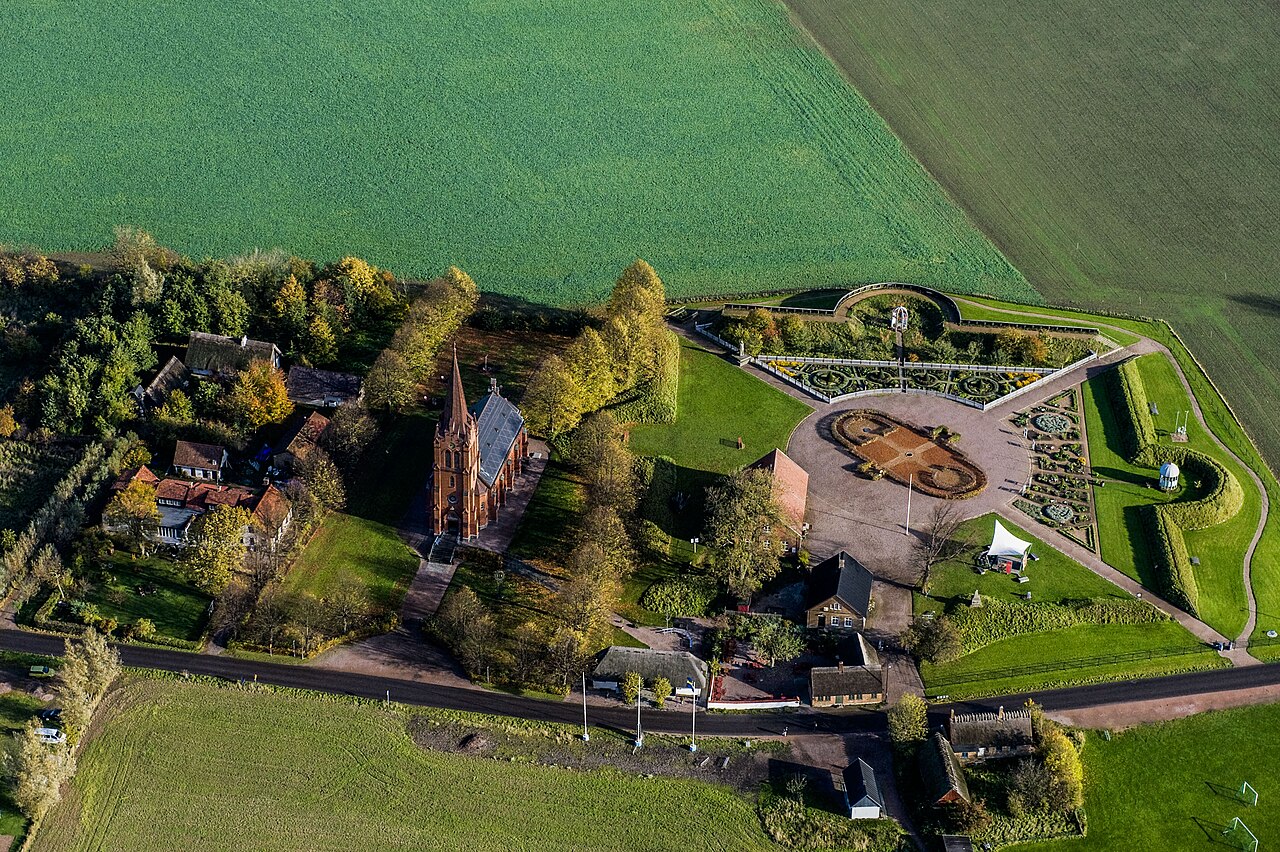
Uraniborg was an astronomical observatory and alchemy laboratory established and operated by the Danish astronomer Tycho Brahe. It was the first custom-built observatory in modern Europe, and the last to be built without a telescope as its primary instrument.
Uraniborg was built c. 1576 – c. 1580 on Ven, an island in the Öresund between Zealand and Scania, Sweden, which was part of Denmark at the time. It was expanded with the underground facility Stjärneborg on an adjacent site.
Brahe also innovated and invented many precision instruments which he used to carry out his studies in the observatory. Research was done in the fields of astronomy, alchemy, and meteorology by Tycho and his assistants.
Brahe abandoned Uraniborg and Stjärneborg in 1597 after he fell out of favour with the Danish king, Christian IV of Denmark; Brahe left the country, and the institution was destroyed in 1601 after his death. Ven was later lost to Sweden, and the Rundetårn (Round Tower) in Copenhagen was inaugurated in 1642 as a replacement for Uraniborg's astronomical functions. Restoration of Uraniborg's grounds began in 1985.
Text adapted from “Uraniborg” on Wikipedia, CC BY-SA 4.0.
Uraniborg ranks #498 of 9,079 worldwide in the atlas's castle fame ranking, and #6 of the 209 mapped in Sweden. Founded 1576, it is older than 34% of the atlas's dated landmarks — one of 891 atlas entries founded in the 16th century. Its Wikipedia articles were opened 6,836 times in the last 60 days, more than 90% of the atlas. 18 more atlas landmarks stand within 25 km. The nearest day-trip guide is Helsingborg, 15 km away. See how Sweden compares in the castle statistics.
View on the interactive castle map →