 Greece · 15th century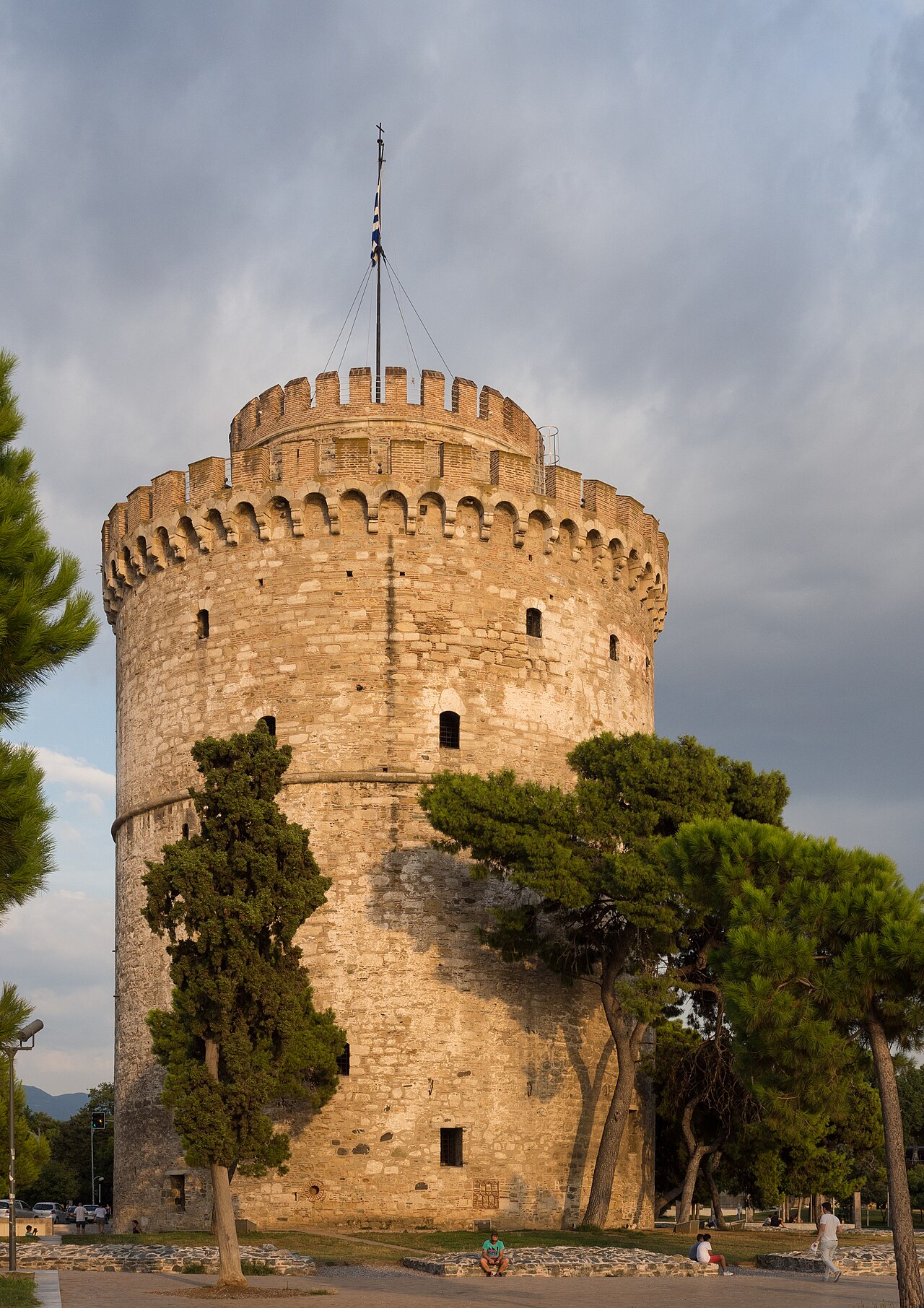
The White Tower of Thessaloniki (Greek: Λευκός Πύργος Lefkós Pýrgos; Turkish: Beyaz Kule; Ladino: Kuli Blanka) is a monument and museum on the waterfront of the city of Thessaloniki, capital of the region of Macedonia in northern Greece. The present tower likely replaced an old Byzantine fortification, known to have been mentioned around the 12th century, that the Ottoman Empire reconstructed to fortify the city's fortress some time after Sultan Murad II captured Thessaloniki in 1430. During the period of Ottoman rule, the tower became a notorious prison and the scene of numerous mass executions, most famously of the Janissaries who revolted during the reign of Mahmud II.
In 1912, as Greece gained control over the city, the White Tower was substantially remodeled and its exterior was whitewashed. The White Tower has been adopted as the symbol of the city.
Text adapted from “White Tower of Thessaloniki” on Wikipedia, CC BY-SA 4.0.
White Tower of Thessaloniki ranks #187 of 9,079 worldwide in the atlas's castle fame ranking, and #7 of the 134 mapped in Greece. Founded c. 1500, it is older than 43% of the atlas's dated landmarks — one of 554 atlas entries founded in the 15th century. Its Wikipedia articles were opened 22,007 times in the last 60 days, more than 98% of the atlas. Wikidata records about 230,000 visitors in 2018. 4 more atlas landmarks stand within 25 km. The nearest day-trip guide is Thessaloniki, 2 km away. See how Greece compares in the castle statistics.
View on the interactive castle map →