 Greece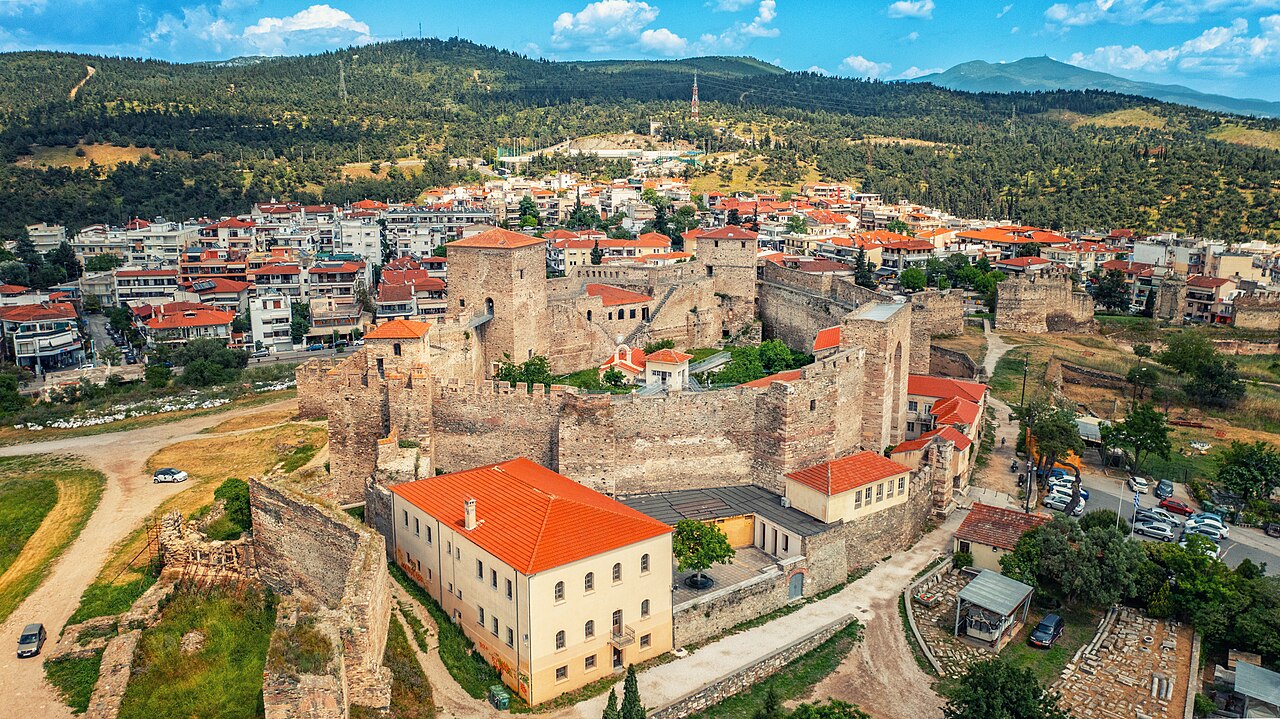
The Heptapyrgion (Medieval Greek: Ἑπταπύργιον [eptaˈpirʝion]), modern Eptapyrgio (Greek: Επταπύργιο [eptaˈpirʝio]), also popularly known by its Ottoman Turkish name Yedi Kule (یدی قله yedikulle; Γεντί Κουλέ), is a Byzantine and Ottoman-era fortress situated on the north-eastern corner of the Acropolis of Thessaloniki in Greece.
Despite its name, which in both languages means "Fortress of Seven Towers", it features ten, and was probably named after the Yedikule Fortress in Constantinople (modern Istanbul, Turkey). It served as the major redoubt of the city's acropolis, as well as the seat of its garrison commander in Ottoman times, until the late 19th century. It was then converted to a prison (Φυλακές Επταπυργίου), which remained open until 1989. References to the infamous Yedi Kule prison abound in the Greek rebetika songs. Restoration and archaeological work began in the 1970s and continues to this day.
Text adapted from “Heptapyrgion (Thessaloniki)” on Wikipedia, CC BY-SA 4.0.
Heptapyrgion ranks #1,296 of 9,079 worldwide in the atlas's castle fame ranking, and #27 of the 134 mapped in Greece. Its Wikipedia articles were opened 4,714 times in the last 60 days, more than 86% of the atlas. 4 more atlas landmarks stand within 25 km. The nearest day-trip guide is Thessaloniki, 2 km away. See how Greece compares in the castle statistics.
View on the interactive castle map →