 Turkey · 18th century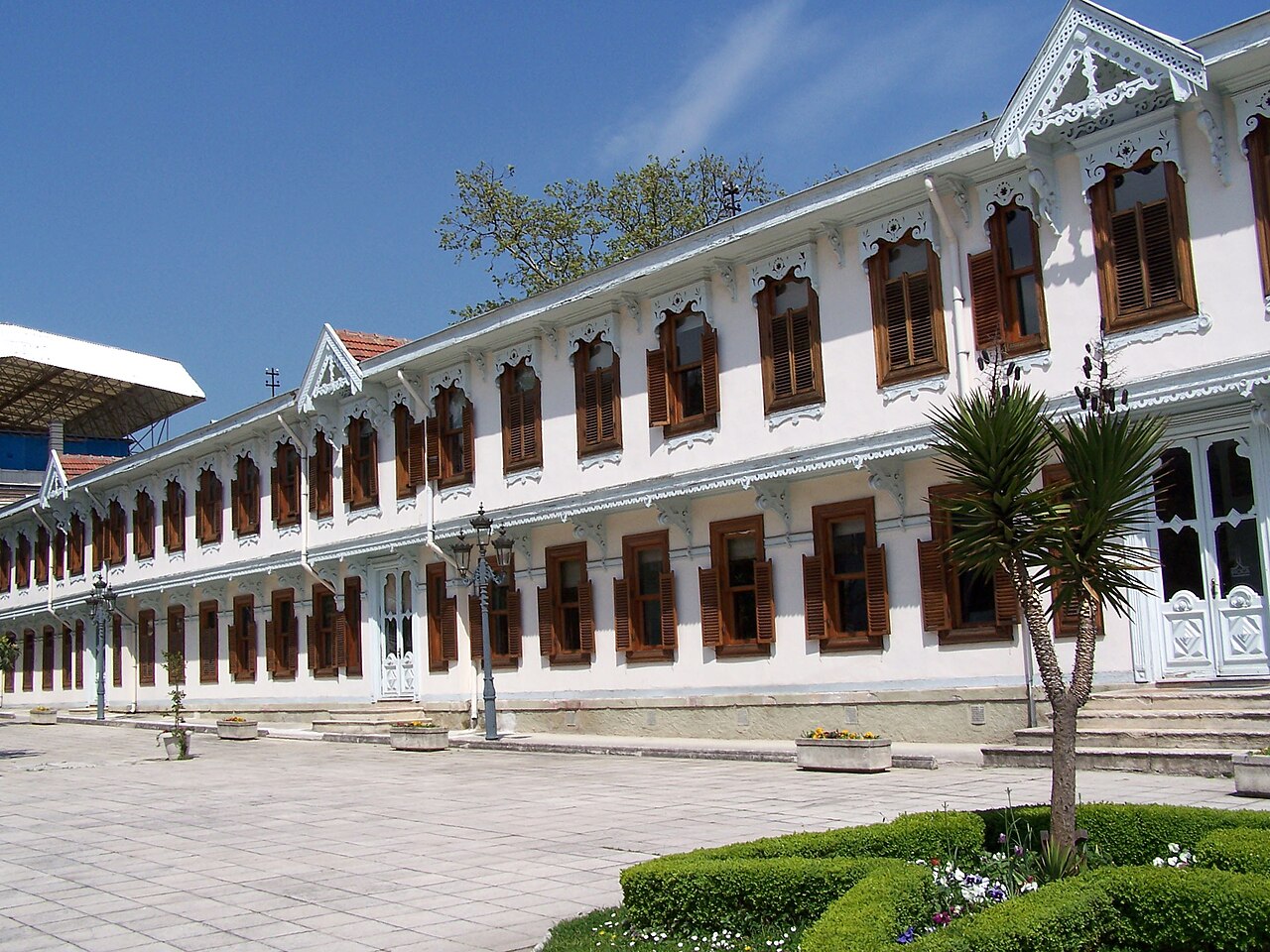
Yıldız Palace (Turkish: Yıldız Sarayı, IPA: [jɯɫˈdɯz saɾaˈjɯ]) is a vast complex of former imperial Ottoman pavilions and villas in Beşiktaş, Istanbul, Turkey, built in the 19th and early 20th centuries. It was used as a residence by the sultan and his court in the late 19th century.
Yıldız Palace, meaning "Star Palace", was built in 1880 and was used by the Ottoman Sultan Abdülhamid II. The area of the palace was originally made of natural woodlands and became an imperial estate during the reign of Sultan Ahmed I (r. 1603–1617). Various sultans after Ahmed I enjoyed vacationing on these lands and Sultans Abdülmecid I and Abdülaziz built mansions here. The Yildiz Palace was a complex over a large area of hills and valleys. This was an example of traditional Ottoman architecture consisting of a complex of different buildings across a piece of land.
The first pavilion was built by Sultan Selim III from 1798 to 1808, for his mother, Mihrişah Sultan. In the 1870s, the surrounding area of the palaces were a series of isolated pavilions in a wooded setting.
In the late 19th century, Sultan Abdülhamid II left Dolmabahçe Palace because he feared a seaside attack on the palace, which is located at the shore of the Bosporus strait. He expanded the Yıldız Palace and ordered the renowned Italian architect Raimondo D'Aronco to build new buildings to the palace complex. When he moved there, the palace became the fourth seat of Ottoman government (the previous ones were the Eski Saray (Old Palace) in Edirne, and the Topkapı Palace and Dolmabahçe Palaces in Istanbul.
The palace is a complex of buildings including the State Apartments Büyük Mabeyn, Şale Pavilion, the Malta Pavilion, the Çadır Pavilion, the Yıldız Theater and Opera House, the Yıldız Palace Museum, and the Imperial Porcelain Factory. The Yıldız Palace Gardens are also a popular public site among the residents of Istanbul. A bridge connects the Yıldız Palace with the Çırağan Palace on the Bosporus through this garden.
The Yıldız Palace is separated into three courtyards. The first courtyard is where the Sultan and his leaders would govern, which makes sense because the palace served as the fourth seat of Ottoman government. In this courtyard, one may find offices for governing officials, the extensive library of Sultan Abdulhamid II, and an armory.
Text adapted from “Yıldız Palace” on Wikipedia, CC BY-SA 4.0.
Yıldız Palace ranks #317 of 9,079 worldwide in the atlas's castle fame ranking, and #8 of the 129 mapped in Turkey. Founded 1790, it is older than 13% of the atlas's dated landmarks — one of 696 atlas entries founded in the 18th century. Its Wikipedia articles were opened 10,852 times in the last 60 days, more than 94% of the atlas. 26 more atlas landmarks stand within 25 km. The nearest day-trip guide is Istanbul, 6 km away. See how Turkey compares in the castle statistics.
View on the interactive castle map →