 Serbia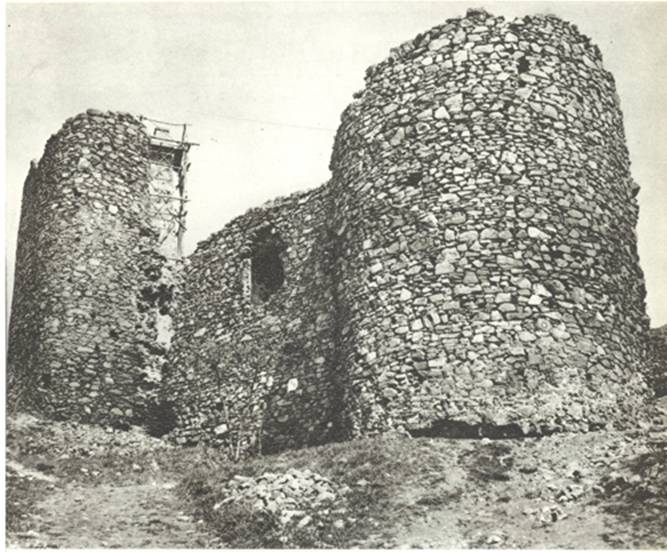
Žrnov (Serbian Cyrillic: Жрнов) or Žrnovan (Жрнован) was a medieval fortress on the highest top of the Avala Mountain, at 511 metres (1,677 ft), in Belgrade, Serbia. The Ancient Romans had built an outpost there, and later the Serbs expanded it into a fortress. It was completely demolished in 1934 to make the way for the Monument to the Unknown Hero.
The Avala had deposits of ores, most notably lead and mercury's ore of cinnabarite but mining activities which can be traced to the pre-Antiquity times. Archeologist Miloje Vasić believed that the vast mines of cinnabarite (mercury-sulfide) on Avala were crucial for the development of the Vinča culture, on the banks of the Danube circa 5700 BC. Settlers of Vinča apparently melted cinnabarite and used it in metallurgy. The first miners on Avala recorded in history were the Celtic tribe of Scordisci and it is believed that they built the first outpost on the top of the mountain.
The top of Avala proved to be suitable for building, so the Romans built a fortified outpost, probably on the foundations of the older Celtic one. Apart from guarding and controlling the access roads to Singidunum, predecessor of Belgrade, the outpost was also important for the protection of the mines on the mountain, which were exploited by the Romans. The outpost was some 100 m (330 ft) below the top of the mountain.
After the second explosion during the demolition of the fortress in 1934, a layer from the Roman period was discovered. It consisted of a cistern for drinking water and an oven for baking bread.
There are no records which confirm that the Byzantines used the fort. In the first half of the 15th century, during the reign of Serbian despot Stefan Lazarević, it was expanded into a proper fortress. The data on the fort is scarce. When German naturalist and traveler Felix Philipp Kanitz visited the area in the second half of the 19th century, he made several drawings of Žrnov and wrote that "Serbian emperors" built the fort on the foundations of the Roman outpost on the top of the mountain, without specifying which "emperors" or when. During the Middle Ages, the cinnabarite was used for the fresco paintings and was exported to Greece. The expanded fortress became known as Žrnov Grad ("Žrnov Town"). It is believed that it got its name because of the large grinding stones for crushing the ores, which are called žrvanj in Serbian.
Text adapted from “Žrnov” on Wikipedia, CC BY-SA 4.0.
Žrnov ranks #2,425 of 9,079 worldwide in the atlas's castle fame ranking, and #13 of the 34 mapped in Serbia. Its Wikipedia articles were opened 3,403 times in the last 60 days, more than 80% of the atlas. 6 more atlas landmarks stand within 25 km. The nearest day-trip guide is Belgrade, 15 km away. See how Serbia compares in the castle statistics.
View on the interactive castle map →