Fortaleza
Portas do Cerco
🇨🇳 China · siglo XIX
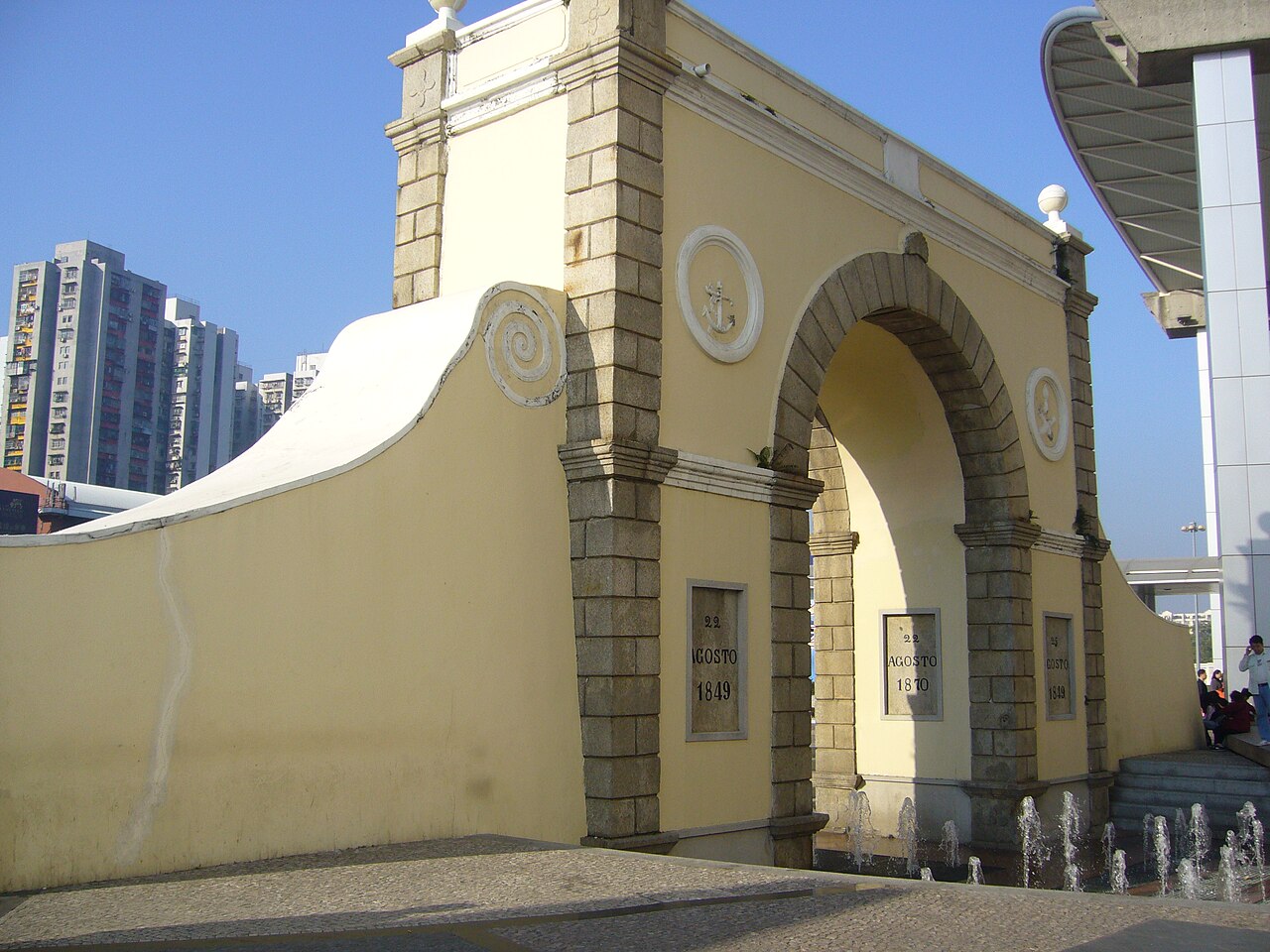
Portas do Cerco es una zona de Nossa Senhora de Fátima, Macao, China. Situada en la punta norte de la península de Macao, es conocida por la Puerta de la Barrera, que separa Macao de la China continental. Los portugueses construyeron la puerta en 1849 para reemplazar un muro derruido que los chinos habían levantado durante la dinastía Ming en 1573. Los chinos construyeron un muro guarnecido para controlar el flujo de personas y mercancías. Fue el escenario del incidente de Passaleão, un enfrentamiento entre la dinastía Qing y el reino de Portugal en 1849 a raíz de la muerte del gobernador de Macao, Ferreira do Amaral.
Liderado por el coronel Mesquita, Portugal ganó la pequeña batalla, lo que llevó a la extensión de la frontera de Macao hacia el norte. En el límite de dicha expansión se construyó Portas do Cerco, con la inscripción «A pátria honrai, que a pátria vos contempla» (en portugués, «Honrad a la patria, que la patria os contempla») en la fachada de su arco interior, en 1849. La Puerta de la Barrera sirvió como frontera de facto, pero los límites precisos de la frontera de Macao nunca se han demarcado formalmente.
Macao, hoy región administrativa especial de China, todavía tiene una frontera oficial con Zhuhai, en la China continental, a pocos metros detrás de la antigua puerta de la barrera. El nuevo Posto Fronteiriço das Portas do Cerco (puesto fronterizo de la Puerta de la Barrera) se inauguró el 15 de enero de 2004.
Traducción automática de «Portas do Cerco» en la Wikipedia en inglés, CC BY-SA 4.0.
Portas do Cerco ocupa el puesto 2279 de 8134 en el mundo en la clasificación de fama de este atlas y el n.º 45 de los 119 que el atlas cartografía en China. Su fundación, en 1849, es anterior a la del 9% de los monumentos datados del atlas — uno de los 607 monumentos del atlas fundados en el siglo XIX. Sus artículos de Wikipedia se abrieron 3160 veces en los últimos 60 días, más que el 76% del atlas. En 25 km a la redonda hay otros 9 monumentos del atlas. La guía de excursión más cercana es Zhuhai, a 7 km. Compara el dato en las estadísticas de castillos.
Ver en el mapa interactivo de castillos →Preguntas frecuentes
¿Dónde está Portas do Cerco?
La fortaleza se encuentra en China, en las coordenadas 22.21583°, 113.54917°.
¿De qué año data Portas do Cerco?
El atlas fija su fundación en 1849. Pudieron existir construcciones anteriores en el mismo lugar; este es el año documentado más antiguo.
¿Qué puesto ocupa Portas do Cerco en la clasificación por fama?
En la clasificación por fama de este atlas: n.º 2279 de 8134 en el mundo, y n.º 45 en China. La fama combina en cuántas ediciones de Wikipedia aparece un monumento y cuánta gente las lee.
¿Qué castillo está más cerca de Portas do Cerco?
Fortaleza de Mong Há, a unos 1 km.
Más castillos en China
- Xizhimen China
- Zhonghua Gate China · siglo XIV
- Jiankou China · siglo XIV
- Mandarin's House China · siglo XIX
Más fortalezas
- Puerta del Puente (Córdoba) España · siglo XVI
- Puerta Nueva de Bisagra España · siglo XVI
- Murallas de Córdoba España · siglo III a. C.
- Puerta de Palmas España