Fortaleza
Yangguan
🇨🇳 China · siglo II a. C.
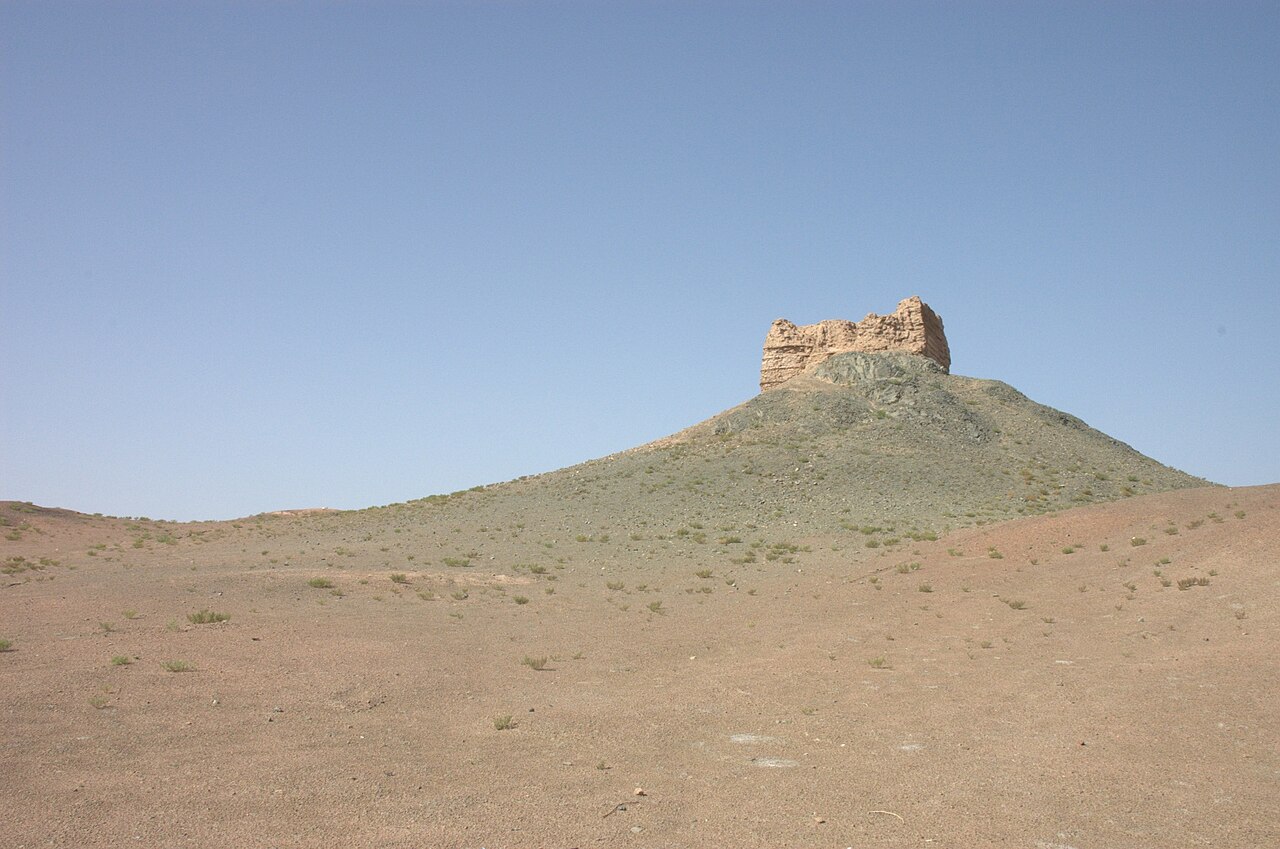
Yangguan, o el paso de Yangguan (chino tradicional: 陽關; chino simplificado: 阳关; lit. «Puerta del Sol»), es un paso de montaña que fue fortificado por el emperador Wu de la dinastía Han Occidental hacia el año 120 a. C. y utilizado como puesto de avanzada en los dominios coloniales adyacentes a la antigua China. Se encuentra a unos 70 kilómetros (43 millas) al suroeste de Dunhuang, en el territorio de Gansu, al oeste de la provincia de Shaanxi, en el extremo noroeste de China, que en la antigüedad era el centro administrativo más occidental de China. Fue establecido como puesto de defensa fronterizo, así como como un lugar de desarrollo en la remota frontera occidental china; el emperador Wu alentó a los chinos a establecerse allí. Hoy en día, Yangguan se encuentra en la aldea de Nanhu, a lo largo del corredor de Hexi.
Yangguan fue uno de los dos pasos occidentales más importantes de China, siendo el otro Yumenguan. En chino, yang significa «sol» o «soleado», pero también puede utilizarse para significar «sur» (siendo el lado soleado de una colina el lado sur). Yangguan recibió, por tanto, ese nombre porque se encuentra al sur del paso de Yumenguan. Fue un hito importante en la Ruta de la Seda. La fortaleza de Yangguan, sin embargo, había caído en ruinas hacia el año 900 d. C.
Traducción automática de «Yang Pass» en la Wikipedia en inglés, CC BY-SA 4.0.
Yangguan ocupa el puesto 1452 de 8134 en el mundo en la clasificación de fama de este atlas y el n.º 32 de los 119 que el atlas cartografía en China. Su fundación, en 120 a. C., es anterior a la del 99% de los monumentos datados del atlas — uno de los 12 monumentos del atlas fundados en el siglo II a. C. Sus artículos de Wikipedia se abrieron 3053 veces en los últimos 60 días, más que el 76% del atlas. Compara el dato en las estadísticas de castillos.
Ver en el mapa interactivo de castillos →Preguntas frecuentes
¿Dónde está Yangguan?
La fortaleza se encuentra en China, en las coordenadas 39.92725°, 94.05904°.
¿De qué año data Yangguan?
El atlas fija su fundación en 120 a. C. Pudieron existir construcciones anteriores en el mismo lugar; este es el año documentado más antiguo.
¿Qué puesto ocupa Yangguan en la clasificación por fama?
En la clasificación por fama de este atlas: n.º 1452 de 8134 en el mundo, y n.º 32 en China. La fama combina en cuántas ediciones de Wikipedia aparece un monumento y cuánta gente las lee.
¿Qué castillo está más cerca de Yangguan?
Puerta de Jade, a unos 50 km.
Más castillos en China
- City Wall of Nanjing China · siglo XIV
- Fortaleza de la Guía China · siglo XIX
- Palacio de la Pureza Celestial China
- Simatai China · siglo VI
Más fortalezas
- Torres de Serranos España · siglo XIV
- Fortaleza de Zvečan Kosovo · siglo XI
- Fuerte Róterdam Indonesia · siglo XVI
- Dzong Rinpung Bután · siglo XVII