Vesting
Yangguan
🇨🇳 China · 2e eeuw v.Chr.
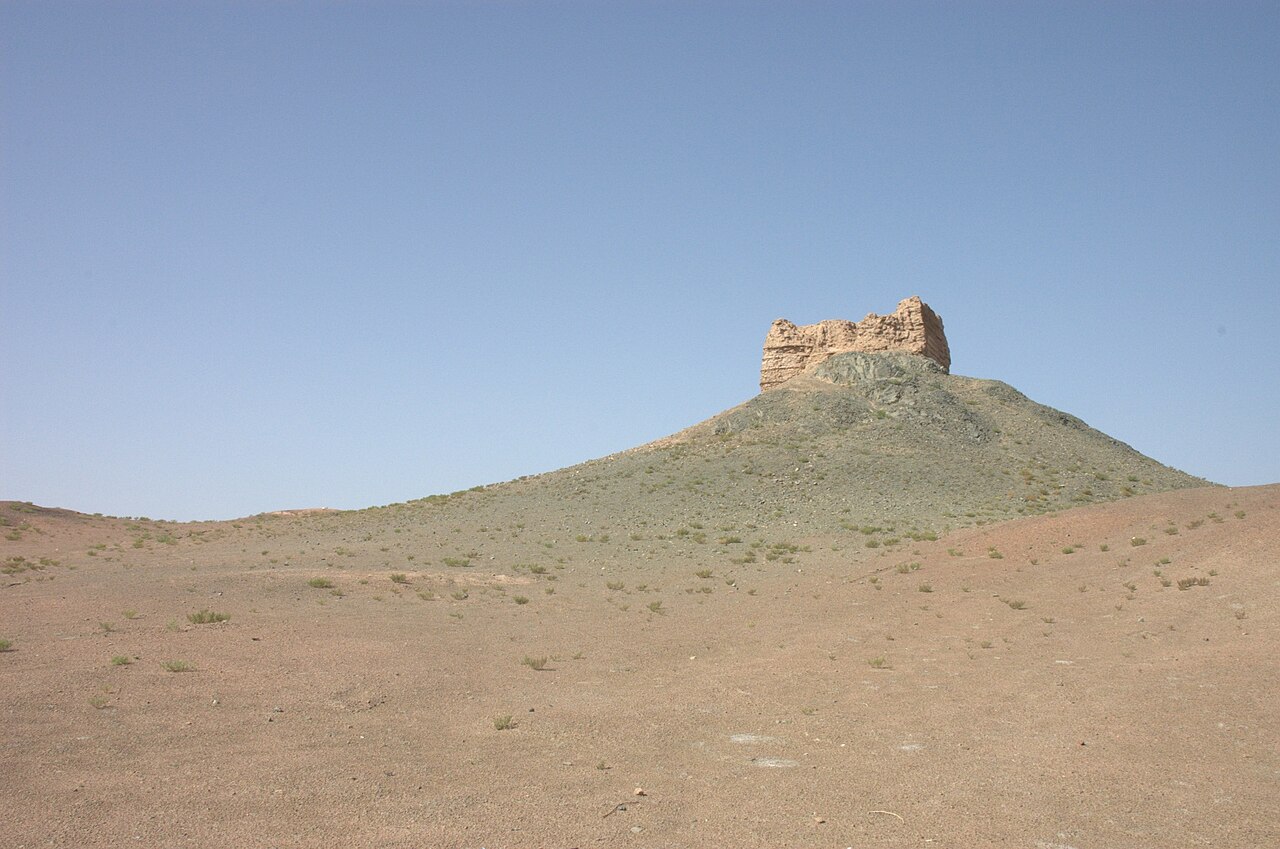
Yangguan, of de Yangguan-pas (traditioneel Chinees: 陽關; vereenvoudigd Chinees: 阳关; letterlijk 'Zonnepoort'), is een bergpas die rond 120 v.Chr. door keizer Wu van de Westelijke Han-dynastie werd versterkt en werd gebruikt als buitenpost in de koloniale gebieden grenzend aan het oude China. Zij ligt ongeveer 70 kilometer ten zuidwesten van Dunhuang, in het gebied Gansu, ten westen van de provincie Shaanxi, in het uiterste noordwesten van China, dat in de oudheid het meest westelijke bestuurscentrum van China was. Zij werd opgericht als grensverdedigingspost en als ontwikkelde plaats in het verre westelijke grensgebied van China; keizer Wu moedigde Chinezen aan zich er te vestigen. Tegenwoordig ligt Yangguan in het dorp Nanhu, langs de Hexicorridor.
Yangguan was een van de twee belangrijkste westelijke passen van China, de andere was Yumenguan. In het Chinees betekent yang "zon" of "zonnig", maar het kan ook "zuid" betekenen (de zonnige zijde van een heuvel is de zuidelijke zijde). Yangguan dankt zijn naam dus aan het feit dat het ten zuiden van de Yumenguan-pas ligt. Het was een belangrijk baken op de Zijderoute. Tegen circa 900 n.Chr. was de vesting bij Yangguan echter tot ruïne vervallen.
Machinaal vertaald uit “Yang Pass” op de Engelstalige Wikipedia, CC BY-SA 4.0.
Yangguan staat op plaats 1.452 van 8.134 in de bekendheidsranglijst van deze atlas en op plaats 32 van de 119 die de atlas in China in kaart brengt. Gebouwd in 120 v.Chr., en daarmee ouder dan 99% van de gedateerde bouwwerken in de atlas — een van de 12 bouwwerken in de atlas die uit de 2e eeuw v.Chr. stammen. De Wikipedia-artikelen erover werden de afgelopen 60 dagen 3.053 keer geopend, meer dan 76% van de atlas. Zie hoe dat zich verhoudt in de kastelenstatistiek.
Bekijk op de interactieve kastelenkaart →Veelgestelde vragen
Waar ligt Yangguan?
Yangguan ligt in China, op 39.92725°, 94.05904°.
Wanneer werd Yangguan gebouwd?
De atlas dateert de stichting op 120 v.Chr. Er kunnen eerdere bouwwerken hebben gestaan; dit is het oudste gedocumenteerde bouwjaar.
Hoe bekend is Yangguan?
In de bekendheidsranglijst van deze atlas: plaats 1.452 van 8.134 wereldwijd, plaats 32 in China. Bekendheid combineert het aantal Wikipedia-taalversies met het aantal lezers.
Welk kasteel ligt het dichtst bij Yangguan?
Yumen Pass, ongeveer 50 km verderop.
Meer kastelen in China
- City Wall of Nanjing China · 14e eeuw
- Guia Fortress China · 19e eeuw
- Palace of Heavenly Purity China
- Simatai China · 6e eeuw
Meer vestingen
- Torres de Serranos Spanje · 14e eeuw
- Zvečanski grad Kosovo · 11e eeuw
- Fort Rotterdam Indonesië · 16e eeuw
- Rinpung Dzong Bhutan · 17e eeuw