Ruïne
Brougham Castle
ENG Engeland · 13e eeuw
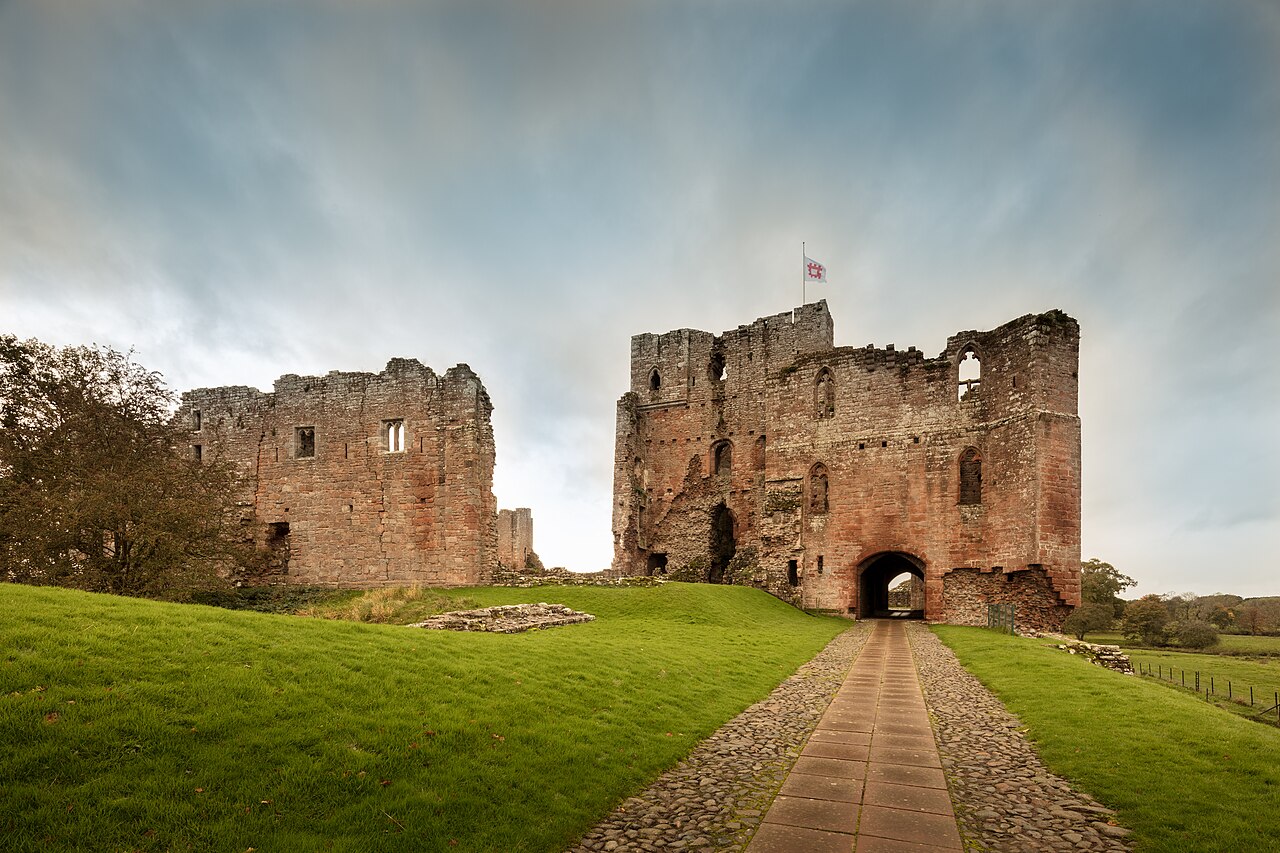
Brougham Castle is een middeleeuws gebouw op ongeveer 2 mijl (3,2 km) ten zuidoosten van Penrith, Cumbria, Engeland. Het kasteel werd in het begin van de 13e eeuw gesticht door Robert I de Vieuxpont. De plek, nabij de samenvloeiing van de rivieren Eamont en Lowther, was door de Romeinen gekozen voor een Romeins fort genaamd Brocavum. Het kasteel is, samen met het fort, een scheduled monument: "Brougham Roman fort and Brougham Castle".
In zijn vroegste vorm bestond het kasteel uit een stenen donjon, met een omheining beschermd door een aarden wal en een houten palissade. Toen het kasteel werd gebouwd, was Robert de Vieuxpont een van de weinige heren in de streek die trouw waren aan koning Jan. De Vieuxponts waren een machtige grootgrondbezittersfamilie in het noordwesten van Engeland, die ook de kastelen van Appleby en Brough bezaten. In 1264 werd de kleinzoon van Robert de Vieuxpont, eveneens Robert genaamd, tot verrader verklaard, en zijn bezittingen werden door Hendrik III geconfisqueerd. Brougham Castle en de andere landgoederen kwamen uiteindelijk terug in bezit van de familie Vieuxpont en bleven daar tot 1269, toen de bezittingen door een huwelijk overgingen naar de familie Clifford.
Met het uitbreken van de Schotse Onafhankelijkheidsoorlogen, in 1296, werd Brougham een belangrijke militaire basis voor Robert Clifford, 1e baron de Clifford. Hij begon het kasteel te versterken: de houten buitenverdedigingen werden vervangen door sterkere, indrukwekkendere stenen muren, en er werd een grote stenen poorttoren toegevoegd. Het belang van Brougham en Robert Clifford was zo groot dat hij in 1300 koning Eduard I op het kasteel ontving. Roberts zoon, Roger Clifford, werd in 1322 als verrader terechtgesteld, en de familiebezittingen kwamen in het bezit van koning Eduard II, hoewel ze werden teruggegeven zodra zijn zoon Eduard III koning werd.
Machinaal vertaald uit “Brougham Castle” op de Engelstalige Wikipedia, CC BY-SA 4.0.
Brougham Castle staat op plaats 1.348 van 8.134 in de bekendheidsranglijst van deze atlas en op plaats 88 van de 333 die de atlas in Engeland in kaart brengt. Gebouwd in ca. 1225, en daarmee ouder dan 75% van de gedateerde bouwwerken in de atlas — een van de 861 bouwwerken in de atlas die uit de 13e eeuw stammen. De Wikipedia-artikelen erover werden de afgelopen 60 dagen 3.013 keer geopend, meer dan 75% van de atlas. Binnen 25 km staan nog 4 andere bouwwerken uit de atlas. De dichtstbijzijnde dagtripgids is Newcastle upon Tyne, 79 km verderop. Zie hoe dat zich verhoudt in de kastelenstatistiek.
Bekijk op de interactieve kastelenkaart →Veelgestelde vragen
Waar ligt Brougham Castle?
Brougham Castle ligt in Engeland, op 54.6533°, -2.71802°.
Wanneer werd Brougham Castle gebouwd?
De atlas dateert de stichting op ca. 1225. Er kunnen eerdere bouwwerken hebben gestaan; dit is het oudste gedocumenteerde bouwjaar.
Hoe bekend is Brougham Castle?
In de bekendheidsranglijst van deze atlas: plaats 1.348 van 8.134 wereldwijd, plaats 88 in Engeland. Bekendheid combineert het aantal Wikipedia-taalversies met het aantal lezers.
Welk kasteel ligt het dichtst bij Brougham Castle?
Penrith Castle, ongeveer 3 km verderop.
Meer kastelen in Engeland
- Conisbrough Castle Engeland · 11e eeuw
- Pevensey Castle Engeland · 11e eeuw
- Beaumont Palace Engeland · 12e eeuw
- Halton Castle Engeland · 11e eeuw
Meer ruïnes
- Château de Marly Frankrijk · 17e eeuw
- Ak-Saray Palace Oezbekistan · 14e eeuw
- Hagi Castle Japan · 17e eeuw
- Los Millares Spanje