Vesting
Daugavgrīva Fortress
🇱🇻 Letland · 17e eeuw
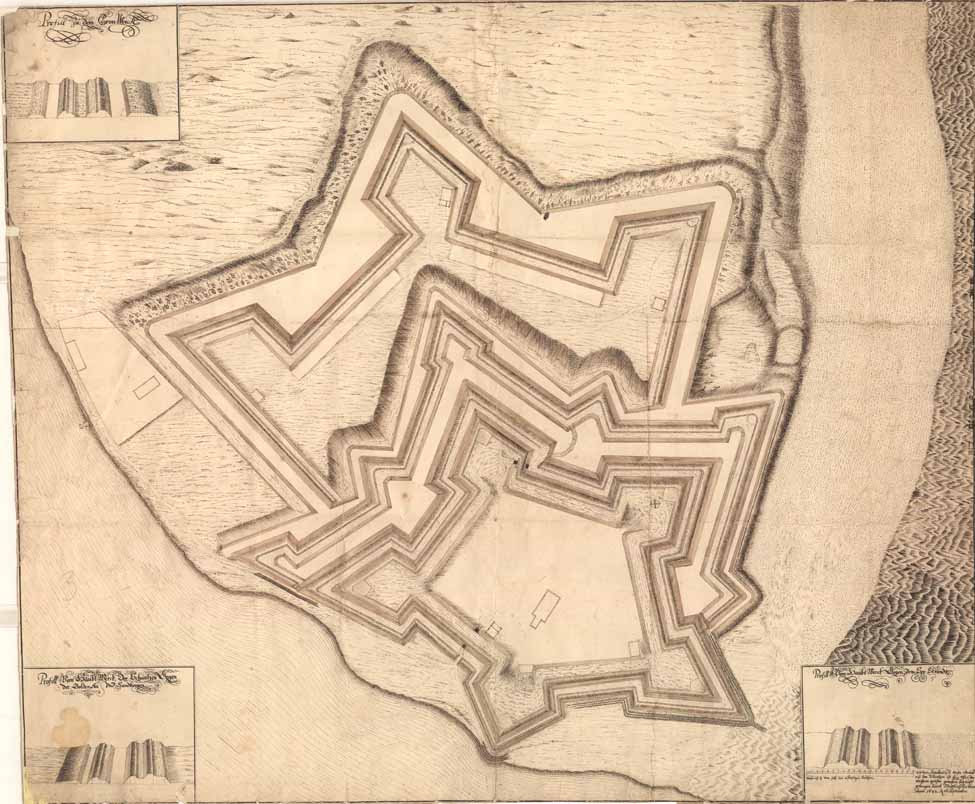
De vesting Daugavgrīva (Duits: Dünamünder Schanze, Festung Dünamünde; Pools: twierdza Dynemunt; Russisch: крепость Дюнамюнде, Усть-Двинск; Zweeds: Neumünde) is een vesting gebouwd in Zweeds Lijfland in de 17e eeuw. Ze bevindt zich in Daugavgrīva, bij Riga, nabij de monding van de riviertak Buļļupe in de Daugava.
De vesting Daugavgrīva neemt een belangrijke plaats in in de geschiedenis van Letland. Bijbelvertaler Johann Ernst Glück woonde hier van 1680 tot 1683, en tijdens de Eerste Wereldoorlog werd hier de eerste eenheid Letse troepen opgericht — het 1e Letse Schuttersbataljon van Daugavgrīva (1915). Tijdens de Letse Onafhankelijkheidsoorlog, in 1919, tijdens het Bermontiade-conflict, werd de vesting veroverd door het 9e Infanterieregiment van Rēzekne van het Letse Leger.
Tegenwoordig is het fort een monument van nationaal belang. Een deel van het terrein maakt deel uit van het douanegebied van de Republiek Letland.
Machinaal vertaald uit “Daugavgrīva fortress” op de Engelstalige Wikipedia, CC BY-SA 4.0.
Daugavgrīva Fortress staat op plaats 3.244 van 8.134 in de bekendheidsranglijst van deze atlas en op plaats 15 van de 45 die de atlas in Letland in kaart brengt. Gebouwd in 1641, en daarmee ouder dan 29% van de gedateerde bouwwerken in de atlas — een van de 626 bouwwerken in de atlas die uit de 17e eeuw stammen. De Wikipedia-artikelen erover werden de afgelopen 60 dagen 1.596 keer geopend, meer dan 61% van de atlas. Binnen 25 km staan nog 3 andere bouwwerken uit de atlas. De dichtstbijzijnde dagtripgids is Riga, 12 km verderop. Zie hoe dat zich verhoudt in de kastelenstatistiek.
Bekijk op de interactieve kastelenkaart →Veelgestelde vragen
Waar ligt Daugavgrīva Fortress?
Daugavgrīva Fortress ligt in Letland, op 57.0451°, 24.0395°.
Wanneer werd Daugavgrīva Fortress gebouwd?
De atlas dateert de stichting op 1641. Er kunnen eerdere bouwwerken hebben gestaan; dit is het oudste gedocumenteerde bouwjaar.
Hoe bekend is Daugavgrīva Fortress?
In de bekendheidsranglijst van deze atlas: plaats 3.244 van 8.134 wereldwijd, plaats 15 in Letland. Bekendheid combineert het aantal Wikipedia-taalversies met het aantal lezers.
Welk kasteel ligt het dichtst bij Daugavgrīva Fortress?
Daugavgrīva Castle, ongeveer 3 km verderop.
Meer kastelen in Letland
- Mežotne Palace Letland · 18e eeuw
- Lielvārde Castle Letland · 13e eeuw
- Rauna Castle Letland
- Aizpute Castle Letland · 13e eeuw
Meer vestingen
- Castle Williams Verenigde Staten · 19e eeuw
- Chapora Fort India · 18e eeuw
- Fort Rice Verenigde Staten · 19e eeuw
- Fort William (Ghana) Ghana · 17e eeuw