Ruïne
Fotheringhay Castle
ENG Engeland · 11e eeuw
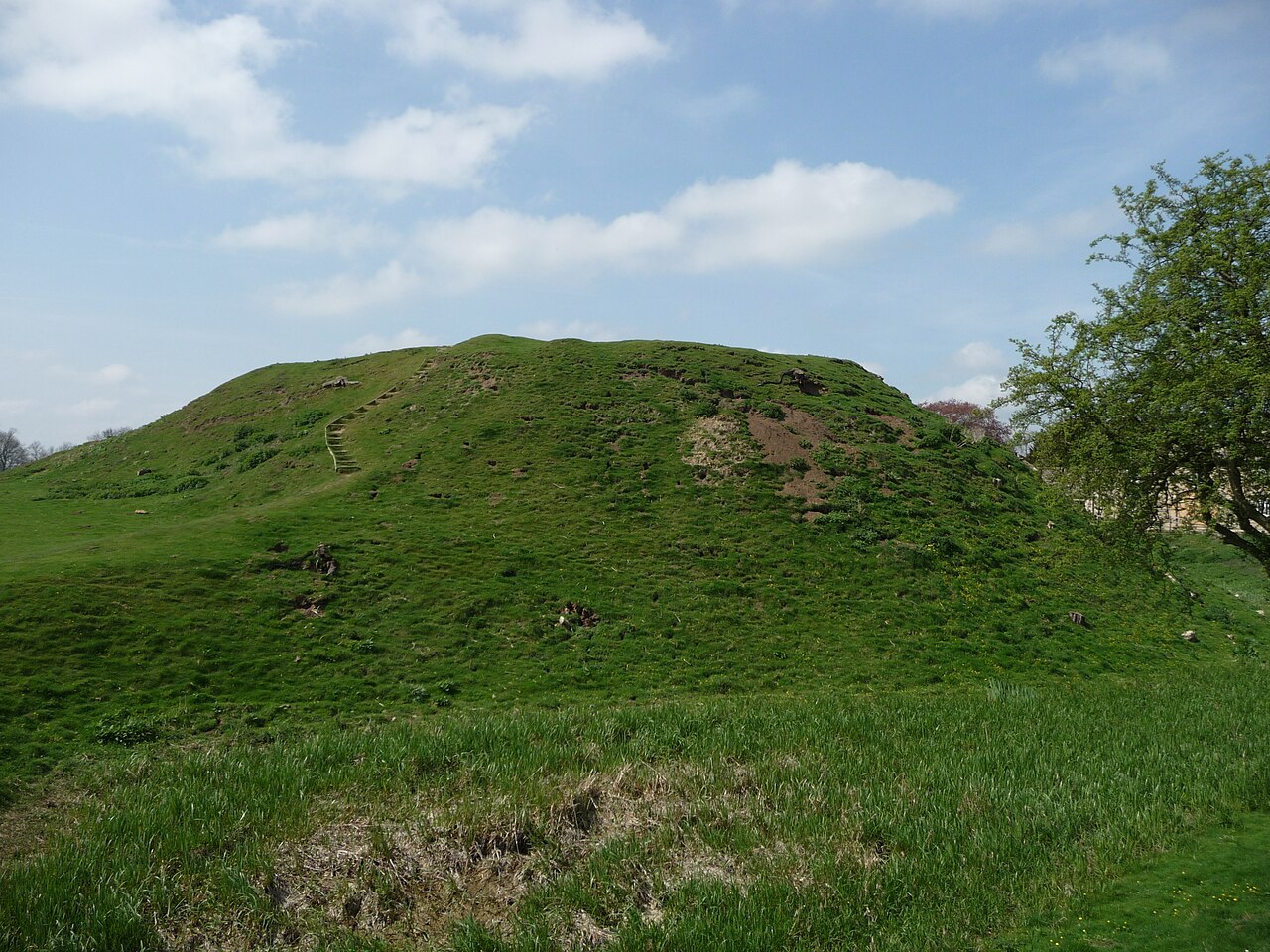
Fotheringhay Castle, ook bekend als Fotheringay Castle, was een Normandisch motte-en-baileykasteel uit de hoge middeleeuwen in het dorp Fotheringhay, 3½ mijl (6 kilometer) ten noorden van het marktstadje Oundle, Northamptonshire, Engeland (rasterreferentie TL061930). Het werd waarschijnlijk rond 1100 gesticht door Simon de Senlis, graaf van Northampton. In 1113 kwam het bezit in handen van prins David van Schotland toen deze met Simons weduwe trouwde. Het kasteel bleef daarna in handen van de Schotse prinsen tot het begin van de 13e eeuw, toen het door koning Jan van Engeland in beslag werd genomen.
In 1220 werd Fotheringhay Castle beheerd door Ranulf de Blondeville, 6e graaf van Chester. In januari van het volgende jaar werd het kortstondig veroverd door William II de Forz, 3e graaf van Albemarle, tijdens zijn opstand tegen koning Hendrik III. Forz verliet het kasteel, Hendrik III nam het onder zijn beheer, en Fotheringhay bleef in koninklijke handen tot de regering van Eduard II. Het was een geliefde residentie van de hertogen van York, en koning Richard III werd er in 1452 geboren. Het was ook de laatste gevangenisplaats van Maria Stuart, koningin van Schotland, die in 1587 in het kasteel werd berecht en terechtgesteld.
Het kasteel werd in de jaren 1630 ontmanteld en het meeste metselwerk werd verwijderd, waardoor alleen de aardwerken overbleven. De locatie is beschermd als Scheduled Monument en is opengesteld voor het publiek.
Machinaal vertaald uit “Fotheringhay Castle” op de Engelstalige Wikipedia, CC BY-SA 4.0.
Fotheringhay Castle staat op plaats 517 van 8.134 in de bekendheidsranglijst van deze atlas en op plaats 39 van de 333 die de atlas in Engeland in kaart brengt. Gebouwd in ca. 1100, en daarmee ouder dan 86% van de gedateerde bouwwerken in de atlas — een van de 325 bouwwerken in de atlas die uit de 11e eeuw stammen. De Wikipedia-artikelen erover werden de afgelopen 60 dagen 17.159 keer geopend, meer dan 96% van de atlas. Binnen 25 km staan nog 3 andere bouwwerken uit de atlas. De dichtstbijzijnde dagtripgids is Cambridge, 52 km verderop. Zie hoe dat zich verhoudt in de kastelenstatistiek.
Bekijk op de interactieve kastelenkaart →Veelgestelde vragen
Waar ligt Fotheringhay Castle?
Fotheringhay Castle ligt in Engeland, op 52.5242°, -0.43572°.
Wanneer werd Fotheringhay Castle gebouwd?
De atlas dateert de stichting op ca. 1100. Er kunnen eerdere bouwwerken hebben gestaan; dit is het oudste gedocumenteerde bouwjaar.
Hoe bekend is Fotheringhay Castle?
In de bekendheidsranglijst van deze atlas: plaats 517 van 8.134 wereldwijd, plaats 39 in Engeland. Bekendheid combineert het aantal Wikipedia-taalversies met het aantal lezers.
Welk kasteel ligt het dichtst bij Fotheringhay Castle?
Barnwell Castle, ongeveer 8 km verderop.
Meer kastelen in Engeland
- Framlingham Castle Engeland · 12e eeuw
- Bolingbroke Castle Engeland · 13e eeuw
- Scarborough Castle Engeland · 12e eeuw
- Tattershall Castle Engeland · 13e eeuw
Meer ruïnes
- Dinefwr Castle Wales
- Slot Monbijou Duitsland · 18e eeuw
- Palace of Nestor Griekenland · 13e eeuw v.Chr.
- Kasteel Rakvere Estland · 13e eeuw